Canary Islands · Spain · UNESCO Biosphere Reserve
Lanzarote
Born from fire, shaped by vision. An island where 18th-century volcanic eruptions became raw material for one of the world's great experiments in art, architecture and human restraint.
Canary Islands · Spain · UNESCO Biosphere Reserve
Born from fire, shaped by vision. An island where 18th-century volcanic eruptions became raw material for one of the world's great experiments in art, architecture and human restraint.
Must-See
Fire mountains, volcanic lava tubes, wine grown in black ash and a wild Atlantic cliff beach — four Lanzarote experiences unlike anything else in Europe.

Between 1730 and 1736, a series of volcanic eruptions buried 11 villages and a third of Lanzarote's farmland under lava and ash. Today, that devastation is one of the most extraordinary landscapes on Earth — the Montañas del Fuego. The geothermal heat is still live: guides pour water into vents and watch it explode as steam, and a restaurant grills food using nothing but the earth's internal heat.
National Park · Volcano · UNESCO Read our Timanfaya guide →
An ancient lava tube runs six kilometres from the Timanfaya eruptions to the sea, surfacing in two of Lanzarote's most astonishing spaces. At Jameos del Agua, César Manrique transformed the tube's ocean opening into a concert hall, lagoon and garden of savage beauty — where blind albino crabs, found nowhere else on Earth, live in the subterranean saltwater pool. A masterwork of architecture and ecology.
César Manrique · Lava Tube · Architecture See our 5-day itinerary →
Nowhere else on Earth do people grow wine like this. In the volcanic heartland of Lanzarote, each vine is planted in a hand-dug hollow — a zoco — carved into the black lapilli ash, protected from the Atlantic wind by a low semicircular wall of volcanic stone. The result is an ancient, entirely human landscape of extraordinary beauty, producing a Malvasía white wine that is fresh, mineral and completely unique.
Unique Viticulture · Wine · UNESCO Read our La Geria wine route guide →
At the foot of a 600-metre basalt escarpment, Famara stretches four kilometres of wild, driftwood-scattered sand between surf and cliff. This is Lanzarote without a resort in sight — a place for surfers, kite enthusiasts and anyone who needs space and sky in proportion. The Risco de Famara cliff above is the island's most dramatic geological feature: on clear mornings, La Graciosa and Tenerife are both visible from the ridge.
Surf · Wild Beach · Cliffs · Nature Read our beaches guide →Where to Stay
Three of our favourite places to stay on the island, from a grand beach resort in Playa Blanca to a design hotel shaped by César Manrique. For every budget and family option, see our full Lanzarote hotel guide and our luxury hotels guide.
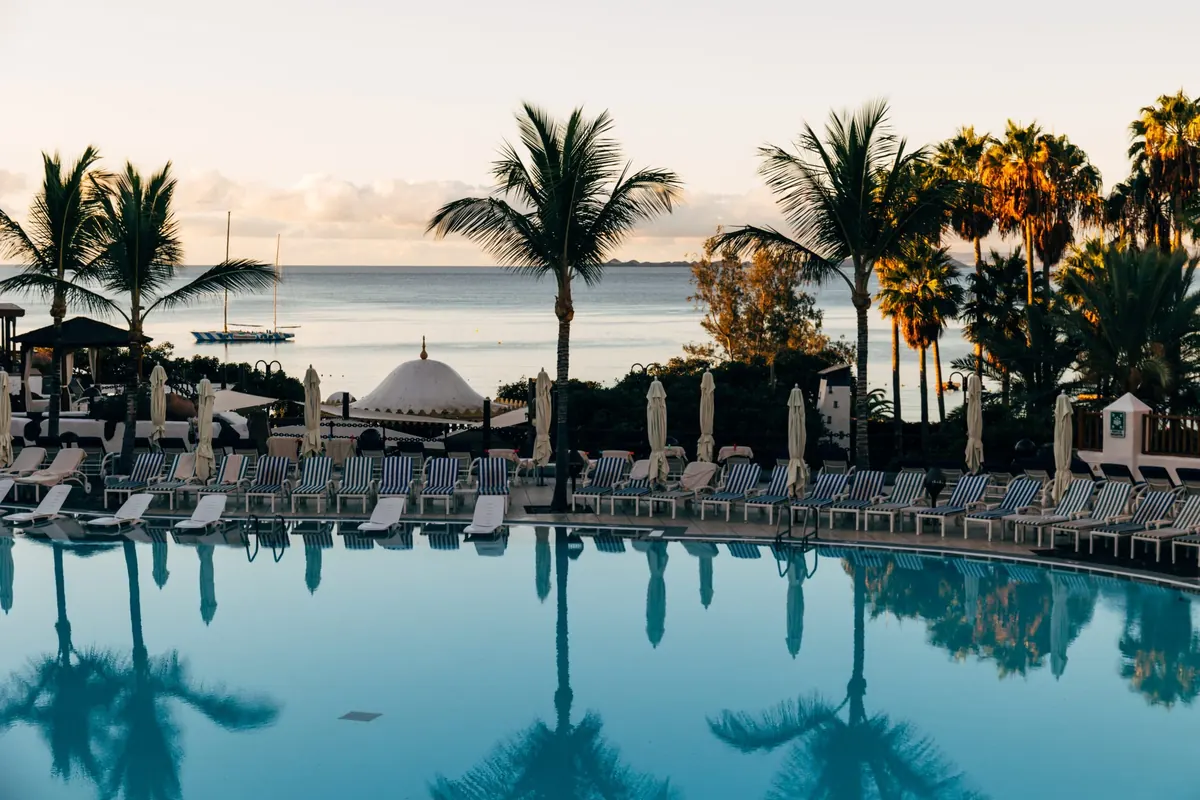 Grand Beach Resort
The most complete five-star on the island, right on Playa Dorada: 385 spacious rooms and suites, seven restaurants, four pools and one of the largest thalasso spas in Lanzarote. Equally good for couples and families, with the Papagayo coves a short drive away.
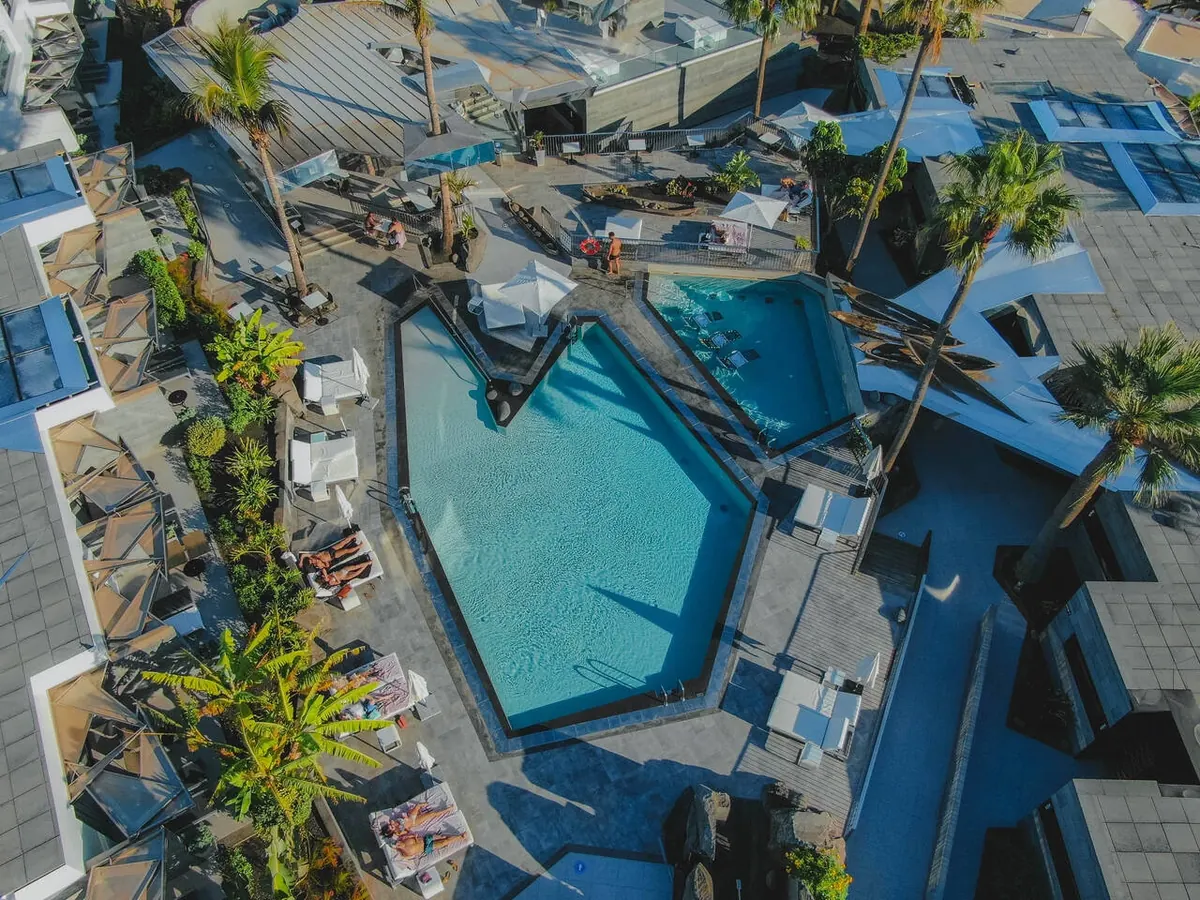 Design Boutique
Just 81 suites in volcanic stone and dark timber on the hillside above Puerto del Carmen, strictly for guests aged 18 and over. A swim-up bar, a grotto-style spa and a gourmet restaurant with a wine tasting room make it the island's most intimate five-star stay.
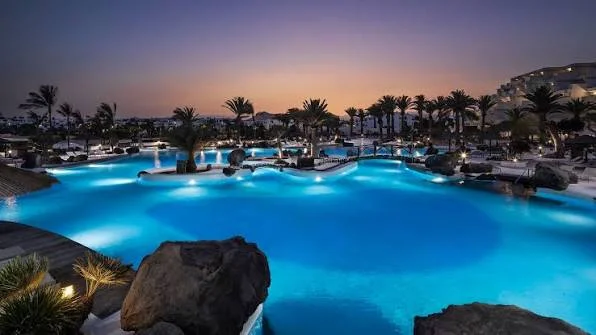 Manrique Design
César Manrique's legacy in hotel form: whitewashed architecture, seawater lagoon pools framed by black basalt and lush tropical gardens, directly on the beach in Costa Teguise. Adults-only and all-inclusive, with four restaurants and an exclusive Reserve area.
Plan Your Trip
Lanzarote Airport (ACE) is only 15 minutes from Puerto del Carmen, around 15–20 from Costa Teguise and about 35 from Playa Blanca. Compare fares from your city below.
Curated Experiences
Three experiences that reveal Lanzarote's soul — its geology, its art and its wine — in the hands of people who know this island intimately.

Enter the Timanfaya National Park beyond the standard coach bus route, with a specialist geologist guide who takes you to viewpoints and lava formations closed to independent visitors. The guide explains the catastrophic 1730–1736 eruption sequence, identifies the different lava types and demonstrates the still-active geothermal heat just centimetres below the surface. One of the most dramatic natural environments in Europe, explained by someone who genuinely loves it.
See Tours & Excursions
No visitor fully understands Lanzarote without understanding César Manrique — the artist, architect and activist who shaped the entire island's visual identity and fought (successfully) to ban high-rise development and advertising billboards. This full-day tour visits his former home (now the César Manrique Foundation), the Jameos del Agua, Mirador del Río and the Cactus Garden: each one a different facet of his extraordinary vision.
See Tours & Excursions
Walk among the vine zocos of La Geria as a local winemaker explains the extraordinary story of how viticulture survived the volcanic eruptions — and why the ash that destroyed everything turned out to be ideal for growing exceptional wine. A guided walk through the vineyard landscape leads to a private tasting of three Malvasía styles (dry, semi-sweet and naturally sweet) with local cheese, papas arrugadas and mojo. Limited to 8 people.
See Tours & ExcursionsPlan Your Trip
Travel Tips
Each island is a world of its own. Find your perfect match.