At 3,715 metres, Mount Teide is the highest point in Spain, and the national park around it is one of the most visited in Europe. You drive up through pine forest into Las Cañadas, a vast volcanic caldera of lava flows, coloured rock and wide sandy plains, with the cone of Teide rising above it all. On a clear day you can see La Gomera, La Palma and El Hierro floating above the clouds.
The park was declared a UNESCO World Heritage Site in 2007, and access is now more regulated than ever. Since January 2026 the summit trail and the main hiking route up the mountain have an eco-fee for visitors, permits are booked through the Cabildo de Tenerife, and further controls on cars and parking are on the way. This guide covers what you need to know before you go, the best trails for every level and how to plan the day. For other walks on the island, see our Anaga Rural Park guide and Masca gorge guide.
Quick Guide: Choose Your Teide
Six ways to experience the mountain, from a gentle loop to a night above the clouds.
Easiest Way Up
Eight minutes to 3,555 metres, with two short viewpoint trails at the top.
Best Short Walk
A two-hour loop around the park's most famous rock formations.
Climb It on Foot
The classic hike up the mountain, past the Altavista refuge.
Best After Dark
One of the best places in the world to see the night sky.
The 2026 Rules at a Glance
Since the Cabildo de Tenerife took over the management of the park, two trails have an eco-fee for visitors, and bookings have moved to its Tenerife ON platform. These are the rules in force in October 2026:
Rangers check permits and ID at the start of the summit trail, and can turn away hikers without the minimum equipment: warm clothes, sturdy footwear, water and sun protection. More changes are coming: the Cabildo plans access controls at the park entrances, a limited number of bookable parking spaces and shuttle buses from late 2026 into 2027 — see getting there.
The Trails at a Glance
| Trail | Distance | Time | Booking | Level |
|---|---|---|---|---|
| La Fortaleza & Pico Viejo viewpoints (11, 12) | Short | 30–60 min | Cable car ticket | Easy, high altitude |
| Roques de García (3) | 3.5 km loop | ~2 h | No | Easy |
| Telesforo Bravo to the summit (10) | 653 m | ~40 min up | Permit + fee | Moderate, steep |
| Montaña Blanca to La Rambleta (7) | 8.2 km | 5–6 h up | Booking + fee | Hard |
| La Rambleta to Pico Viejo (9) | 9.6 km | Full day | No | Hard |
| Siete Cañadas (4) | 16.6 km | 4–5 h | No | Moderate |
Trail numbers and distances follow the official park list. Times are approximate and longer at altitude; check the weather and trail closures before you set off.
The Best Ways to Experience Teide
I. The Teide Cable Car
The Teleférico del Teide climbs from 2,356 metres to the upper station at La Rambleta, 3,555 metres, in about eight minutes. From the top, two short trails need no permit: trail 11 to the Mirador de La Fortaleza, looking north over the clouds, and trail 12 to the Mirador de Pico Viejo, looking down into its huge crater, with La Gomera and La Palma beyond. The summit itself, about 160 metres higher, is only reachable with a permit.
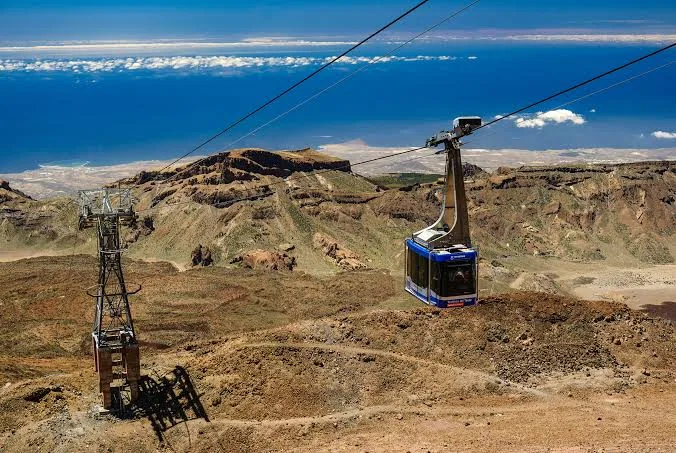
A return ticket costs €42 for adults and €21 for children aged 3 to 13 (non-resident prices); one way is €23.50, useful if you hike up Montaña Blanca. It opens at 9:00 every day, with the last ascent between 16:00 and 17:40 depending on the season. Book online for a time slot, arrive early to avoid the queues and check the same morning: the cable car closes in strong wind or ice. At 3,555 metres the air is thin — move slowly, and it isn't recommended for very young children, pregnant women or people with heart or breathing problems.
II. Roques de García (Trail 3)
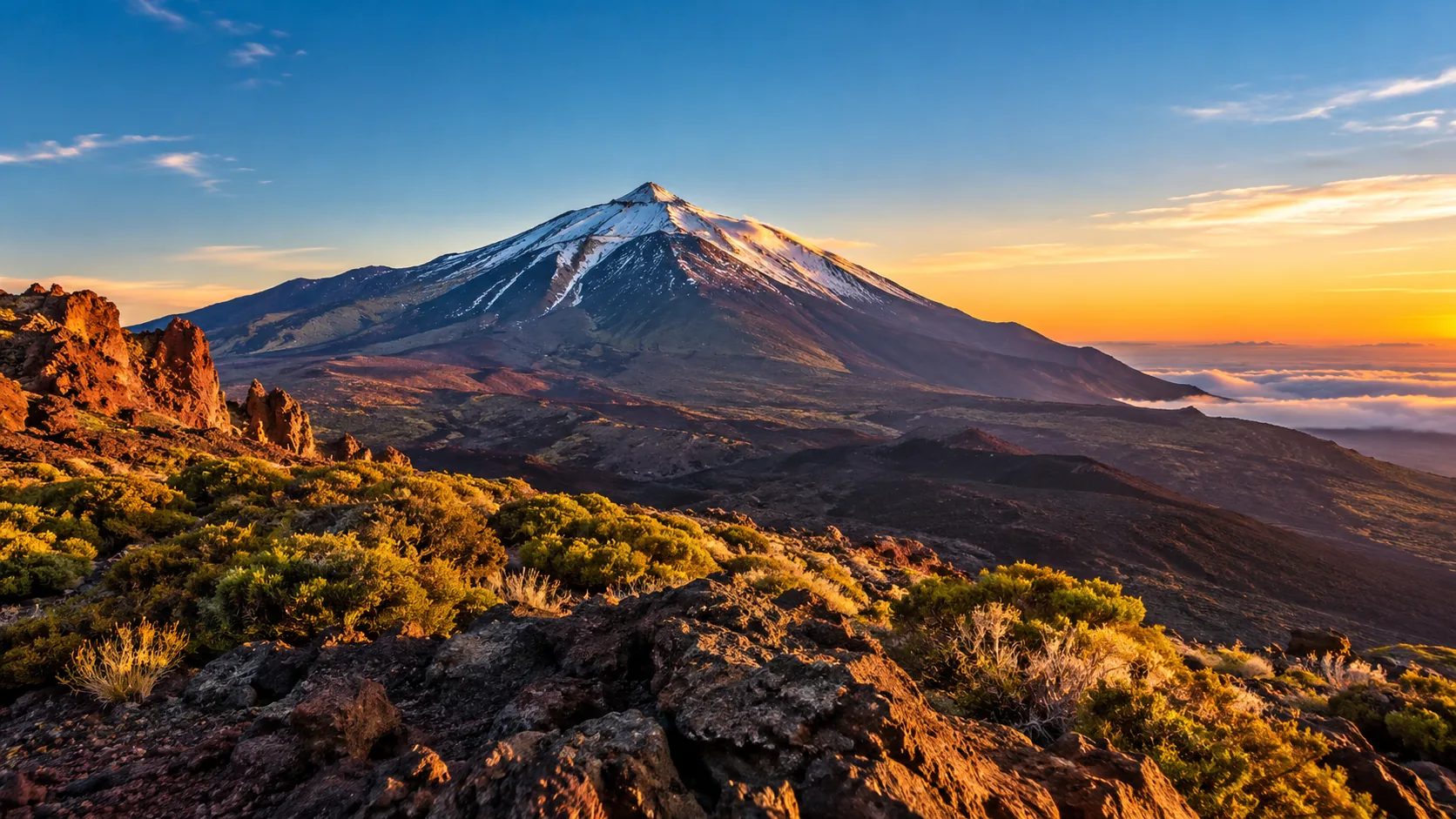
The park's most photographed view: a line of eroded volcanic towers, including the leaning Roque Cinchado, in front of the cone of Teide. The circular trail 3 starts at the Mirador de La Ruleta, on the TF-21 at kilometre 46, opposite the Parador. It's about 3.5 kilometres with around 200 metres of ascent and takes about two hours; the first part is easy, while the return along the base of the rocks has a short, steeper climb. A short accessible section near the viewpoint suits wheelchairs and pushchairs. Go early or late: the car park fills by mid-morning, and the light is better.
III. The Summit: Telesforo Bravo Trail (Trail 10)
The final path to the crater is only 653 metres long, from La Rambleta to the summit, but it climbs steeply over loose volcanic rock at more than 3,500 metres, so allow about 40 minutes up. At the top, fumaroles release warm, sulphur-scented steam, and the view takes in the whole archipelago on a clear day. You need a named permit for a two-hour slot between 9:00 and 17:00, booked on Tenerife ON — €15 for visitors from outside the Canaries since January 2026. Permits are released every Monday at 07:00 and go fast, especially in summer and at holidays, so book as soon as your dates are fixed. Bring your permit and ID; most people reach the start of the trail by cable car, so time your ticket to match your slot.
IV. Montaña Blanca to La Rambleta (Trail 7)
The classic way to climb Teide on foot starts at kilometre 40.2 of the TF-21. A wide track crosses the pale pumice slopes of Montaña Blanca, past the dark boulders known as the "Huevos del Teide", then a narrow path zigzags steeply up past the Altavista refuge to La Rambleta — about 8.2 kilometres and almost 1,200 metres of ascent. Allow five to six hours up. Since 2026 this trail must be booked, from 9:00 to 15:00, with a fee for visitors of €6 on weekdays and €10 at weekends. To continue to the summit you need the trail 10 permit too; most hikers ride the cable car down (one way €23.50), so check the time of the last descent.
This is a serious high-altitude hike. Start early, carry at least two litres of water, food, warm and windproof layers, a hat and sunscreen, and turn back if you get a headache or feel dizzy — altitude sickness is common above 3,000 metres.
V. Sunrise from the Top: the Altavista Refuge
The only way to stand on the summit at sunrise and watch the shadow of Teide stretch across the sea is to sleep at the Refugio de Altavista, at 3,260 metres. It reopened in July 2026 after a full renovation, with 49 places in shared dormitories, toilets but no showers. A night costs €71 for visitors, stays are limited to one night, and the booking includes the permits for trails 7 and 10, with access to the summit between 06:00 and 09:00 the next morning. Check in between 15:00 and midnight, walking up from Montaña Blanca — there's no road or cable car — and bring a sleeping bag, warm clothes and a head torch. Book on the refuge's official website well ahead.
VI. Pico Viejo (Trail 9)
Teide's neighbour, at 3,135 metres, has one of the largest craters in the park. Trail 9 leaves from La Rambleta, crosses to the Pico Viejo viewpoint, skirts the crater and descends to the Narices del Teide, the vents of the 1798 eruption — about 9.6 kilometres over rough lava, with a long descent. It's a hard, full-day route for experienced hikers, and you'll need transport at the bottom. A guided version from the cable car is the easiest way to do it.
Easier Walks in Las Cañadas
The caldera floor has gentler routes at around 2,000 metres. From the El Portillo visitor centre, trail 1 leads about 5.5 kilometres to the foot of the red cliffs of La Fortaleza, and trail 4, Siete Cañadas, follows a wide track for 16.6 kilometres along the edge of the caldera to the Cañada Blanca visitor centre near the Parador — four to five hours, mostly flat. Both are free and need no booking.
Sunset and Stargazing
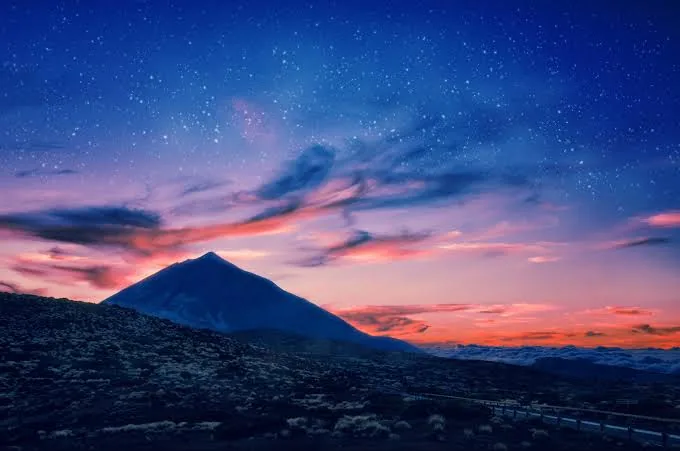
Above the clouds and far from city lights, Teide has some of the clearest night skies in the world, protected by law, and the Izaña observatory sits on its eastern ridge. Stay after sunset at any viewpoint for the colours over the sea of clouds and the cone of Teide, then wait for the stars. It gets cold quickly — near freezing in winter — so bring a warm jacket. The easiest option is a guided tour with transport, sunset and a session with telescopes.
Getting There
By car, four roads lead into the park: the TF-21 from La Orotava in the north and from Vilaflor in the south, the TF-24 along the ridge from La Esperanza and La Laguna, and the TF-38 from Chío in the west. From Costa Adeje it's about an hour to the cable car. Fill up before you go — there are no petrol stations in the park — and drive carefully on the bends, watching for cyclists.
By bus, TITSA line 342 runs from Costa Adeje and Las Américas and line 348 from Puerto de la Cruz, usually once a day each way, stopping at the cable car and the Parador. The timetable leaves a few hours in the park, enough for the cable car or the Roques de García but not for the longer hikes.
What's changing. The Cabildo plans checkpoints at the park entrances, a limited number of parking spaces that visitors book and pay for, and a network of shuttle buses (around €7 for visitors) from late 2026 into 2027. The details and dates were not final in October 2026 — check before your trip, and we'll update this guide.
Where to Stay
Staying near the park lets you be on the trails before the day-trippers and out for sunset and the stars without a long drive back.
Parador de Las Cañadas del Teide
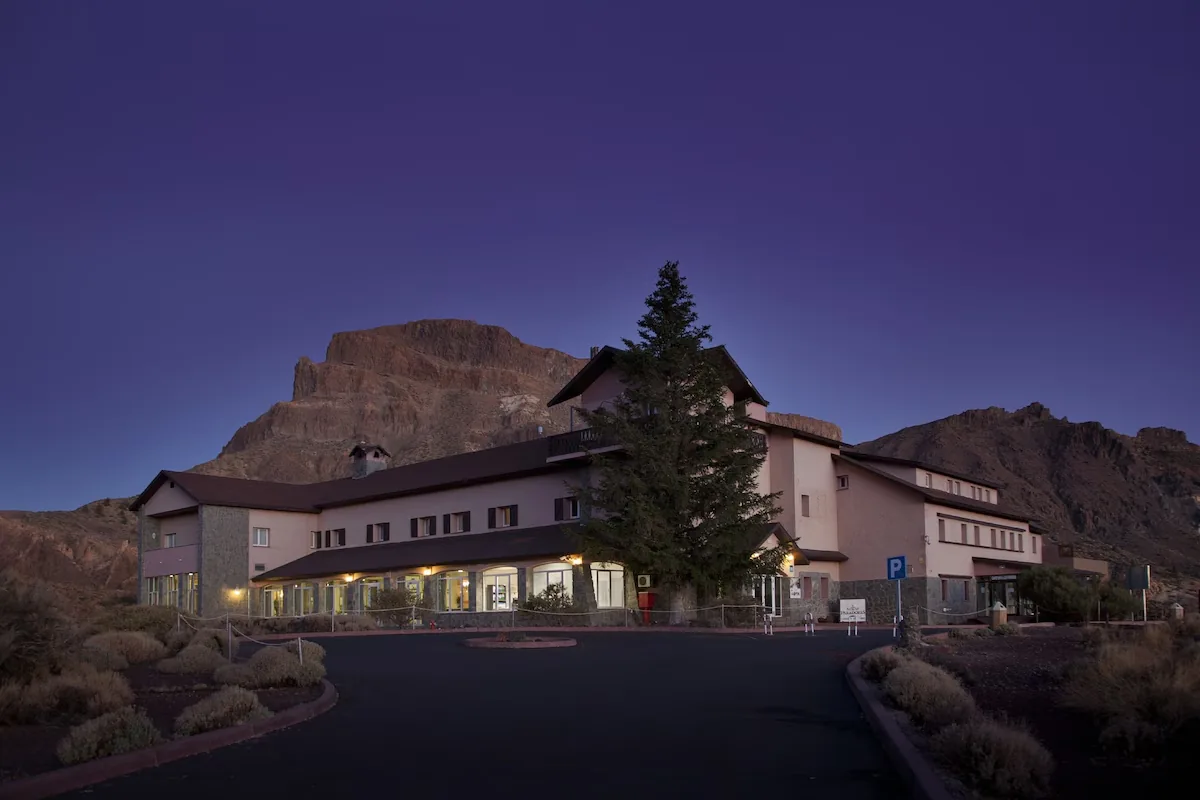
The only hotel inside the national park, a stone mountain lodge at about 2,100 metres opposite the Roques de García and the start of trail 3. Rooms are simple and traditional, with a restaurant serving Canarian dishes, an indoor pool and a sauna. Its location is unbeatable: guests rate it 9.8 out of 10.
Parador de Las Cañadas
The only hotel in the crater, opposite the Roques de García — from around €120.
Hotel Alta Montaña
A small rural hotel with 17 rooms and mountain or sea views in the highest village in the Canaries, rated 9.6/10 — from around €80. Not for young children.
Vilaflor, at around 1,400 metres, is about 40 minutes from the cable car and the starting point for the Paisaje Lunar — see our Tenerife hidden gems. For a resort base, see our best hotels in Tenerife South and Tenerife North guides.
Practical Tips
Book Early
Summit permits are released every Monday at 07:00 and sell out. Plan the rest of your day around your slot.
Layers
It can be 20 °C colder at the summit than on the coast, with wind and, in winter, snow and ice.
Altitude
Move slowly, drink water and come down if you feel dizzy, sick or get a headache.
Sun
The sun is fierce at altitude, with little shade on the trails. Hat, sunglasses and sunscreen are essential.
Check the Weather
Wind closes the cable car and the summit trail. Check the same morning before you drive up.
Staying Connected
Signal comes and goes in the park. A Yesim eSIM keeps your permit, maps and the weather on your phone.
Frequently Asked Questions
Final Verdict
For most visitors, the best day on Teide is an early cable car to the viewpoints, the Roques de García loop and sunset over the clouds. If you want the summit, book the trail 10 permit as soon as dates are released and plan the day around it; if you want it at sunrise, the reopened Altavista refuge is the way. Respect the new fees and rules — they exist because the park was under real pressure — and go prepared for altitude, sun and cold.