Most visitors to Gran Canaria land at the airport, head straight to the south and never see the capital. That's a pity. Las Palmas de Gran Canaria, with around 380,000 residents, is the largest city in the Canary Islands and one of Europe's most underrated city breaks: a colonial old town where Columbus stopped on his way to the Americas, a three-kilometre city beach sheltered by a natural reef, busy markets, good museums and a food scene that locals take seriously.
The city stretches for several kilometres along the north-east of the island, from the old quarter of Vegueta in the south to the La Isleta peninsula in the north, so each barrio has its own character. This guide covers what to see, where to eat and stay, how to get around and the best day trips. If you're deciding between the capital and the resorts, start with our Gran Canaria south vs north guide.
Quick Guide: The Barrios
Las Palmas is long and narrow; knowing its neighbourhoods makes planning much easier.
The Old Town
Cobbled streets, the cathedral, the Casa de Colón and the best museums.
Beach & Promenade
Where most visitors stay: the beach, restaurants and the airport bus.
Green & Elegant
Villas, Doramas Park, the Pueblo Canario and the Santa Catalina hotel.
Local & Authentic
A working-class barrio of fish bars at the northern tip of the city.
Vegueta and Triana: The Historic Heart
Vegueta is where Las Palmas began in 1478, and it has been a protected historic site since 1973. Start in the Plaza de Santa Ana, where the Cathedral of Santa Ana faces a square guarded by bronze dogs — the animals often linked to the islands' name. You can visit the cathedral and its sacred art museum, and climb the tower for a view over the rooftops.
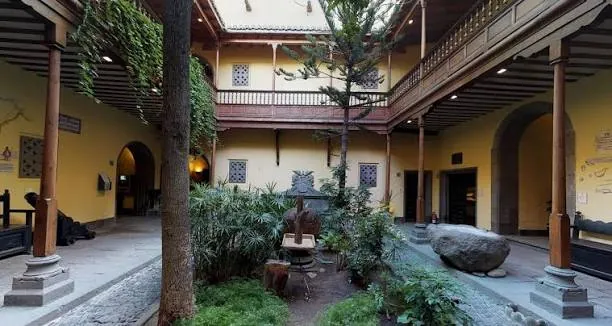
A few steps away, the Casa de Colón occupies the former governor's residence where, according to tradition, Columbus stopped in 1492 on his first voyage to the Americas. Its courtyards, carved wooden balconies and rooms on navigation, cartography and pre-Columbian America make it the city's most atmospheric museum; general entry is around €4, and it's open daily (shorter hours on Sundays). Nearby, the Museo Canario has the best collection on the island's pre-Hispanic inhabitants, and the CAAM contemporary art centre on Calle de los Balcones is free.
Across the main road, Triana is the 19th-century merchant quarter, with its pedestrian high street, modernist façades, the Pérez Galdós house museum and traditional cafés. Finish at the Mercado de Vegueta, the city's oldest food market, for local cheeses, fruit and mojo. On Thursday evenings, the bars of the old town fill up for tapas — the best time to see Vegueta at its liveliest.
Las Canteras: The City Beach
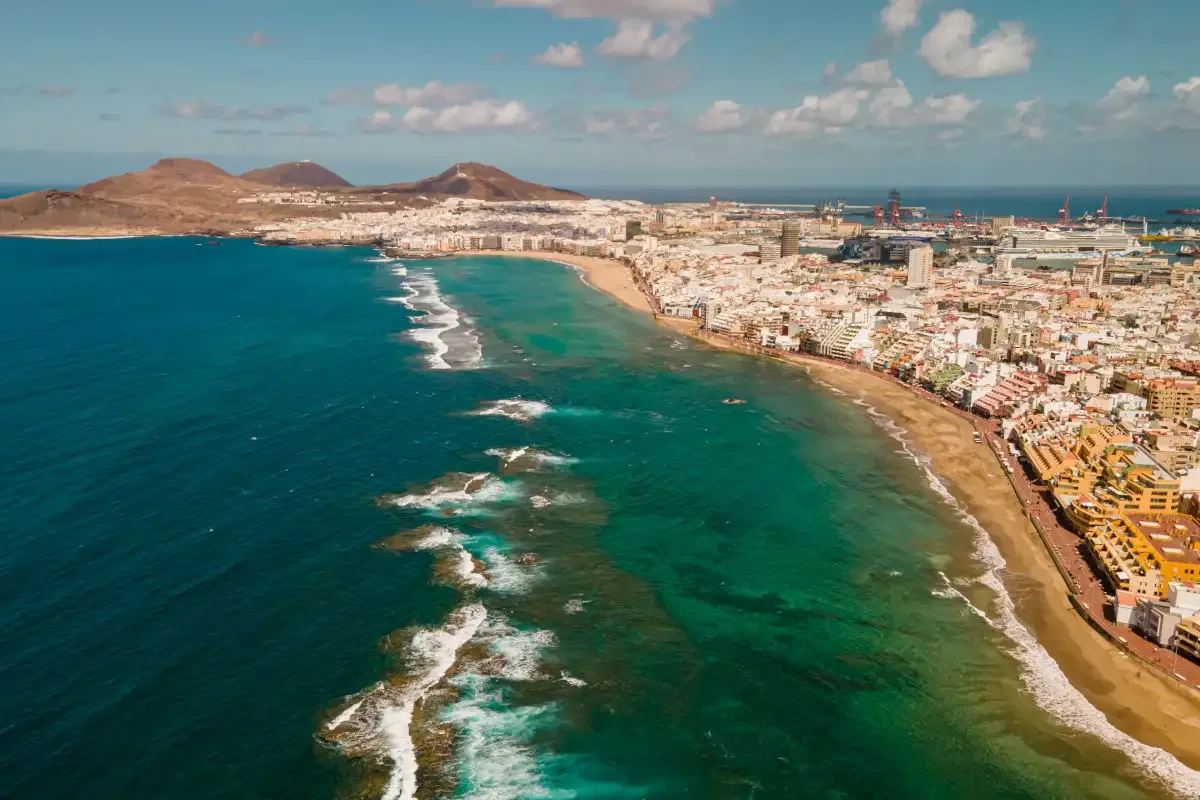
Las Canteras runs for around three kilometres of golden sand along the western side of the city. A natural reef called La Barra, a few hundred metres offshore, shelters much of the beach, so the water in the northern and central sections is often calm enough to swim or snorkel all year. The southern end, La Cícer, is open to the swell and is the city's surf spot, with several surf schools; the Alfredo Kraus Auditorium stands at the very end. The promenade behind the sand is the city's evening meeting place, busiest at sunset.
Before you go. Las Canteras no longer flies the Blue Flag — it lost it in 2023 and the city chose not to reapply — but it's lifeguarded in season and remains one of Spain's best-loved city beaches. For the wild bay of El Confital just beyond the northern tip, see our best beaches guide.
Carnival
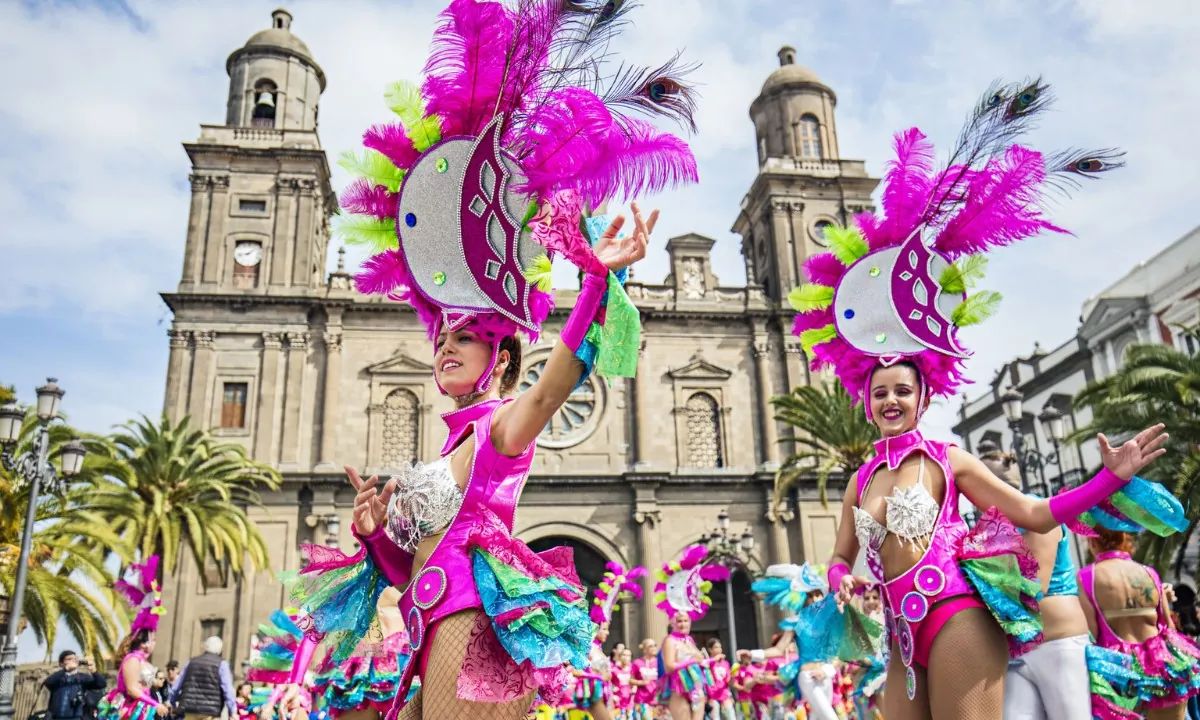
Las Palmas Carnival is one of the biggest in Spain, filling the city for several weeks between February and early March, with dates that change each year around Lent. Expect costume nights in the main square, the election of the Carnival Queen, the famous Drag Queen Gala, the main parade and, at the end, the Burial of the Sardine, a mock funeral that finishes with fireworks. Hotels fill quickly, so book months ahead.
Eating and Drinking
Las Palmas is the best place on the island to eat like a local. Look for papas arrugadas with red and green mojo, sancocho (salted fish with potatoes and mojo), ropa vieja, grilled local fish such as vieja and cherne, and bienmesabe for dessert. The weekday menú del día — two or three courses with a drink — is the best value in the city.
The Mercado del Puerto, an iron market hall near Santa Catalina Park, is now a lively gastro market, best at weekend lunchtimes. For seafood with a view, head to the terraces at La Puntilla, at the northern end of Las Canteras, or into La Isleta, where the bars are local and the fish is fresh. The city's port history has also left it with a good choice of Japanese, Korean and Latin American restaurants.
Doramas Park and the Pueblo Canario
In the garden suburb of Ciudad Jardín, Doramas Park is named after a leader of the island's original inhabitants who resisted the Castilian conquest. Inside the park, the Pueblo Canario recreates a traditional Canarian village square, designed by the artist Néstor Martín-Fernández de la Torre and completed by his brother after his death; it hosts folk music and dance, and the Museo Néstor displays his celebrated Poema del Atlántico. Next door, the grand Santa Catalina hotel is worth a look even if you're not staying.
Getting There and Around
From the Airport
Global bus 60 to San Telmo and Santa Catalina (30–40 min), or a taxi for around €30–35. See our getting around guide.
City Buses
The yellow Guaguas Municipales cover the whole city; rechargeable cards lower the fare. Intercity buses are run by Global.
On Foot
Vegueta and Triana are walkable, and so is the Las Canteras promenade. Between them, take the bus or a taxi.
Driving
Avoid driving in the centre: one-way streets and paid blue-zone parking. Hire a car only for day trips.
Ferries
Naviera Armas sails from the port to Tenerife, Fuerteventura and Lanzarote; the fastest crossing to Tenerife leaves from Agaete.
Staying Connected
A Yesim eSIM keeps maps and bus apps working from the moment you land.
Day Trips from Las Palmas
Teror
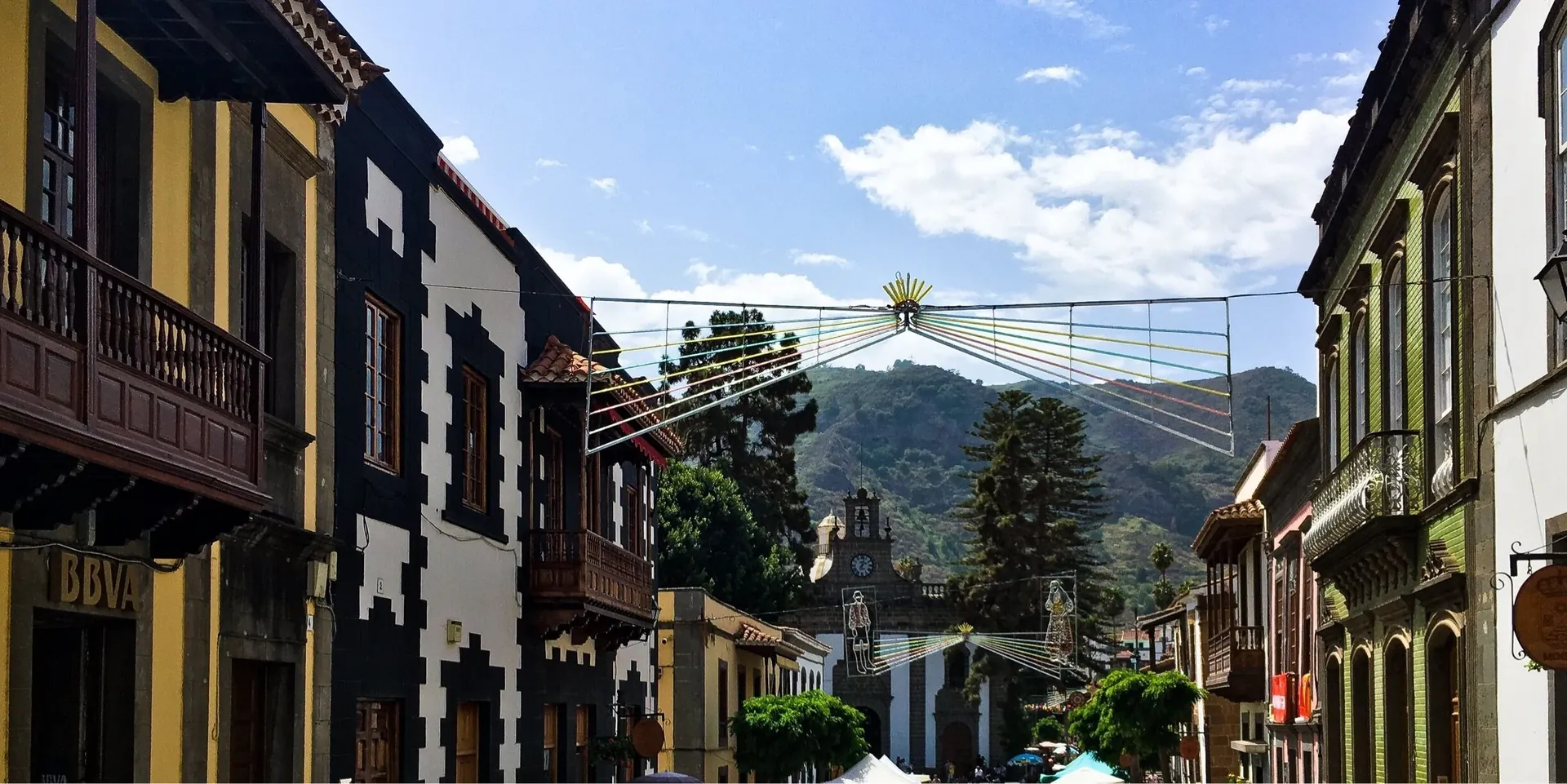
Around half an hour inland, Teror is the most beautiful historic town in the north, with houses of carved wooden balconies around the Basilica of Nuestra Señora del Pino, the island's patron saint. Come on a Sunday morning for the market, or in early September for the island's biggest religious festival.
Bandama, Arucas and the Summit
The Caldera de Bandama, a volcanic crater twenty minutes from the city, is the easiest big view on the island, and Arucas has a striking neo-Gothic church and a rum distillery. With a full day, head up to Pico de las Nieves and Roque Nublo — note that Roque Nublo now needs a reservation between 9:00 and 17:00. Our best hikes guide covers the trails.
For a beach day in the south, Global buses 30 and 50 reach Maspalomas in about an hour — see our Maspalomas dunes guide. For quieter corners of the island, see our hidden gems of Gran Canaria.
When to Visit
Las Palmas is mild all year, with daytime highs of around 21°C in winter and 26°C in late summer. From around June to September, the city often wakes up under a layer of low cloud — the panza de burro — which usually thins during the day. Spring and autumn are the most comfortable seasons, and winter is a good escape from northern Europe. Carnival brings the city's busiest weeks.
Where to Stay in Las Palmas
For most visitors, the Las Canteras and Santa Catalina area is the best base: the beach, the promenade, restaurants and the airport bus are all close. Vegueta and Triana suit culture lovers, and Ciudad Jardín is quiet and green. Our three picks, with full reviews in our best hotels in Gran Canaria guide. For a modern city base by Santa Catalina Park, the AC Hotel Gran Canaria is a good-value alternative.
I. NH Imperial Playa
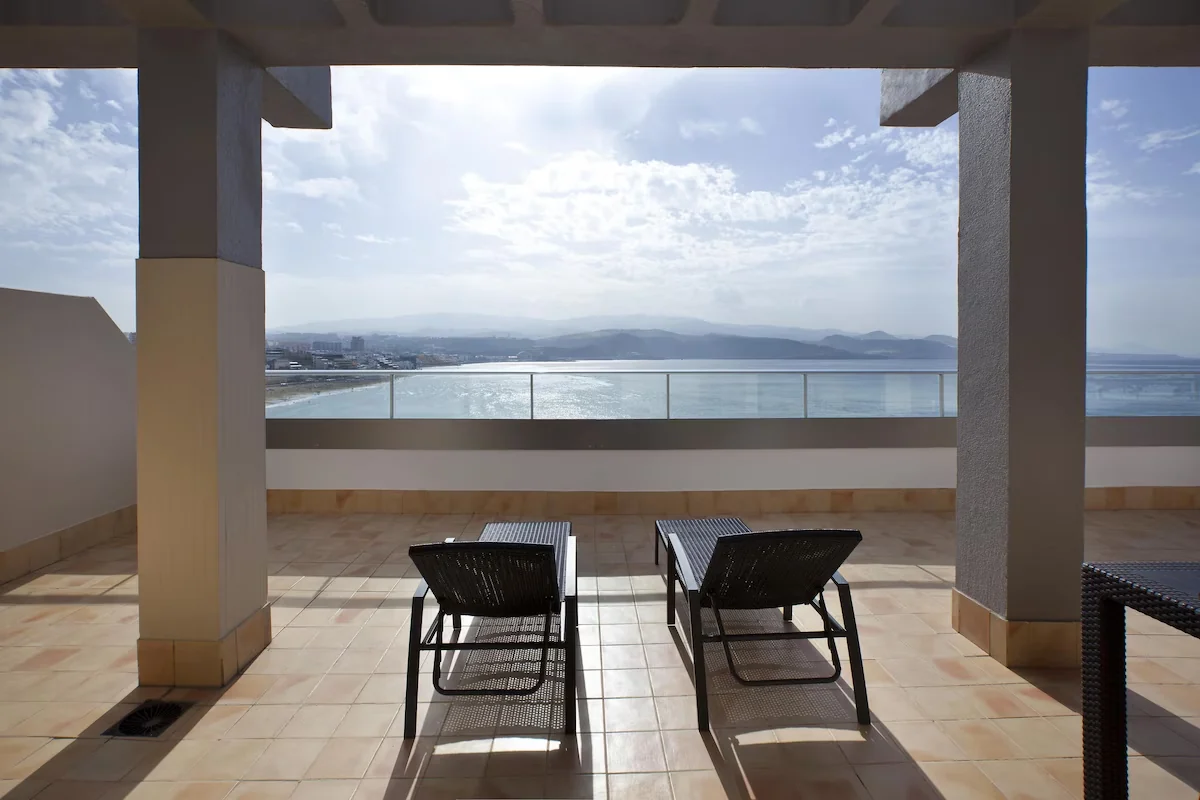
A four-star at the calm La Puntilla end of Las Canteras, a minute from the sand, with many rooms looking over the bay and guest scores of around 8.4 out of 10. The best-value beachfront base in the city.
II. Santa Catalina, a Royal Hideaway Hotel
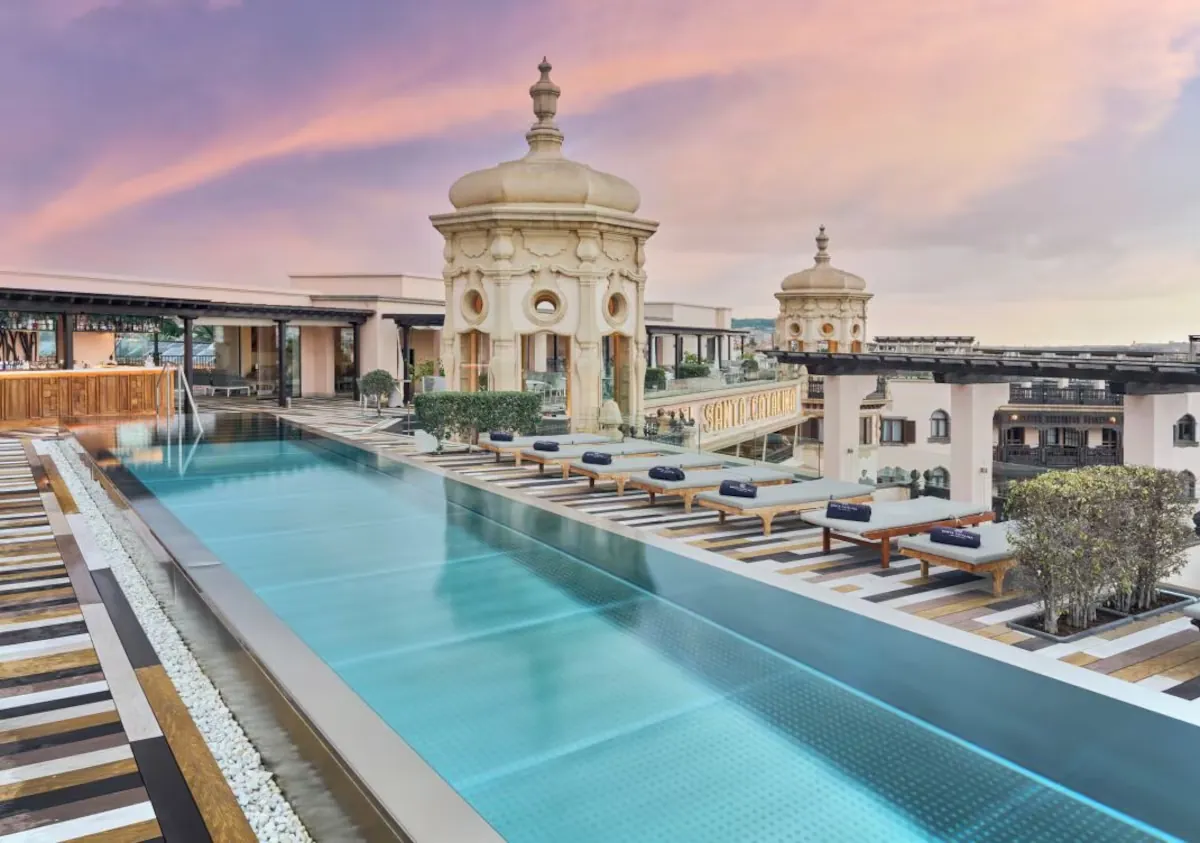
The city's grand historic hotel, in the gardens of Doramas Park since 1890, with Canarian-colonial architecture, a Michelin-starred restaurant and guest scores of around 9.4 out of 10. A short taxi ride from the beach.
III. Hotel Cristina by Tigotan
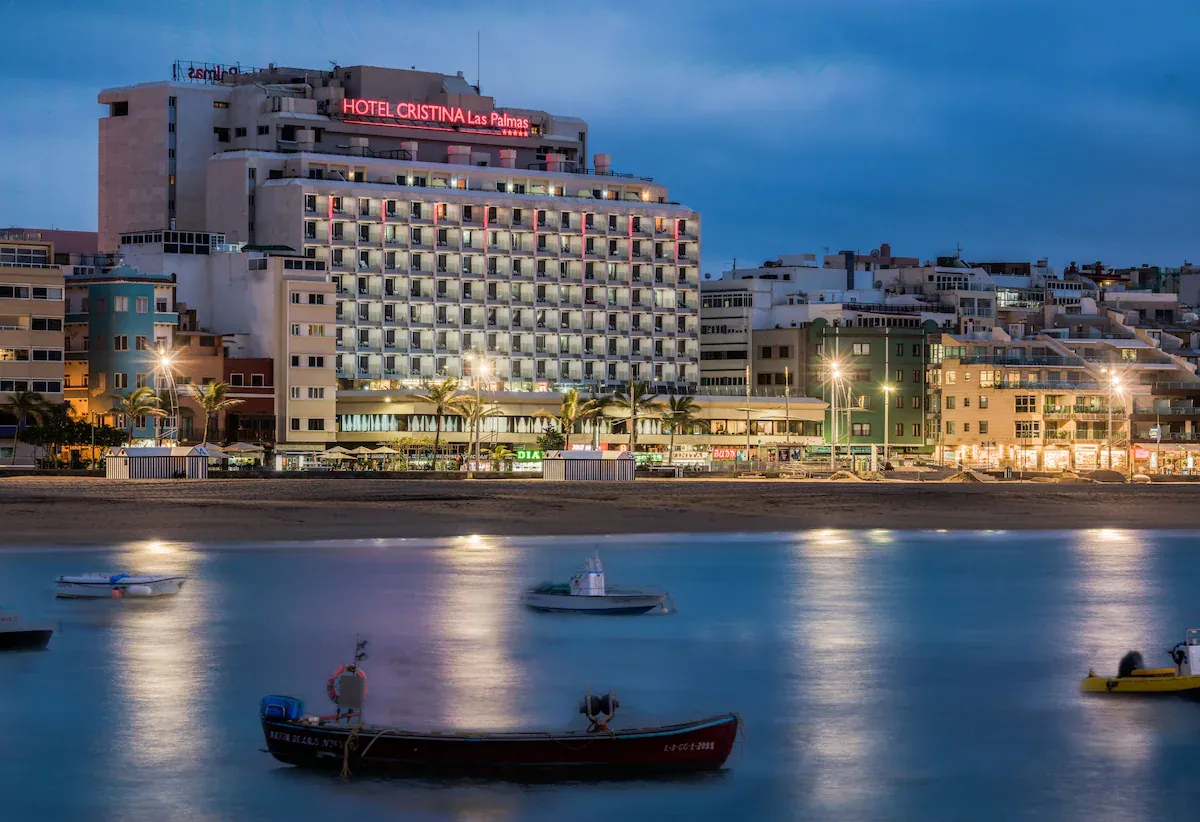
An adults-only (16+) five-star directly on the Las Canteras promenade, with an outdoor pool and terrace above the beach — the best choice for a child-free city-and-beach stay.
Frequently Asked Questions
Final Verdict
Give Las Palmas at least two days: one for Vegueta, Triana and the markets, one for Las Canteras and the evening promenade. Stay by the beach in the Santa Catalina area, eat the menú del día, book a Thursday evening in the old town, and use the city as a base for Teror, Bandama and the summit. Combined with a few days in the south, it shows you both sides of Gran Canaria — our 5 days in Gran Canaria itinerary is built exactly that way.