The question almost every first-time visitor asks about Gran Canaria isn't which beach to visit — it's where to stay. And unlike Tenerife, where the north–south divide is mostly about weather, Gran Canaria's two sides are genuinely different places. The north is Las Palmas, the largest city in the Canary Islands, with a historic quarter, a serious food scene and one of Europe's great city beaches. The south is a coast built for holidays: the Maspalomas dunes, long sunny beaches and resort hotels from Playa del Inglés to Puerto de Mogán.
Neither is better in absolute terms. This guide compares them honestly — weather, beaches, culture, nightlife, transport and cost — and ends with the hotels we'd choose on each side. If you're still deciding between islands, start with Tenerife vs Gran Canaria; for the whole island, see our Gran Canaria guide.
Quick Guide: The Best Areas
Six bases cover almost every kind of trip. Choose the one that matches yours, then jump to the details.
City + Beach
A real city with a reef-protected golden beach and great-value hotels.
History & Food
The colonial old town, its museums, markets and tapas bars.
Quiet North-West
A white fishing village, natural pools and ferries to Tenerife.
Nightlife & Value
The busiest resort, beside the dunes, with the most choice at every price.
Upmarket Resorts
The lighthouse, the dunes and the island's best large resorts.
Families & Couples
Calm sheltered beaches and the prettiest harbour on the coast.
South vs North at a Glance
| Factor | North (Las Palmas) | South (Maspalomas & coast) |
|---|---|---|
| Weather | Mild all year; morning cloud common in summer | Sunnier and a couple of degrees warmer |
| Beaches | Las Canteras, one excellent city beach | Many: Maspalomas, Playa del Inglés, Amadores, Mogán |
| Atmosphere | A working Spanish city | International resort coast |
| Culture & food | Old town, museums, markets, local restaurants | Limited; mostly the dunes and Mogán |
| Nightlife | Local bars and terraces | Playa del Inglés, including the Yumbo Centre |
| Families | Good on the calm stretch of Las Canteras | Excellent: calm beaches, resort pools, boat trips |
| Hotels | City hotels, often better value | Large resorts, all-inclusive, adults-only |
| Airport | Around 25 minutes | Around 25–30 minutes |
| Car needed? | No — buses and taxis cover the city | Not for the coast; useful for the interior |
| Best for | Couples, city lovers, food, longer stays | Sun seekers, families, beach and pool holidays |
The North: Las Palmas and Real Canarian Life
Las Palmas de Gran Canaria, with around 380,000 residents, is the largest city in the archipelago — and it surprises people who arrive expecting a resort. Founded in 1478, its historic quarter of Vegueta has been a protected historic site since 1973, with the Cathedral of Santa Ana, the Casa de Colón — where, according to tradition, Columbus stopped on his first voyage to the Americas — and the Museo Canario, the best collection of pre-Hispanic artefacts on the island. Next door, Triana has the pedestrian shopping street, modernist façades and some of the city's best cafés.
On the other side of the city, Playa de Las Canteras runs for around three kilometres of golden sand. A natural reef called La Barra, a few hundred metres offshore, shelters much of the beach, so the water inside is often calm enough for a long swim even when the Atlantic outside is rough. The promenade behind it is lined with restaurants and terraces, and the sunsets — with Mount Teide on the horizon on clear evenings — are some of the best on the island.
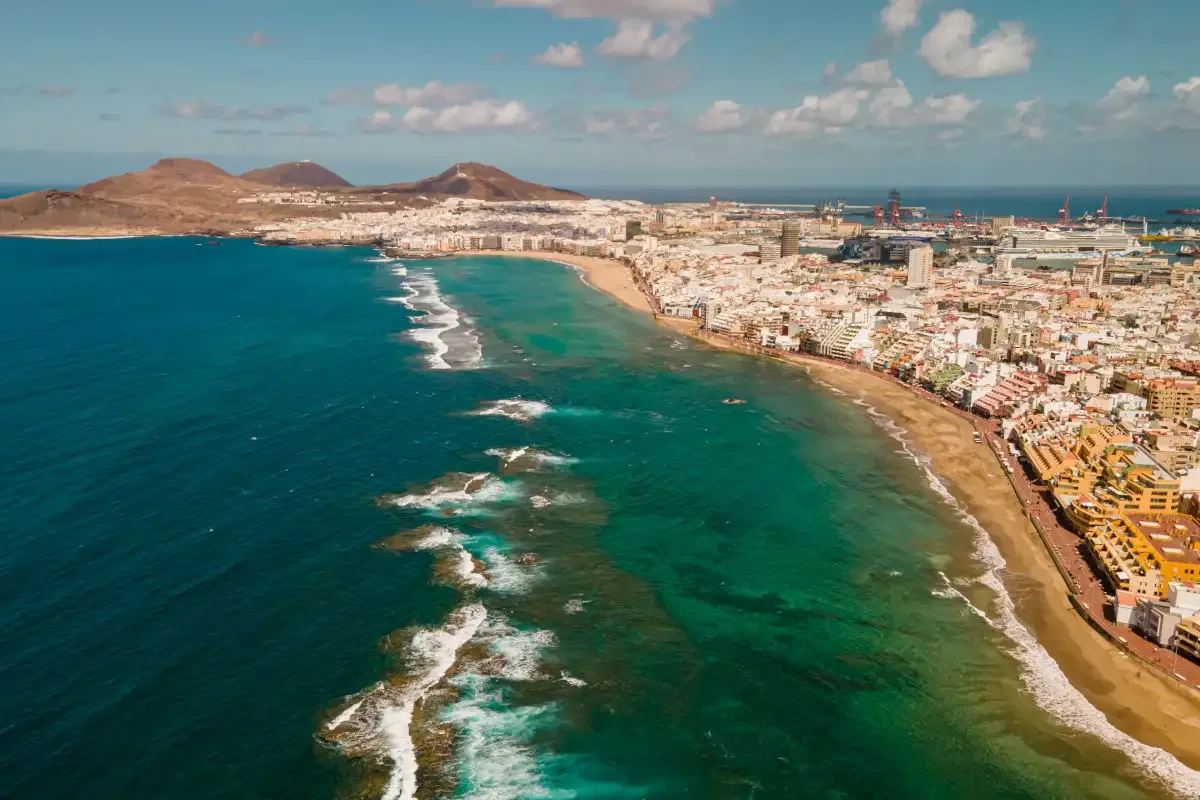
Choose your stretch of Las Canteras. The calmest water is in the northern and central sections, behind the reef — best for families and swimmers. The southern end, around La Cícer, is open to the swell and is the city's surf spot. The northern tip, La Puntilla, has the fishing boats and some of the best seafood terraces.
Las Palmas is also the island's food capital. The Mercado de Vegueta is the city's oldest market, the Mercado del Puerto near Santa Catalina Park has been turned into a lively gastro market, and the tapas bars of the old town are where locals actually eat. If you stay in the north, an evening in Vegueta is the single experience we'd book first. For the full picture, see our Las Palmas city guide.
Beyond the City: Agaete and the North-West
The north coast beyond Las Palmas is the least touristy part of Gran Canaria. Agaete is a white village at the mouth of a green valley — the only place in Europe where coffee is grown commercially — and its harbour, Puerto de las Nieves, has fish restaurants, the natural rock pools of Las Salinas and the ferry to Santa Cruz de Tenerife. The famous Dedo de Dios rock lost its "finger" in Tropical Storm Delta in 2005, but the cliffs are still spectacular at sunset.
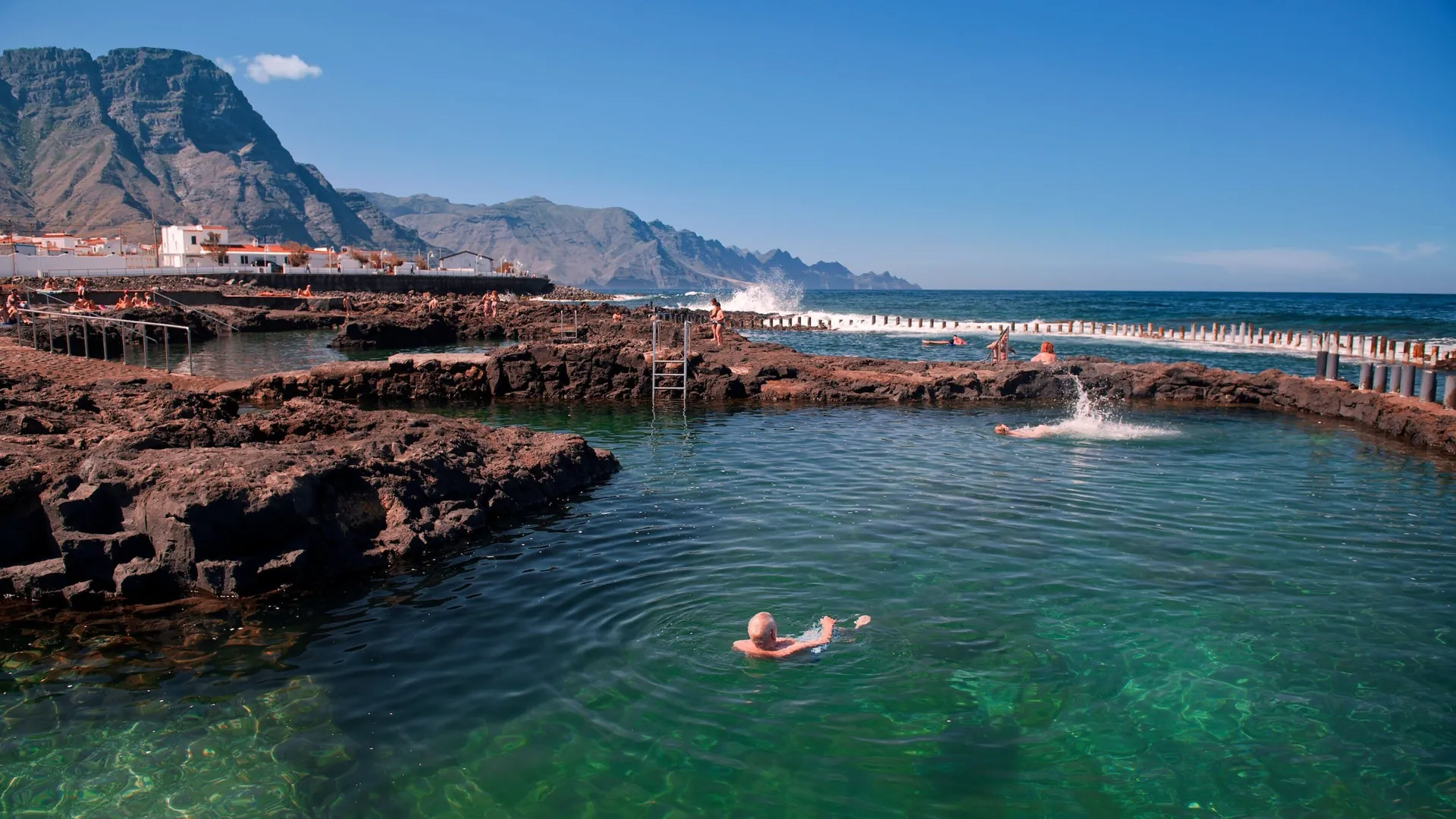
Nearby are Gáldar, with the Cueva Pintada archaeological museum, and the small beach of Sardina del Norte. Agaete suits travellers who want quiet, walking and local life rather than a beach holiday; it's around 40 minutes by car from Las Palmas. The pine forest of Tamadaba Natural Park, above Agaete, is covered in our best hikes in Gran Canaria guide.
Travelling as a family or group? The private tour of the north — Bandama crater, Arucas, a coffee and wine tasting in the Agaete valley and a walk through Vegueta — is our Premium Experience for this guide (see below).
The South: Dunes, Resorts and Reliable Sun
The south of Gran Canaria is where most visitors stay, and it's easy to see why. The mountains in the centre of the island hold back the trade-wind clouds, so the south coast gets more sunshine and a couple of degrees more warmth than the north all year. Most of its resorts were built from the 1960s onwards for winter-sun holidays, and they've been refined ever since.
Its centrepiece is the Maspalomas Dunes, a Special Nature Reserve of around 400 hectares between Playa del Inglés and the lighthouse. Despite the popular story, the sand isn't blown in from the Sahara — most of it comes from the sea — but the landscape is genuinely unlike anything else in Europe. Walk in at sunrise and you could be in a desert; walk out twenty minutes later and you're on a promenade with a coffee. Our Maspalomas dunes guide covers the paths, the rules of the reserve and the best times to visit.
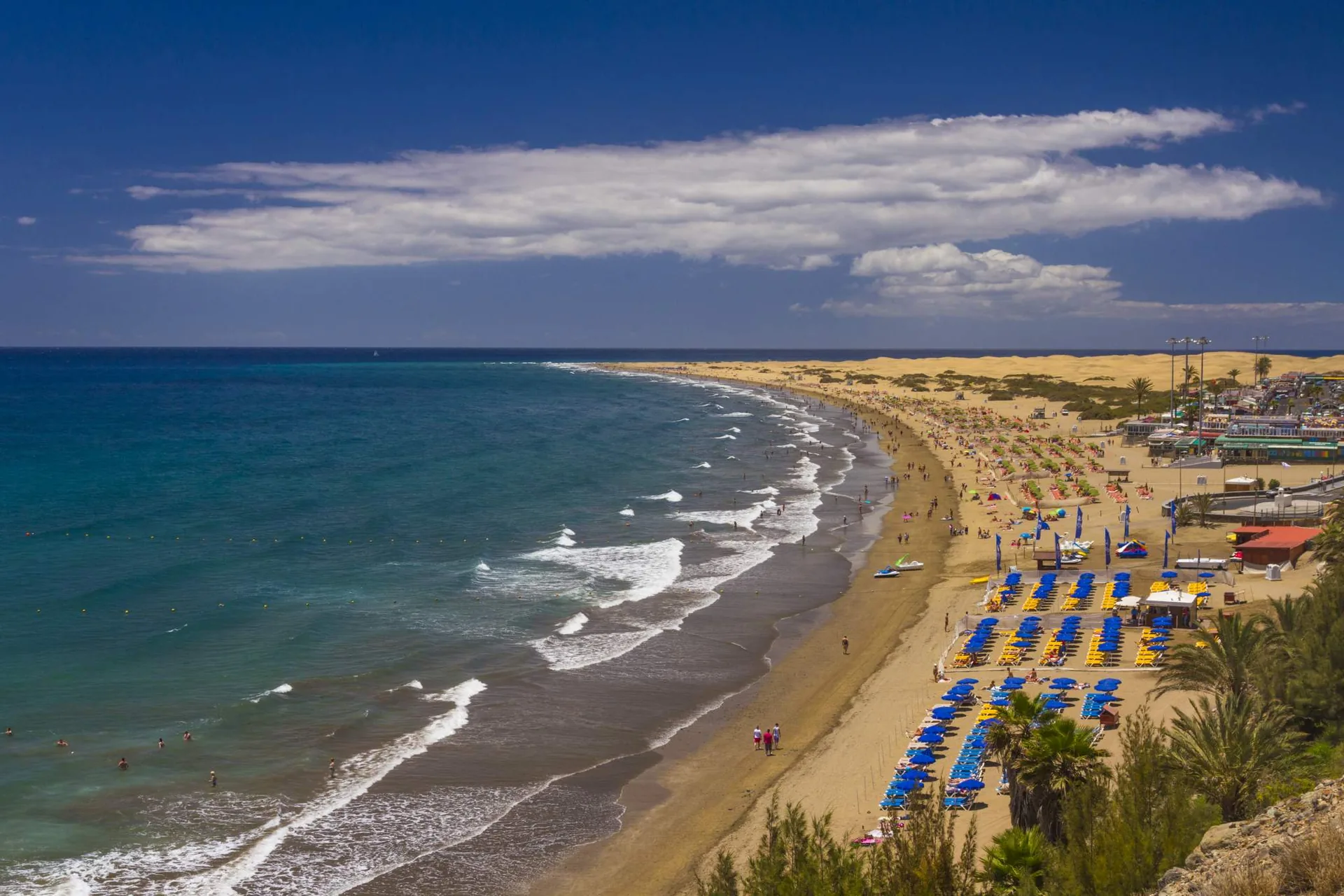
The south isn't one place, though. Playa del Inglés is the busiest resort, with the most hotels, restaurants and nightlife — including the Yumbo Centre, one of Europe's best-known LGBTQ+ nightlife hubs. Maspalomas and Meloneras, around the lighthouse, are calmer and more upmarket, with the island's best large resorts, a seafront promenade and golf. Quieter San Agustín, to the east, suits older couples and anyone who prefers a slower pace.
Amadores, Puerto Rico and Puerto de Mogán
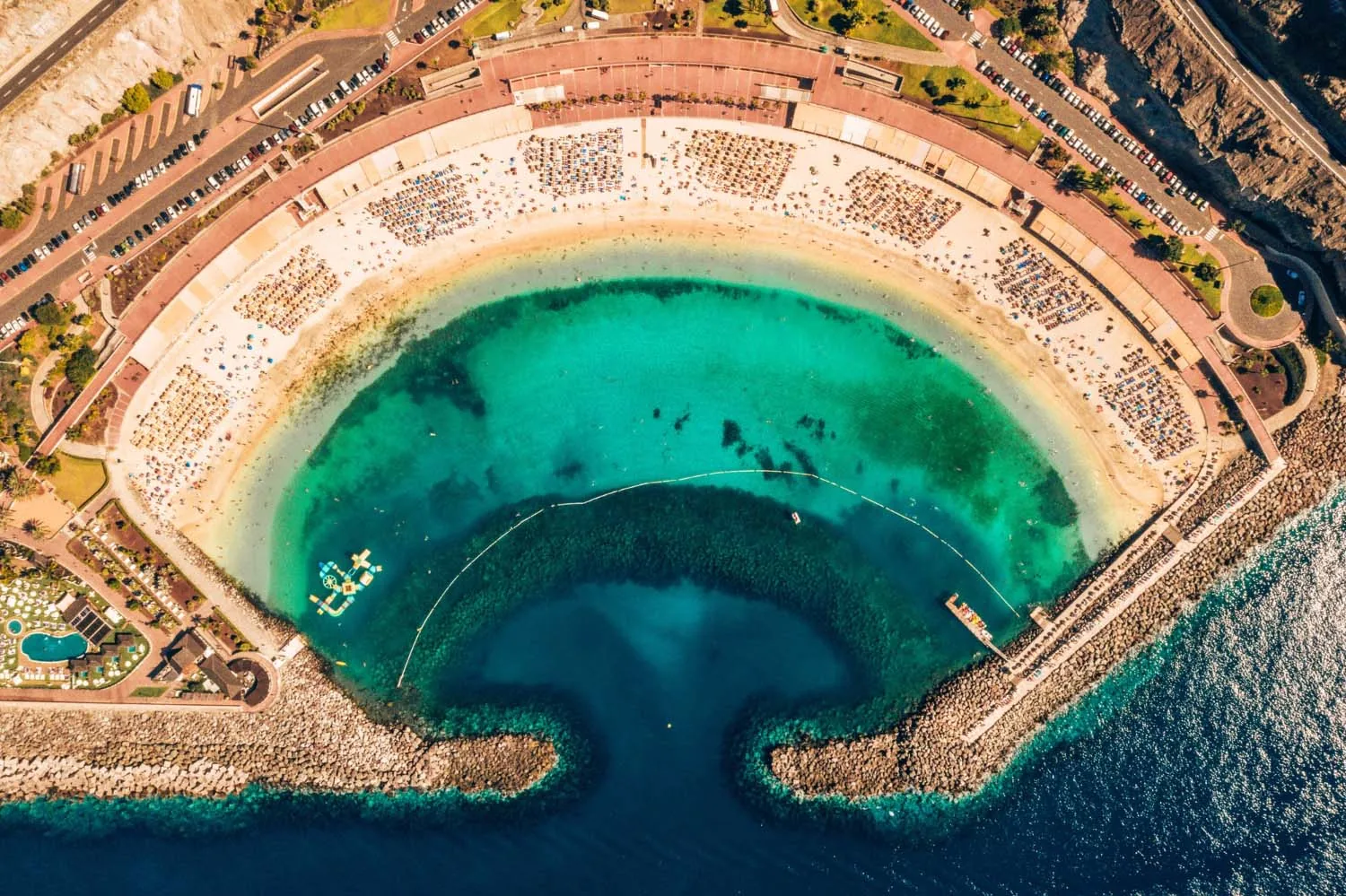
West of Arguineguín, the coast turns into cliffs and small bays. Puerto Rico and Amadores both have man-made, breakwater-sheltered beaches with calm water, which makes them the easiest bases for young children. Amadores, with its light sand and turquoise water, is the more beautiful of the two; Puerto Rico's marina is where most boat trips leave, including the dolphin-watching cruise (from around €36).
At the end of the road, Puerto de Mogán is the prettiest place on the south coast: a small harbour of whitewashed houses, bougainvillea and canals, often called the "Little Venice" of Gran Canaria. It's quieter in the evening, when the day-trippers leave, and suits couples who prefer atmosphere to big resorts. See our Puerto de Mogán guide.
Weather: The Honest Difference
Gran Canaria is mild all year on both sides, but the difference is real. In Las Palmas, daytime highs are around 21°C in winter and 26°C in late summer. The south is typically a couple of degrees warmer and has noticeably more sunshine, because the central mountains block the clouds carried by the trade winds.
What surprises people is the north's summer. From around June to September, Las Palmas often wakes up under a flat layer of low cloud that locals call the panza de burro — "donkey's belly". It usually thins out during the day, and it keeps the city pleasantly fresh, but if your idea of a holiday is unbroken blue sky by the pool, the south is the safer choice. In winter the gap is smaller, and Las Palmas can be an excellent base. Our Canary Islands in winter guide covers what to expect from November to March.
Summer in the dunes. On hot days, the sand of the Maspalomas dunes gets very hot and reflects the heat. Walk them early in the morning or in the last two hours before sunset, take water, and stay on the marked paths that protect the reserve.
Beaches: Quantity vs Character
This is where the south wins on numbers. Its coast is a continuous run of beaches from San Agustín to Puerto de Mogán: the wide, wild Playa de Maspalomas, backed by the dunes (with a designated naturist stretch); the lively Playa del Inglés; the calm, sheltered Amadores and Puerto Rico; and the small harbour beach of Puerto de Mogán.
The north has fewer beaches, but one of them is exceptional. Las Canteras is a genuine city beach — golden sand, a reef-sheltered lagoon, a promenade and everything a city offers within a few minutes' walk. Beyond Las Palmas, the north coast is mostly rocky, with small beaches and natural pools at Sardina del Norte and Agaete that are more about atmosphere than long swims. For every significant beach on the island, see our best beaches in Gran Canaria guide.
Culture, Food and Nightlife
Culture and food: the north, clearly. Las Palmas has the old town, the cathedral, the Casa de Colón, the Museo Canario, the CAAM contemporary art centre and the Pérez Galdós house museum, plus markets and restaurants where locals eat every day. Look out for papas arrugadas with mojo, ropa vieja, fresh vieja and cherne, and bienmesabe for dessert. The south's cultural highlights are mostly natural — the dunes, the palm grove and the La Charca lagoon — with Puerto de Mogán's harbour and its Friday market as the most charming exception.
Nightlife: the south. Playa del Inglés has the island's biggest concentration of bars and clubs, from the Yumbo Centre to beach bars and terraces, and Maspalomas Pride, held every May, is one of the best-known Pride festivals in Europe. Meloneras has a more relaxed scene of cocktail bars along the promenade. Las Palmas has a real local nightlife, but it's built around terraces and bars rather than a resort strip — and it's busiest at weekends.
Don't Forget the Middle
Whichever side you choose, set aside a day for what lies between them: the mountain interior, a landscape of pine forests, volcanic peaks and cliff-top villages. The roads up from the south (GC-60 through Fataga) and the north (GC-15 via Santa Brígida and San Mateo) both lead to Tejeda, one of the "Most Beautiful Villages of Spain", and to the island's highest point, Pico de las Nieves (1,949 m).
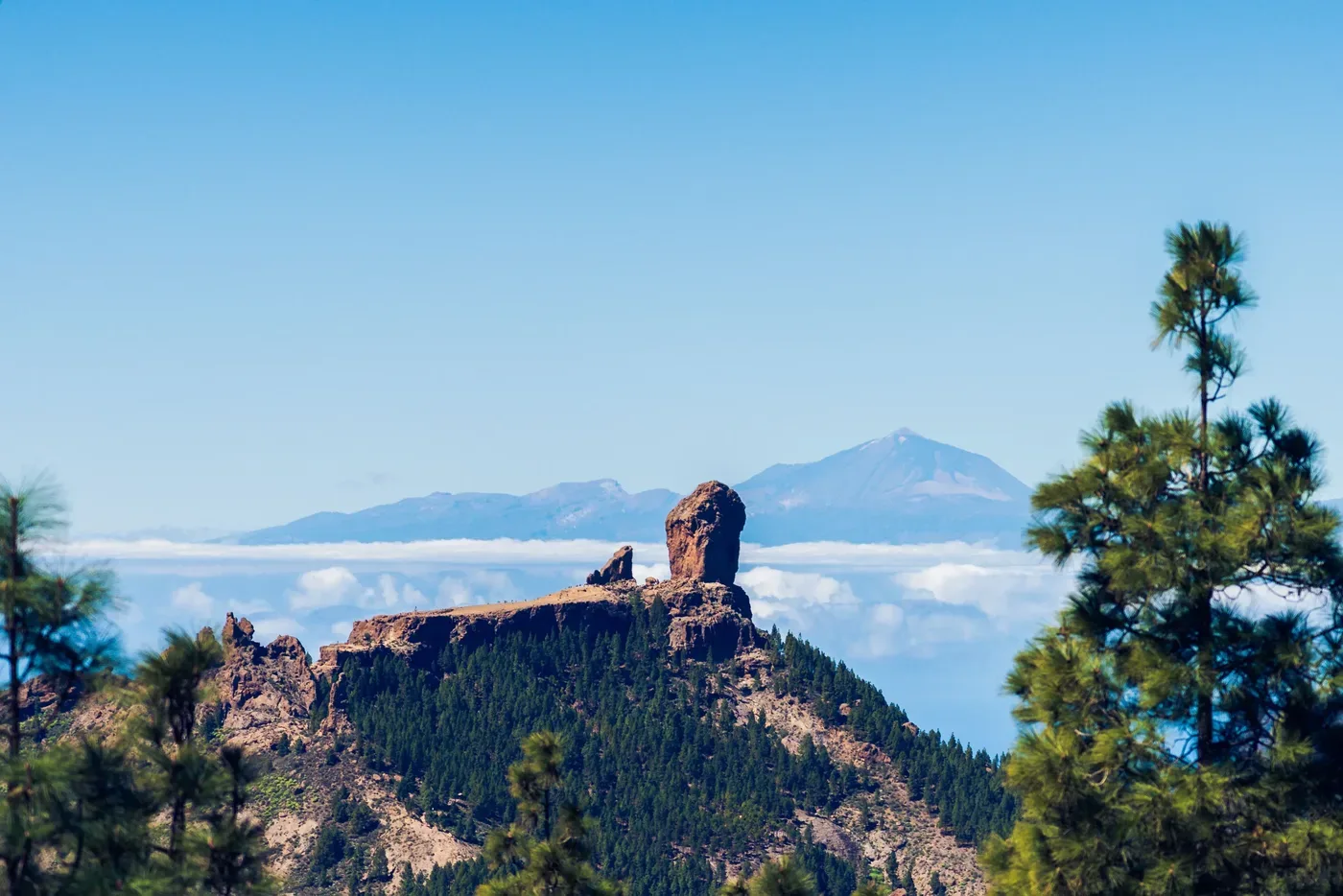
The symbol of the island is Roque Nublo, a volcanic monolith around 67 metres high. Since 2025, access is by reservation only and you can no longer park at the trailhead: you park in Tejeda or at Cruz de los Llanos and take the shuttle bus. Our Roque Nublo guide explains how to book. Nearby, Artenara — the highest municipality on the island — still has cave houses in use, and Risco Caído, a UNESCO World Heritage site since 2019, is close by.
The Honest Verdict
Choose the South if…
you want the most reliable sunshine, resort pools and easy beach days; you're travelling with young children; you want nightlife; or this is your first, short trip to the island. Meloneras and Maspalomas for comfort, Playa del Inglés for value and nightlife, Amadores for families, Puerto de Mogán for couples.
Choose the North if…
you want to experience Gran Canaria as a real place: a Spanish city, its old town, its food and a beautiful city beach, usually at better hotel prices. It suits couples, solo travellers, culture lovers, remote workers and longer stays — especially in winter.
Or do both
On a trip of five days or more, split your stay: two or three nights in Las Palmas, then the rest in the south. The transfer takes under an hour, and you'll see both sides at their best. Our 5 days in Gran Canaria itinerary is built exactly this way; with less time, our 3-day itinerary bases you in the south.
Where to Stay: Our Picks on Each Side
A short list for each side, chosen for location and consistently good guest reviews. Prices are typical starting rates for a double room as seen on Expedia in October 2026 and vary by season. For full reviews, see our best hotels in Gran Canaria guide.
In the North
I. NH Imperial Playa
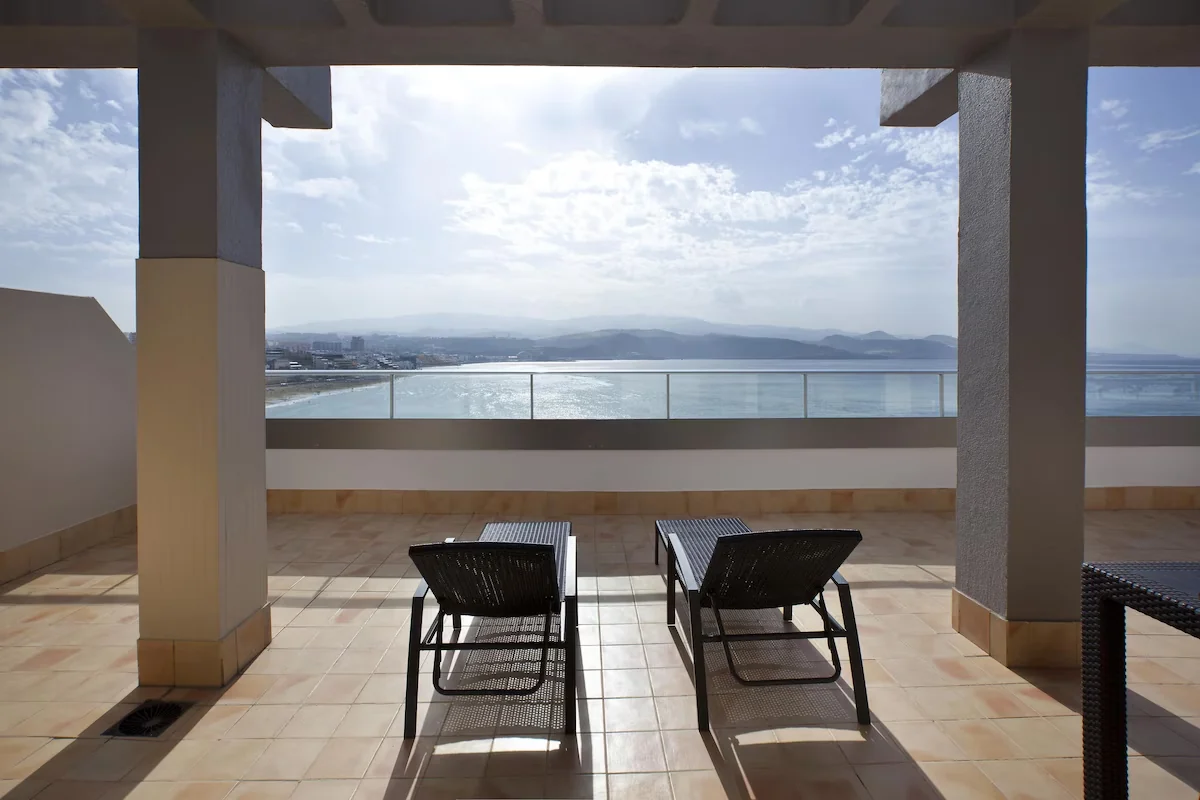
For a city-and-beach stay at a fair price, the NH Imperial Playa is hard to beat: a four-star hotel at the La Puntilla end of Las Canteras, a minute's walk from the sand, with many rooms looking straight out over the bay. Rooms are modern and comfortable, guest scores are around 8.4 out of 10, and the seafood terraces of La Puntilla and Santa Catalina Park are on the doorstep.
II. Santa Catalina, a Royal Hideaway Hotel
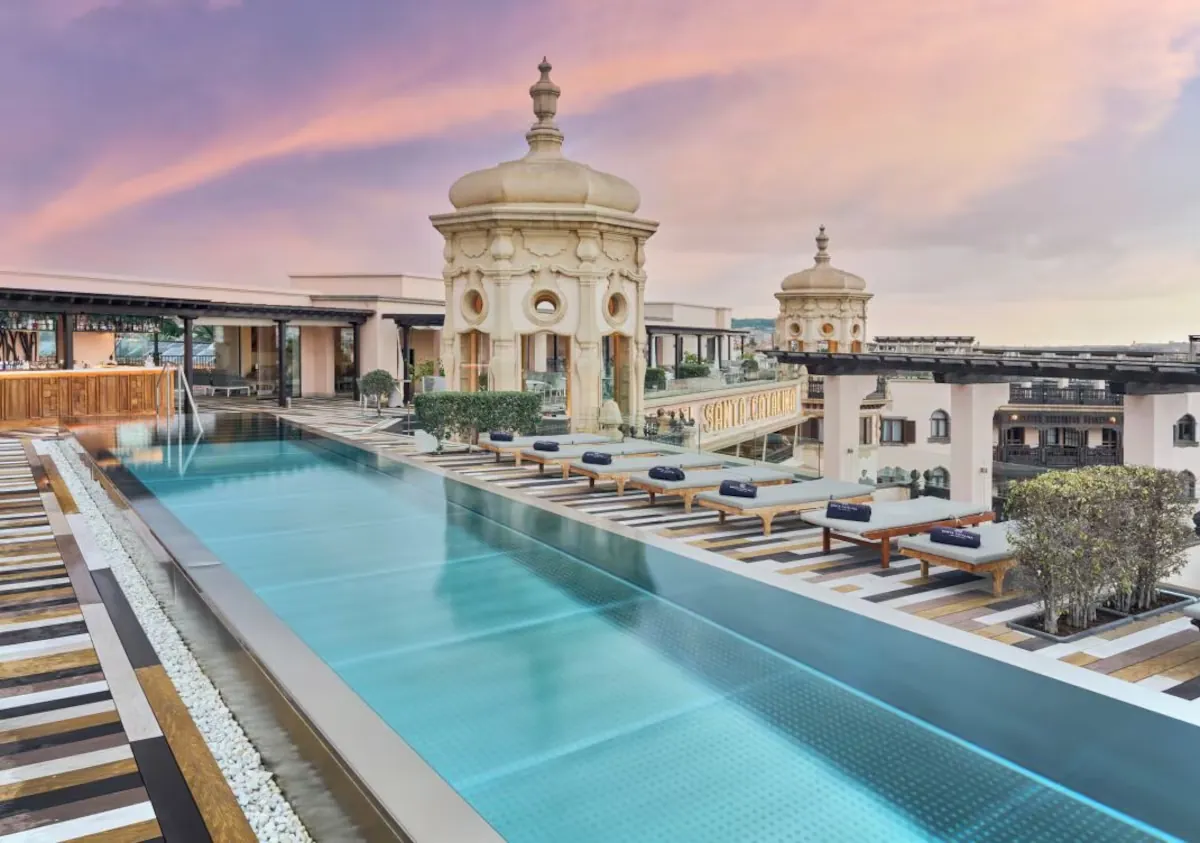
The city's grand dame has welcomed guests since 1890 from the gardens of Doramas Park, with Canarian-colonial architecture, a Michelin-starred restaurant (Poemas by Hermanos Padrón) and guest scores of around 9.4 out of 10. It isn't on the beach — Las Canteras is a short taxi ride away — but for history, gardens and food it's the most characterful stay on the island. Prefer to wake up on the sand without children around? Hotel Cristina by Tigotan is an adults-only (16+) five-star directly on the Las Canteras promenade, from around €155.
III. Hotel Puerto de las Nieves, Agaete
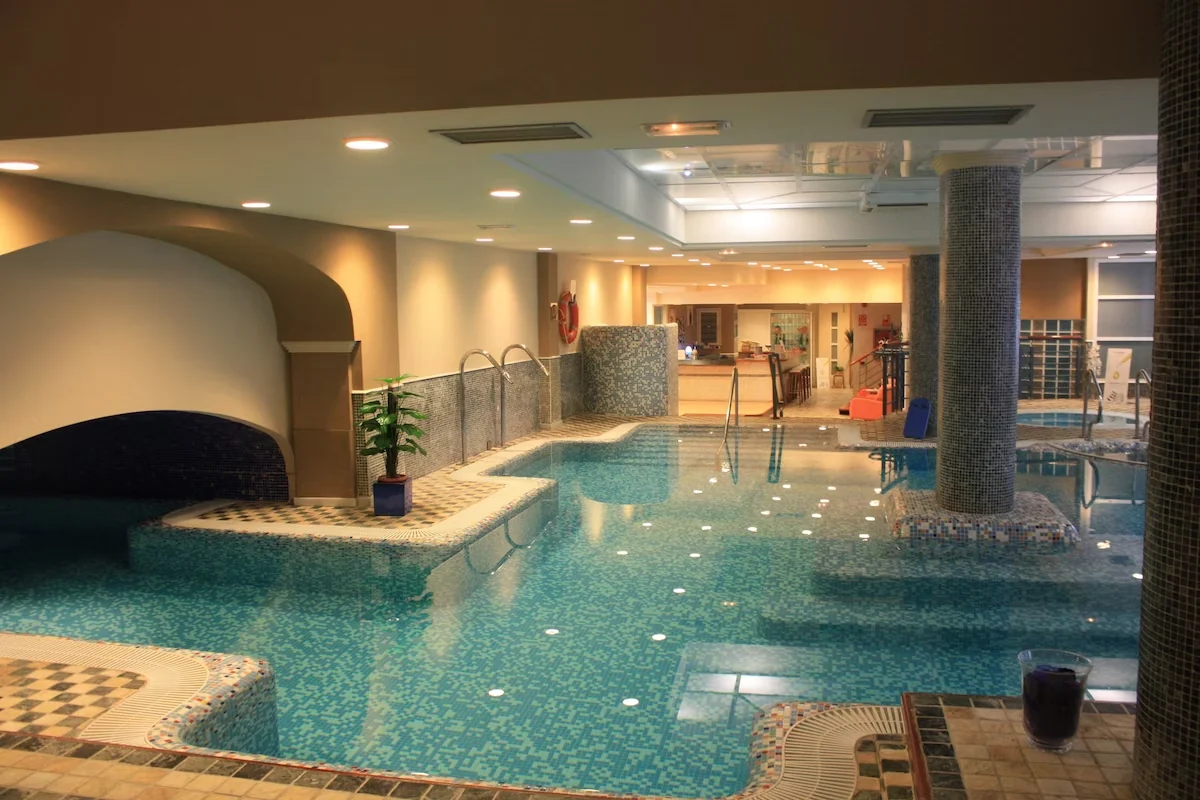
For the quiet north-west, this four-star spa hotel sits a few minutes' walk from the harbour of Puerto de las Nieves, its fish restaurants and the ferry to Tenerife. It has a full-service spa with an indoor pool, a seasonal outdoor pool and guest scores of around 9 out of 10. It's a base for walking, local food and slow days rather than beach life — and one of the best-rated hotels on the north coast.
In the South
IV. Lopesan Costa Meloneras Resort & Spa
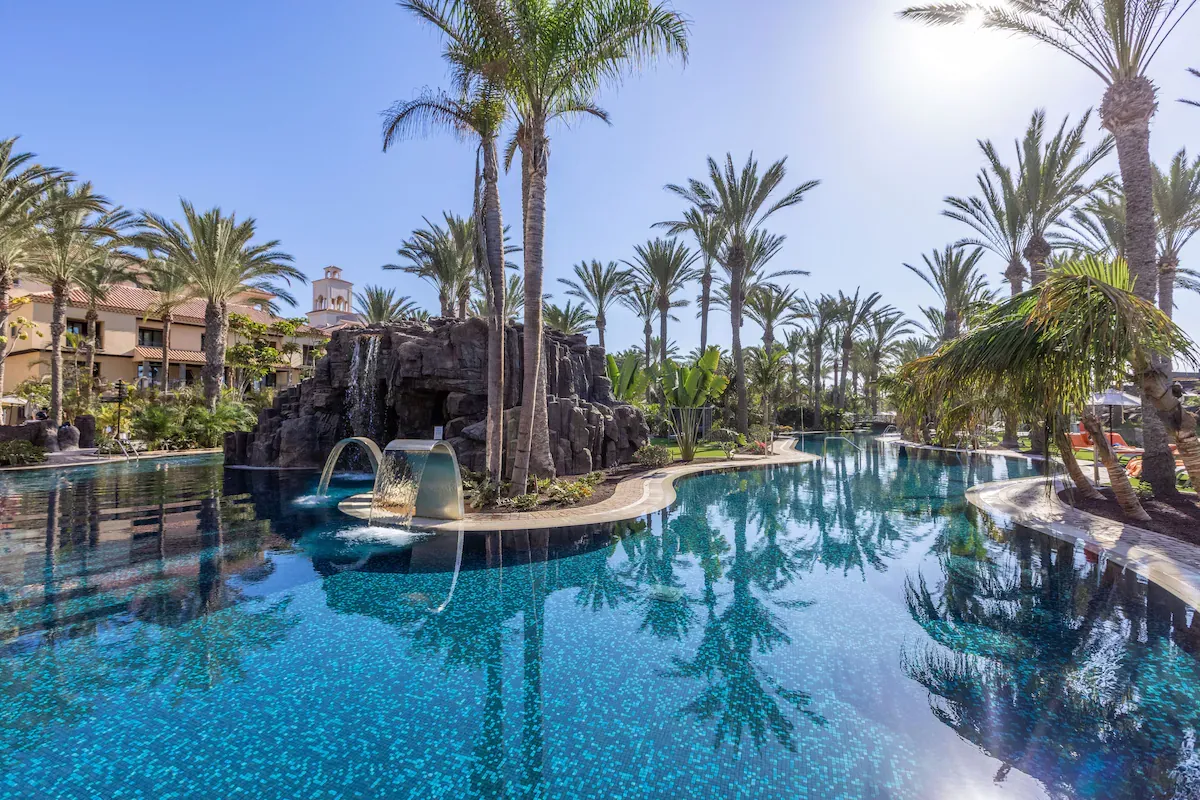
The classic big Gran Canaria resort done well: colonial-style buildings around palm gardens and lagoon pools, right on the Meloneras promenade and a walk from the lighthouse and the dunes. Guest scores of around 9.2 out of 10 from more than a thousand reviews make it one of the most consistently praised resorts on the island, and most tours pick up at the door. If budget is no object, the Seaside Grand Hotel Residencia nearby is the island's most exclusive hotel.
V. Gloria Palace Amadores Thalasso & Hotel
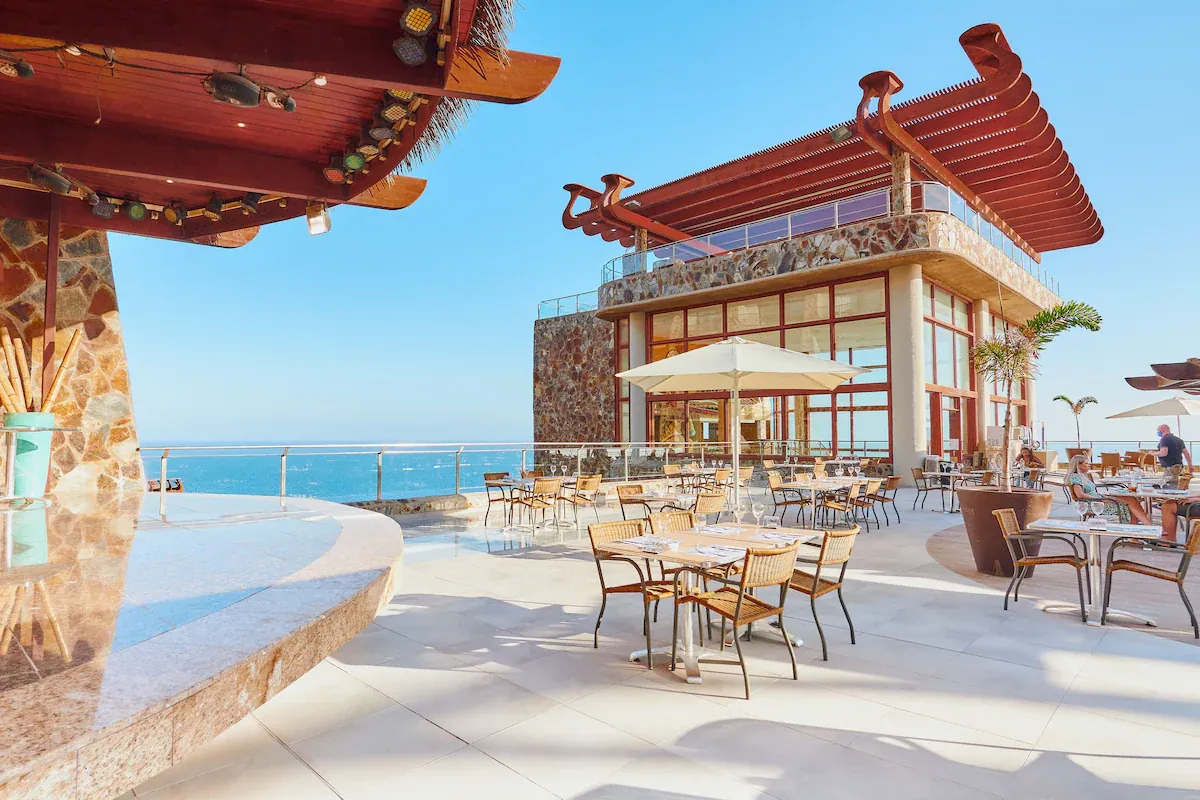
Perched on the cliff above Amadores beach, the Gloria Palace pairs some of the best sea views on the coast with a large thalassotherapy centre and easy access to the calmest swimming in the south. It's a strong, good-value choice for families and couples who want views and spa time more than nightlife. For a design-led, adults-only alternative closer to the action, see Bohemia Suites & Spa in Playa del Inglés.
VI. Hotel Cordial Mogán Playa
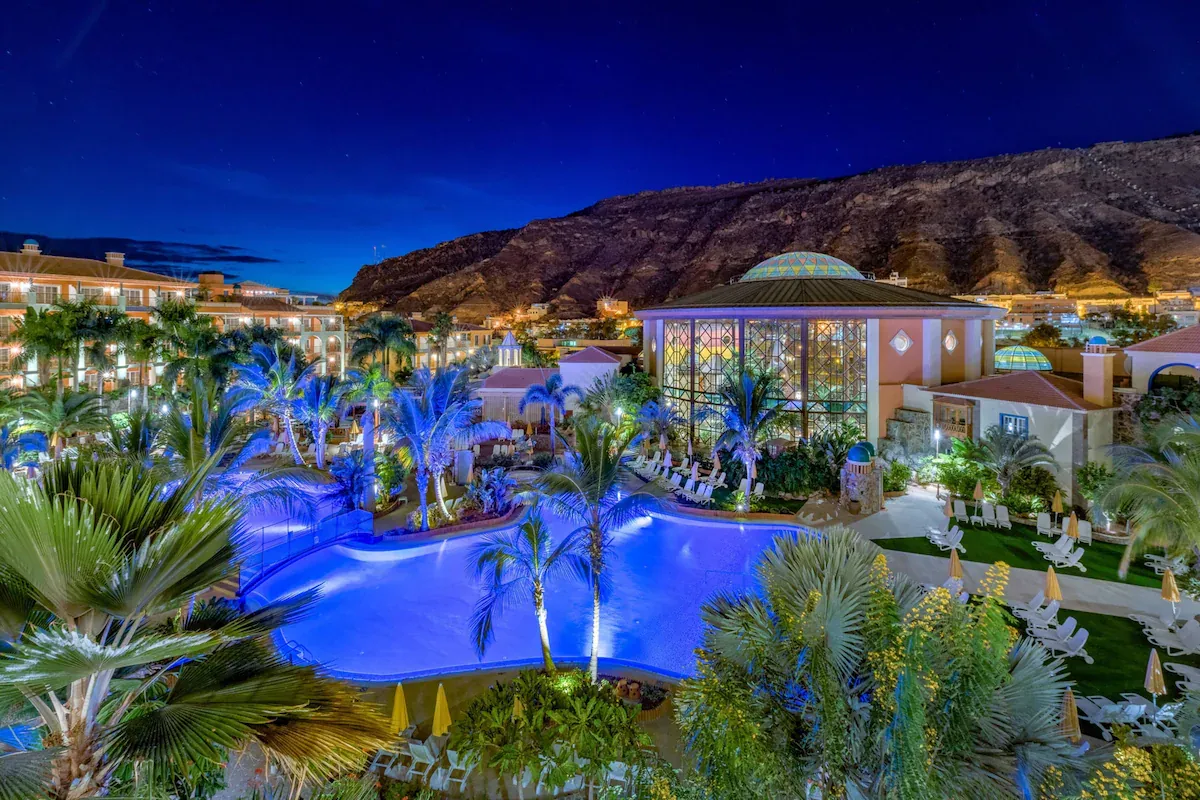
In Puerto de Mogán, the Cordial Mogán Playa is built like a Canarian village around tropical gardens, a few minutes' walk from the beach and the harbour. It suits travellers who want character and a relaxed pace over resort scale. For a contemporary five-star a little inland, the Radisson Blu Resort & Spa Mogán is the alternative.
More options for every budget in our best hotels in the south, luxury hotels and adults-only hotels guides.
Practical: Getting There and Getting Around
The Airport
Gran Canaria Airport (LPA) is on the east coast, around 25 minutes from Las Palmas and 25–30 from Playa del Inglés, Maspalomas and Meloneras.
North to South by Bus
Global line 30 (via Playa del Inglés) and the direct line 50 link Las Palmas and Maspalomas in roughly an hour. See our bus guide.
By Car
About 55 km and 45 minutes on the GC-1. A car is most useful for the interior and the north-west: compare car hire.
Getting to Agaete
Around 40 minutes by car from Las Palmas on the GC-2; Global buses also run along the north coast.
Island Hopping
Ferries from Agaete and Las Palmas reach Tenerife: see our island hopping guide.
Staying Connected
A Yesim eSIM keeps maps working in the mountains, where coverage can be patchy.
Frequently Asked Questions
Final Verdict
If you want sun, beaches and an easy holiday, stay in the south — Meloneras or Maspalomas for comfort, Amadores for families, Puerto de Mogán for atmosphere. If you want a real place with culture, food and a beautiful city beach, stay in Las Palmas. And if you have five days or more, don't choose: split your stay, spend one day in the mountains in between, and you'll understand why Gran Canaria is called a continent in miniature.