Lanzarote's coastline is a geological argument. Around a quarter of the island was buried by the lava of the 1730–1736 Timanfaya eruptions, and yet around almost every headland those same volcanic cliffs give way to beaches of extraordinary beauty: golden coves against turquoise water, wild surf beneath towering cliffs, white sand between black lava and jet-black sand beside salt pans.
UNESCO declared the whole island a Biosphere Reserve in 1993, and that decision has helped preserve a coastline that could easily have disappeared under resort development. Papagayo is protected, Famara remains wild and Janubio still looks untouched. The catch is that many of the best beaches are only practical by car, often at the end of a dirt track. This guide organises the island's twelve best beaches by coast, with honest notes on swimming conditions, facilities and access.
Quick Decision Guide
Short on time? Match your priority to our pick, then scroll down for the full review.
Most Beautiful
The postcard cove of the south, with calm, clear water between dark cliffs.
Best for Space & Families
The largest Papagayo cove, with gentle entry into the water and parking close by.
Most Dramatic
Five kilometres of wild surf beach below the Risco de Famara cliffs.
Best Hidden Gem
White sand and shallow natural lagoons among black lava near Órzola.
All 12 Beaches at a Glance
| Beach | Coast | Sand | Swimming | Facilities | Best For |
|---|---|---|---|---|---|
| Playa de Papagayo | South | Golden | Calm | Beach bar above | Scenery & snorkelling |
| Playa Mujeres | South | Golden | Calm | None | Space & families |
| Playa Blanca & Playa Dorada | South | Golden | Calm | Full | Families |
| Playa Grande | East | Golden | Calm | Full | Resort life & diving |
| Playa de Matagorda | East | Golden | Mostly calm | Good | Windsurfing |
| Playa Honda | East | Golden | Calm | Good | Local families |
| Playa del Reducto | East (Arrecife) | Golden | Calm | Good | City beach |
| Playa de las Cucharas | East | Golden | Calm–moderate | Full | Watersports |
| Playa de Famara | North-west | Golden | Waves & currents | In the village | Surfing & walks |
| Caletón Blanco | North | White | Calm lagoons | None | Children & snorkelling |
| Playa de las Conchas | La Graciosa | Golden | Strong currents | None | Remote beauty |
| Playa de Janubio | South-west | Black | Not recommended | None | Photography |
Swimming conditions change with wind and swell. Always check the flags where there are lifeguards, and take extra care on the north and west coasts.
The South: Papagayo and Playa Blanca
The south of Lanzarote has the calmest water and the most famous beaches on the island. East of the resort town of Playa Blanca, the Monumento Natural de Los Ajaches protects a string of golden coves known collectively as the Playas de Papagayo, looking across the strait to Lobos and Fuerteventura.
I. Playa de Papagayo
Los Ajaches Natural Monument · The Postcard CoveNo beach in Lanzarote is photographed more often than Playa de Papagayo, and with good reason. This small crescent of fine golden sand, around 120 metres long, sits between two dark volcanic headlands that shelter it from the trade winds, so the water is usually calm and startlingly clear — ideal for swimming and snorkelling. It's the cove that appears on almost every Lanzarote postcard.
Access is along an unpaved track from Playa Blanca, with a small vehicle fee (around €3) at the entrance to the natural monument. There's a simple beach bar on the clifftop above the cove, but no sunbed hire, so bring shade and plenty of water. In summer, arrive before 10:00, when the car parks start to fill. Our Papagayo beach guide compares all the coves in detail.
II. Playa Mujeres
Los Ajaches Natural Monument · The Largest Papagayo CovePlaya Mujeres is the first cove you reach on the Papagayo track and, at around 400 metres long, the largest of them. Its gentle slope into calm water and the car park just behind the beach make it the most practical choice for families, and even on busy days there's usually space to spread out. The rocks at either end are good for snorkelling.
There are no facilities, so bring food, water and shade — the nearest beach bar is at Playa de Papagayo. Beyond the main coves, smaller beaches such as Playa de la Cera, Caleta del Congrio and Playa del Pozo are quieter; some are popular with naturists. You can also reach Playa Mujeres on foot along the coast from Playa Blanca in around 40–45 minutes.
III. Playa Blanca & Playa Dorada
Playa Blanca Resort · The Family PromenadeThe town beaches of Lanzarote's southernmost resort are thoroughly civilised: golden sand, gentle water, sunbeds for hire, showers and a promenade of restaurants running behind. The central town beach is small, so many families prefer Playa Dorada to the east, a larger sheltered bay in front of several of the resort's best hotels. The promenade runs along the whole seafront, from Playa Flamingo in the west to Marina Rubicón in the east.
An evening walk here, with Fuerteventura across the narrow strait, is one of Lanzarote's simplest pleasures. Ferries to Corralejo leave from the town's harbour in around 25 minutes, making a day trip to Fuerteventura easy — see our Lanzarote vs Fuerteventura guide.
The East Coast: Resort Beaches
The east coast, between Puerto del Carmen and Costa Teguise, is where most of the island's resort beaches are found: golden sand, promenades, lifeguards, sunbeds and restaurants on the seafront. It's also the easiest coast to explore without a car.
IV. Playa Grande, Puerto del Carmen
Puerto del Carmen · The Liveliest BeachThe showpiece beach of Lanzarote's main resort runs for over a kilometre along a lively seafront. Playa Grande is the island at its most resort-like — wide golden sand, a promenade of restaurants and bars, and watersports from pedal boats to diving. If you want organised beach fun with everything on hand, this is your beach, and it continues east into Playa de los Pocillos, which is quieter and more spacious.
The western end, towards the old harbour (La Tiñosa), is the most atmospheric part of Puerto del Carmen, and the reef and lava formations just offshore make it one of the best diving areas in the Canaries. It's also where you'll find Hotel Fariones, one of the island's best beachfront hotels.
V. Playa de Matagorda
Between Puerto del Carmen and the Airport · Windsurfing BeachMatagorda is the long, breezy beach between Los Pocillos and the airport, with a quieter, more residential feel than Playa Grande. The consistent trade winds make it popular for windsurfing, and the flat promenade is great for a long walk or a run along the seafront. It's a good choice if you want space rather than bustle, and planes landing at the nearby airport are an unexpected attraction for children.
VI. Playa Honda
San Bartolomé · The Locals' BeachBetween the airport and Arrecife, Playa Honda is firmly a local beach — and all the better for it. Its long sweep of golden sand and shallow, gentle water is ideal for families with young children, and the promenade behind it has restaurants serving honest Canarian food at prices well below the resorts. It faces east, so mornings are calm and sunrises spectacular.
VII. Playa del Reducto, Arrecife
Arrecife · The City BeachMost visitors skip the capital in favour of the resorts — their loss. Playa del Reducto is Arrecife's main beach, a curve of golden sand protected by a reef and breakwater that keeps the water calm and shallow. The atmosphere is genuinely local, with families, swimmers and paddleboarders, and the historic centre, the Charco de San Ginés and the International Museum of Contemporary Art, set up by César Manrique in the Castillo de San José, are all nearby.
VIII. Playa de las Cucharas, Costa Teguise
Costa Teguise · The Watersports HubCosta Teguise's main beach has been a windsurfing hub for decades. Reliable trade winds and a sheltered bay make it ideal for learning, and several schools offer windsurfing, kitesurfing and paddleboarding lessons. The resort behind it is quieter and more residential than Puerto del Carmen, and the beach is well kept and rarely overcrowded. It's also home to Paradisus Salinas, with its César Manrique-inspired gardens.
The North: Famara, Caletón Blanco and La Graciosa
The north of Lanzarote is wilder, windier and far less developed than the south and east. Its beaches face the open Atlantic, and some are among the most spectacular in the Canary Islands — but swimming conditions demand respect.
IX. Playa de Famara
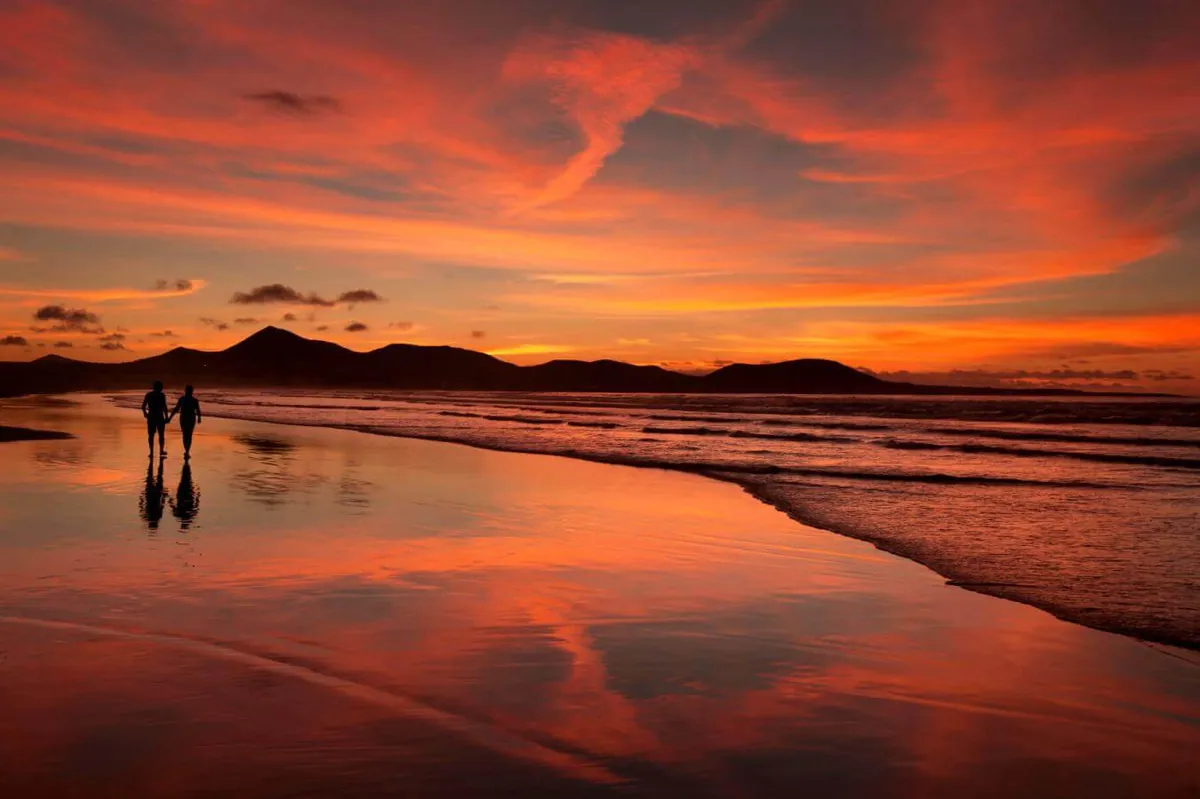
Famara is Lanzarote's soul beach. Backed by the Risco de Famara, a wall of cliffs rising to more than 600 metres along the north-west coast, this long, wild strand of golden sand has a raw beauty that has no equal on the island. The Atlantic swell arrives here almost uninterrupted, creating consistent waves that attract surfers year-round, and the small village of Caleta de Famara has surf schools, board hire and simple fish restaurants.
Swimming can be dangerous because of strong currents and waves: always respect the flags, and stay in the shallows unless conditions are calm. For watching surfers, a long walk at low tide or the late-afternoon light on the cliffs, Famara is unforgettable. Our best hikes in Lanzarote guide covers the walks along the Risco.
X. Caletón Blanco
Near Órzola · White Sand Among Black LavaOn the north-east coast just south of Órzola, Caletón Blanco is one of the most beautiful and unusual beaches on the island: white sand scattered between black lava flows, with shallow, turquoise natural lagoons protected from the open sea by the rocks. In calm weather it's perfect for young children and for snorkelling among the rocks, where fish and small marine life shelter.
There are no facilities, but parking is free and close to the sand. The north coast is often breezy, so bring a windbreak and a layer. It combines perfectly with lunch in Órzola, known for its fresh fish, and a visit to Jameos del Agua and Cueva de los Verdes — our 5 days in Lanzarote itinerary shows how to fit it all in.
XI. Playa de las Conchas, La Graciosa
La Graciosa · Ferry RequiredTechnically on La Graciosa — the small island reached by ferry from Órzola in around 25–30 minutes — Playa de las Conchas is one of the most spectacular beaches in the Canaries: a long arc of golden sand below the volcanic cone of Montaña Bermeja, facing the islet of Montaña Clara across a turquoise sea. La Graciosa is part of the protected Chinijo Archipelago, with sandy tracks instead of tarmac roads.
The beach is around 8 kilometres from the port of Caleta de Sebo, so hire a bike or take a 4x4 taxi. Strong currents make swimming risky — admire it from the sand unless the sea is completely calm. For an easier swim on La Graciosa, Playa Francesa, closer to the port, is sheltered and calm.
The South-West: Volcanic Drama
XII. Playa de Janubio
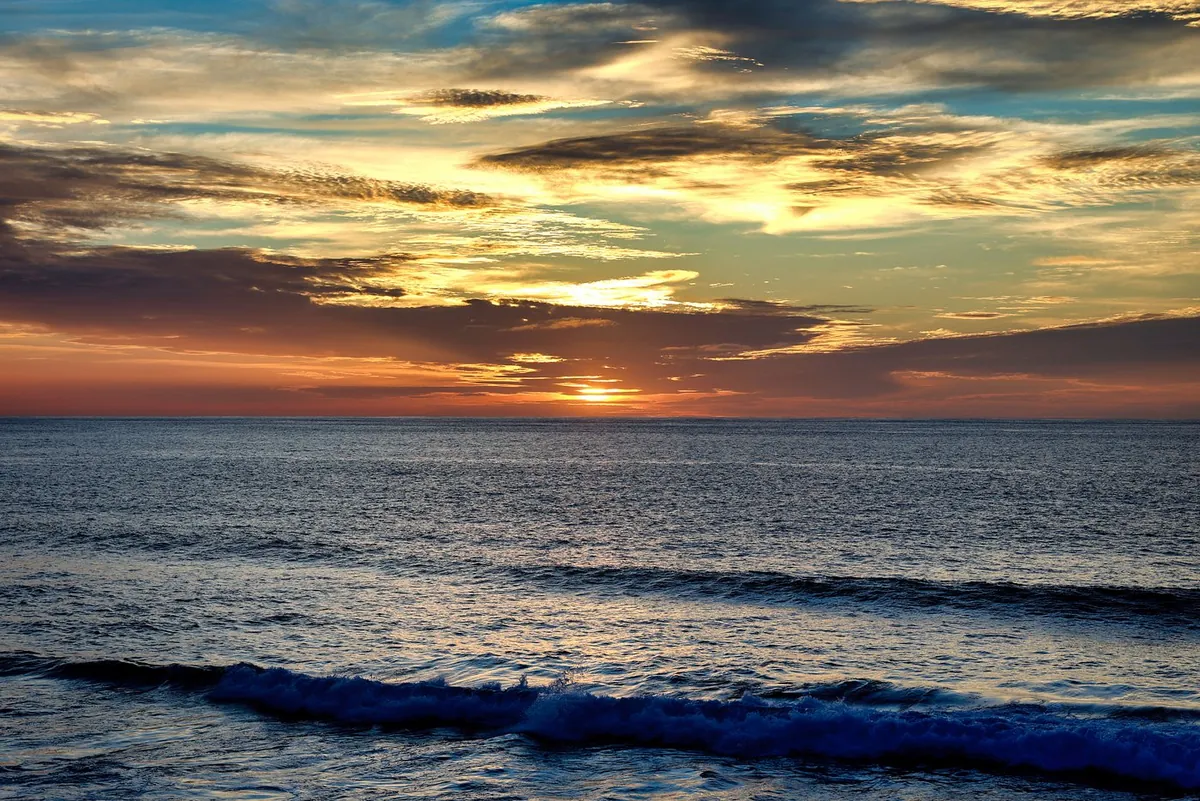
For volcanic drama, Playa de Janubio is unforgettable. The beach is a sweep of jet-black sand pounded by the Atlantic, right beside the Salinas de Janubio, the largest salt pans in the Canary Islands, whose geometric pools form an extraordinary foreground for photographers. This is not a swimming beach — the waves and currents are powerful — but a place to experience the raw power of the ocean.
Come an hour before sunset for the best light over the salt pans, then continue north along the coast road to Los Hervideros and the green lagoon at El Golfo, a few minutes away. Both are on the way to Timanfaya National Park.
Where to Stay Near the Best Beaches
The island is small enough to reach every beach on this list from a single base, but choosing the right area saves driving. For more choice, see our best hotels in Lanzarote, best luxury hotels and where to stay in Lanzarote guides.
Closest to Papagayo
A grand beachfront resort on Playa Dorada in Playa Blanca, minutes from the Papagayo coves.
On Playa Grande
A beachfront five-star in Puerto del Carmen with private access to the sand, 15 minutes from the airport.
On Playa de las Cucharas
An adults-only, all-inclusive five-star in Costa Teguise, well placed for the north.
Beach Tips for Lanzarote
- Respect the flags and the Atlantic. The north and west coasts have strong currents and waves. Swim only where it's safe, and choose the south and east coasts for relaxed swimming.
- Arrive early at Papagayo in summer. The car parks fill by late morning in July and August. Bring water, food and shade, as facilities are limited.
- Plan for the wind. The trade winds are part of Lanzarote life. A windbreak makes a big difference on the north and east coasts.
- Protect yourself from the sun. The breeze makes it feel cooler than it is. Use high-factor sunscreen and reapply after swimming.
Planning Your Lanzarote Trip?
Tell us your dates and what kind of beach holiday you're after — we'll help you choose the right base and plan your days on the coast.
Get My Personalised PlanFrequently Asked Questions
Our Honest Verdict
If you only visit one beach in Lanzarote, make it Papagayo — or Playa Mujeres next door if you want more space. Famara is the most dramatic, Caletón Blanco the most unusual and Janubio the most striking for photographers. For easy days with children, the resort beaches of Playa Blanca, Puerto del Carmen and Costa Teguise have everything you need.
For the rest of your trip, our 5 days in Lanzarote itinerary, Lanzarote island guide and getting around Lanzarote guide cover every detail.