Most of Lanzarote's coast is black lava and dark sand. Papagayo is the exception: a string of small golden coves with calm, clear, turquoise water, tucked between ochre headlands on the island's southern tip. They lie inside the Monumento Natural de Los Ajaches, the oldest part of Lanzarote, east of the resort of Playa Blanca, and look across the strait to Lobos and Fuerteventura. There are no hotels, no promenade and almost no buildings — just a dirt track, a few car parks and some of the finest beaches in the Canary Islands.
"Papagayo" is used for the whole group of coves as well as for the most famous of them, Playa de Papagayo. This guide covers all six main coves, the practical details that catch people out — the unpaved track, the car fee, the lack of shade and services — and how to reach them on foot or by boat if you'd rather not drive. For the rest of the island's coastline, see our 12 best beaches in Lanzarote.
Papagayo at a GlanceWhich Cove Should You Choose?
The coves are only a few hundred metres apart, but they feel very different. Match your priority to the cove, then scroll down for the full description.
Most Beautiful
The postcard cove: a horseshoe of golden sand between cliffs, with restaurants above.
Best for Families & Space
The largest cove, first along the track, with gentle entry and parking close to the sand.
Best Quieter Alternative
Smaller coves between Mujeres and Papagayo, with the same clear water and fewer people.
Most Secluded
The eastern coves, furthest from Playa Blanca; Puerto Muelas is popular with naturists.
The Coves from West to East
From Playa Blanca, the track and the coastal path run east past Marina Rubicón and the old watchtower of Las Coloradas. The coves come one after another along the next few kilometres of coast.
How to Get to Papagayo
By Car
From Playa Blanca, follow the signs for Papagayo. The road soon becomes an unpaved track of about five kilometres through the Los Ajaches hills, with a booth near the start where non-residents pay €3 per vehicle; the money goes to the upkeep of the natural monument. The track forks several times, each branch leading to the car park of a different cove. It's dusty and rutted in places, but a normal hire car manages it at a slow pace in dry weather. Paying by card is the safest option, and keep your ticket until you leave.
Arrive early in summer: in July and August the car parks above Playa Mujeres and Playa de Papagayo fill by late morning. Arriving before 10:00, or after 16:00 for the sunset, makes a big difference.
No public bus goes to Papagayo, and a car lets you try more than one cove in a day. Compare prices with pick-up at the airport or in Playa Blanca.
On Foot or by Bike
Walking in is free. A coastal path runs from Marina Rubicón, at the eastern end of Playa Blanca's promenade, past the Castillo de las Coloradas to Playa Mujeres in around 45 minutes. Continuing to Playa de Papagayo itself takes considerably longer, so allow well over an hour each way and carry plenty of water: there is almost no shade on the route. Cyclists can use the same track as cars, also without paying the fee.
By Boat
Seeing the coves from the water is one of the nicest ways to visit. Catamarans and boat trips from Playa Blanca and Puerto del Carmen sail along the south coast past Papagayo, some with time to swim and snorkel off the coves. It's also the easiest option if you don't want to drive the track.
For sunset cruises and other boat trips along the south coast, compare all the options.
By Taxi
Taxis from Playa Blanca can drop you at the coves, but there's no rank and little phone signal in places, so arrange your return pick-up in advance. If you're staying in Playa Blanca and don't have a car, walking in and taking a taxi back is a practical compromise.
The Six Coves of Papagayo
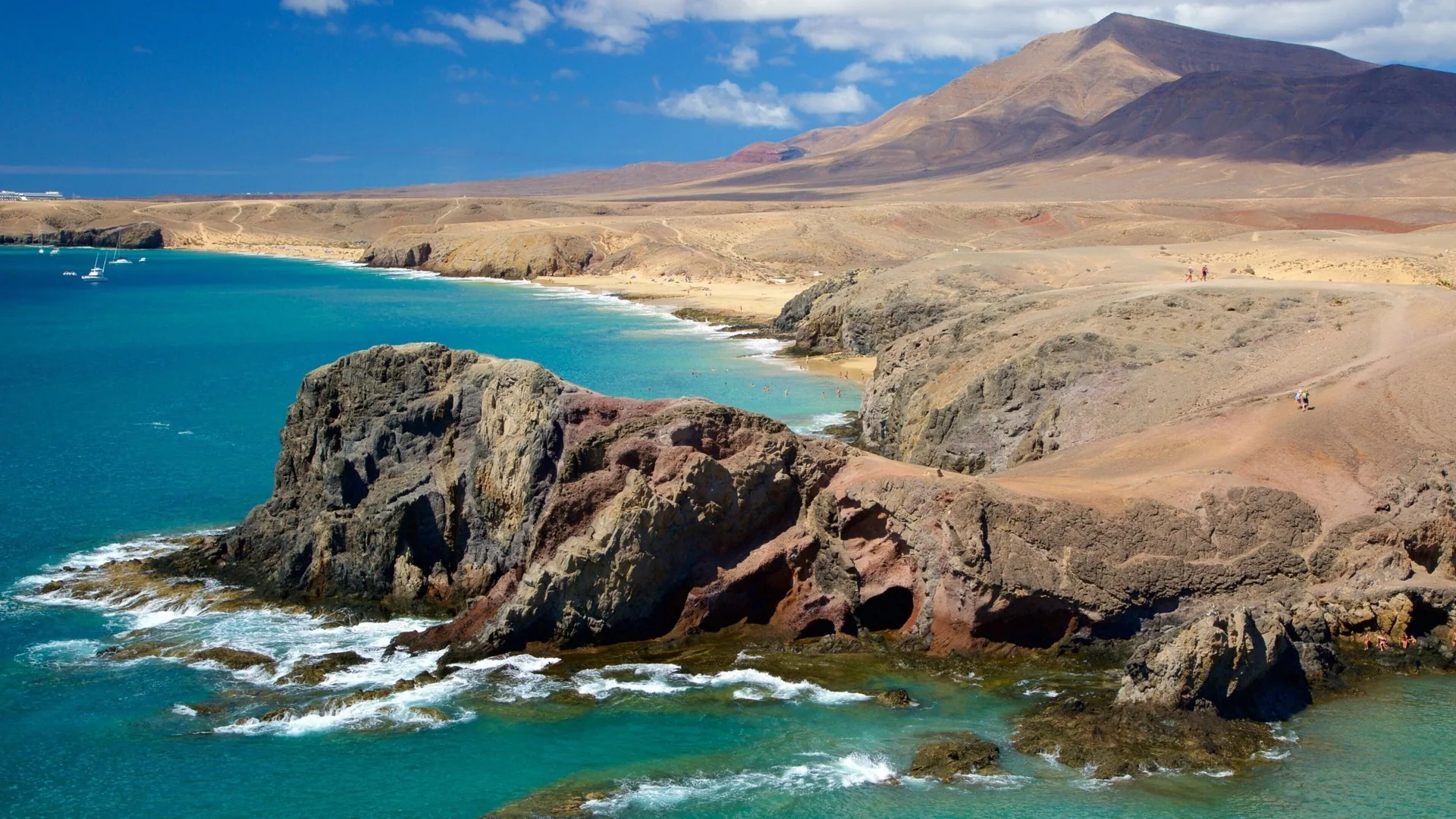
I. Playa Mujeres
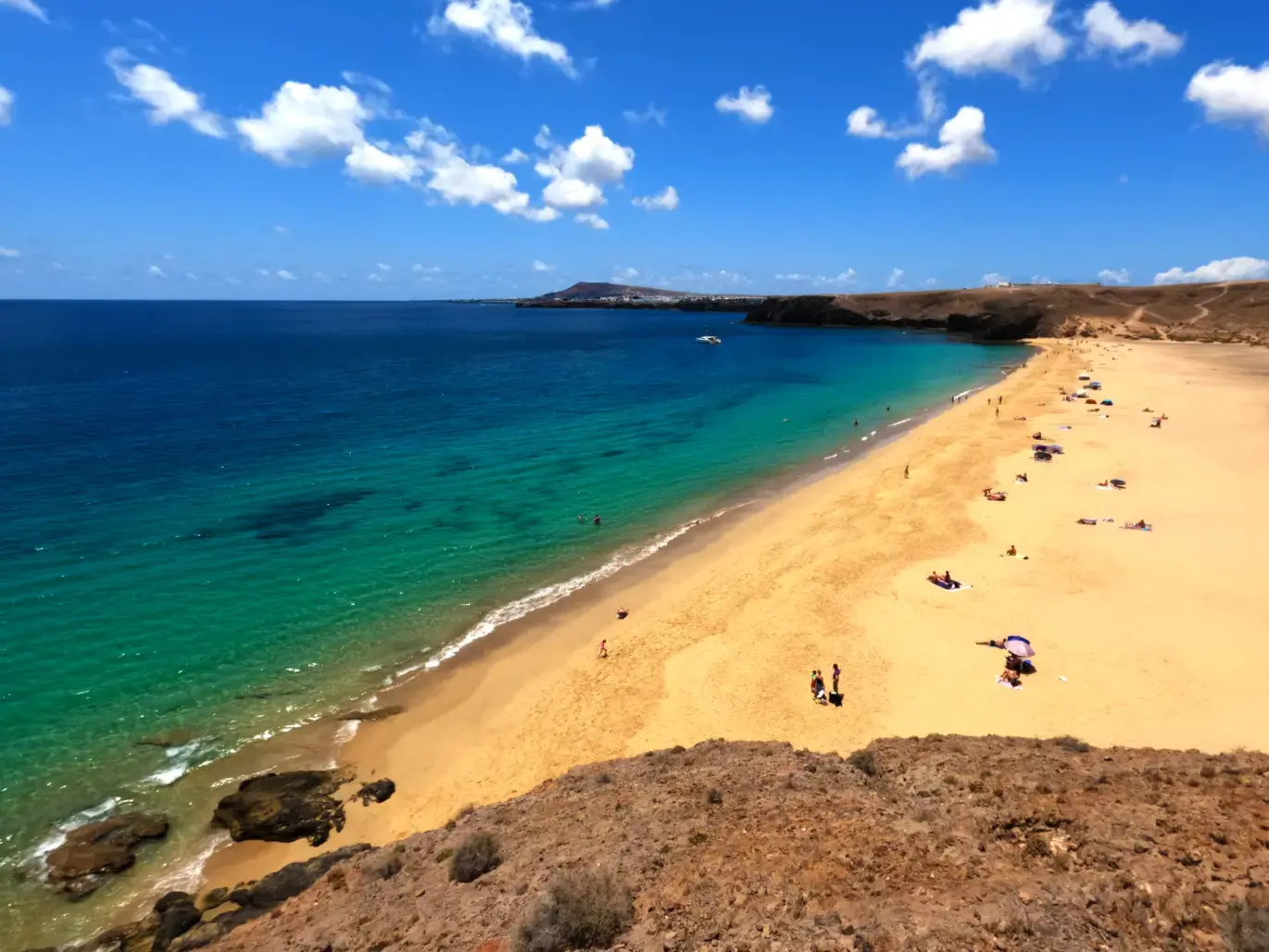
Playa Mujeres is the first cove you reach, whether you come by car or on foot, and at around 400 metres it's by far the largest. The sand slopes gently into calm water, the car park is just behind the beach, and even on busy days there's room to spread out — which makes it the most practical choice for families. The rocks at either end are good for snorkelling. There are no fixed facilities, so bring water, food and shade.
II. Playa del Pozo
Small and ShelteredA short walk east of Mujeres, Playa del Pozo is a smaller, sheltered cove with golden sand and the same clear water. It sees fewer people than its two famous neighbours and has no facilities of its own, but the restaurants above Playa de Papagayo are within walking distance. It's a good choice if Mujeres feels too open and Papagayo too crowded.
III. Playa de la Cera
The Smallest CoveBetween El Pozo and Papagayo, Playa de la Cera is a tiny cove, reached on foot from the nearby car parks. There's space for only a handful of groups, which is exactly its appeal early in the morning. Take everything you need; there's nothing here but sand, rock and water.
IV. Playa de Papagayo
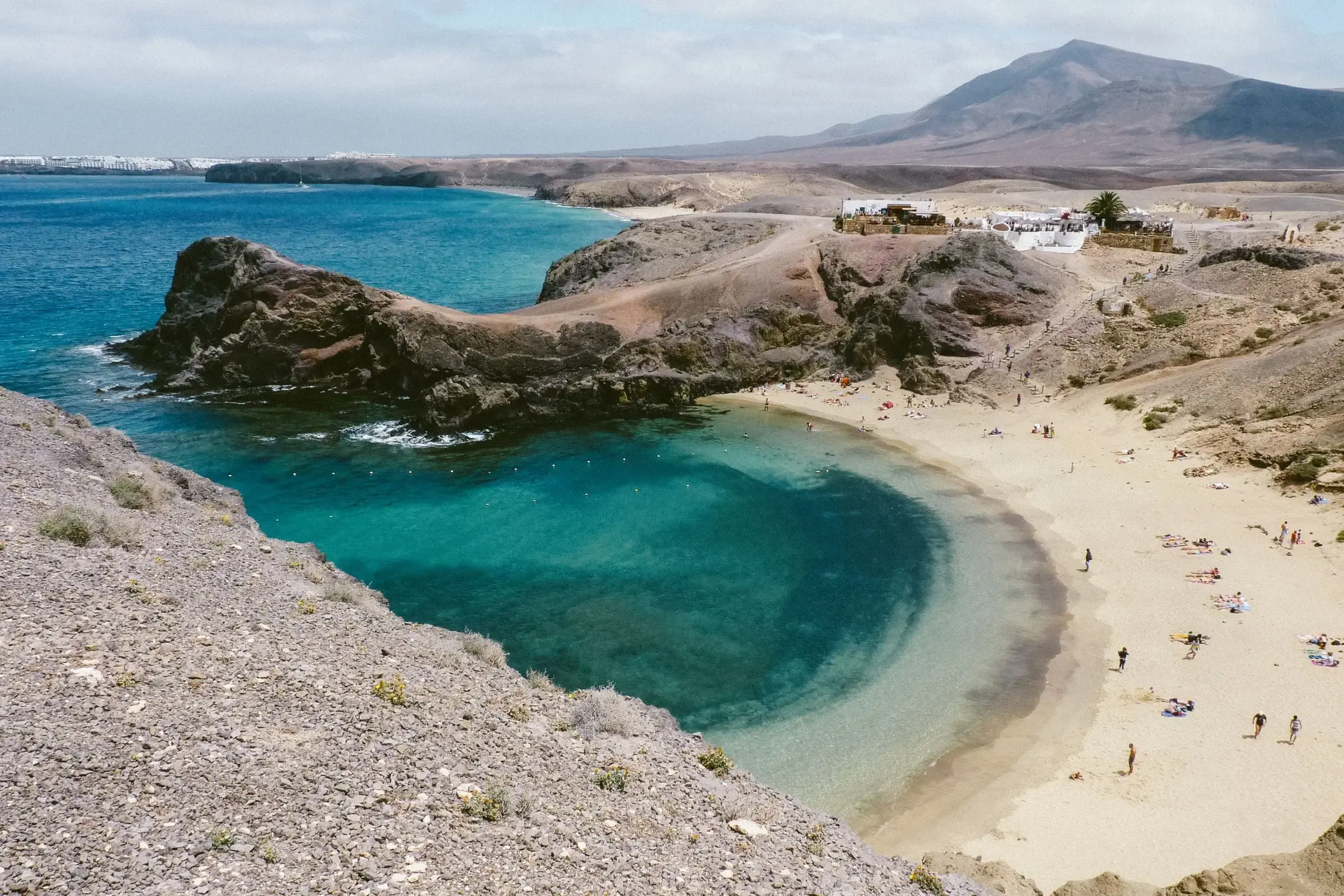
This is the cove that gives the whole area its name, and the one in almost every photograph of Lanzarote's beaches: a horseshoe of golden sand enclosed by cliffs, with water that turns an almost improbable turquoise on a calm, sunny day. The shape of the bay keeps it sheltered, so swimming is usually easy and snorkelling along the rocky edges is good. On the clifftop above, a small cluster of buildings houses the only restaurants in Papagayo — popular, not cheap, but with one of the best views on the island.
It's also the busiest cove, and getting down involves steps and a short, steep path, which is worth knowing if you're carrying a lot of gear or travelling with small children. Come early in the morning or for the last couple of hours before sunset, when the day-trippers have gone.
V. Caleta del Congrio
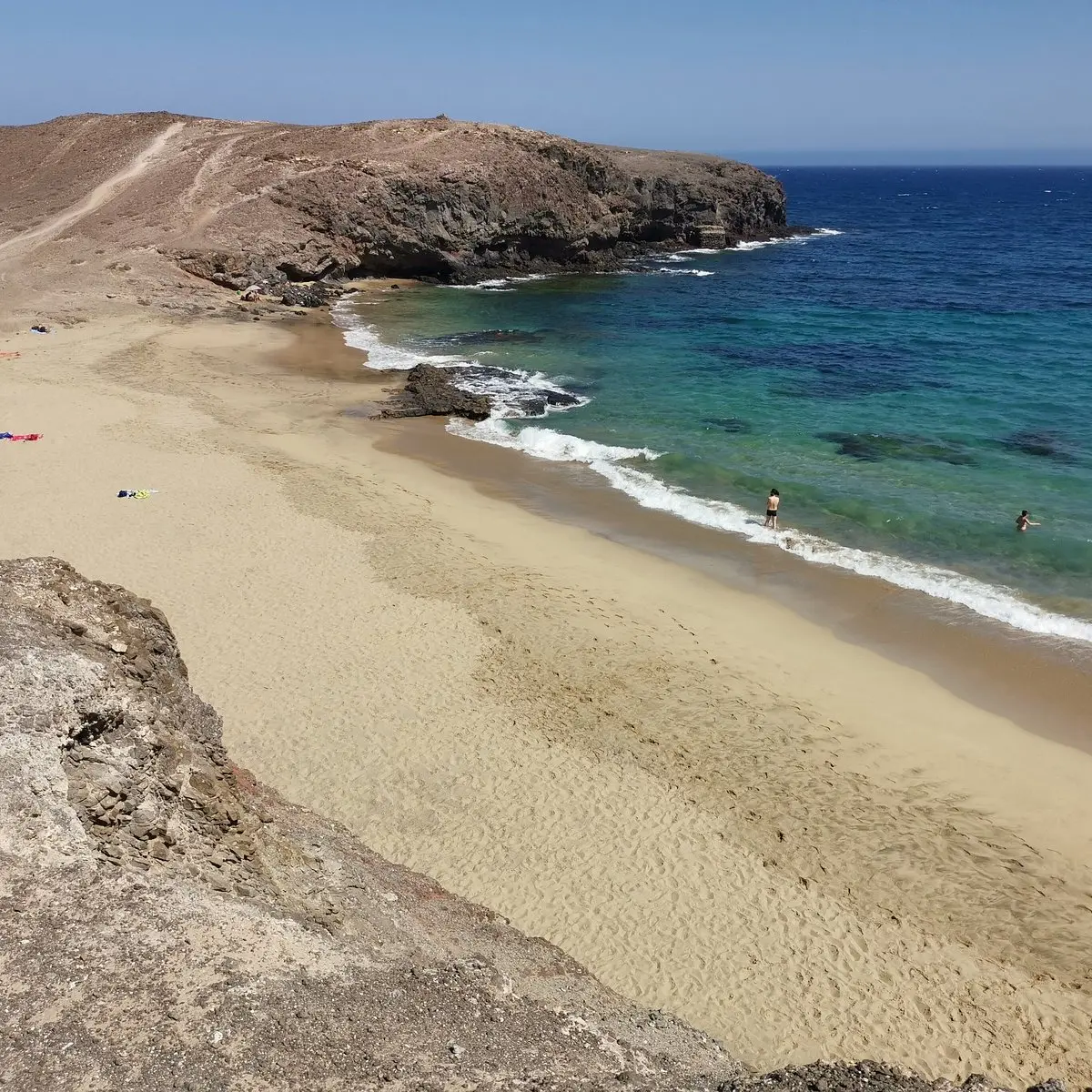
East of Playa de Papagayo, the coves become quieter. Caleta del Congrio is a small, rocky-edged bay with golden sand, reached by a branch of the track or on foot. Kayak tours sometimes stop here, and its position means it gets a little shade from the cliffs late in the afternoon — a rarity at Papagayo.
VI. Puerto Muelas
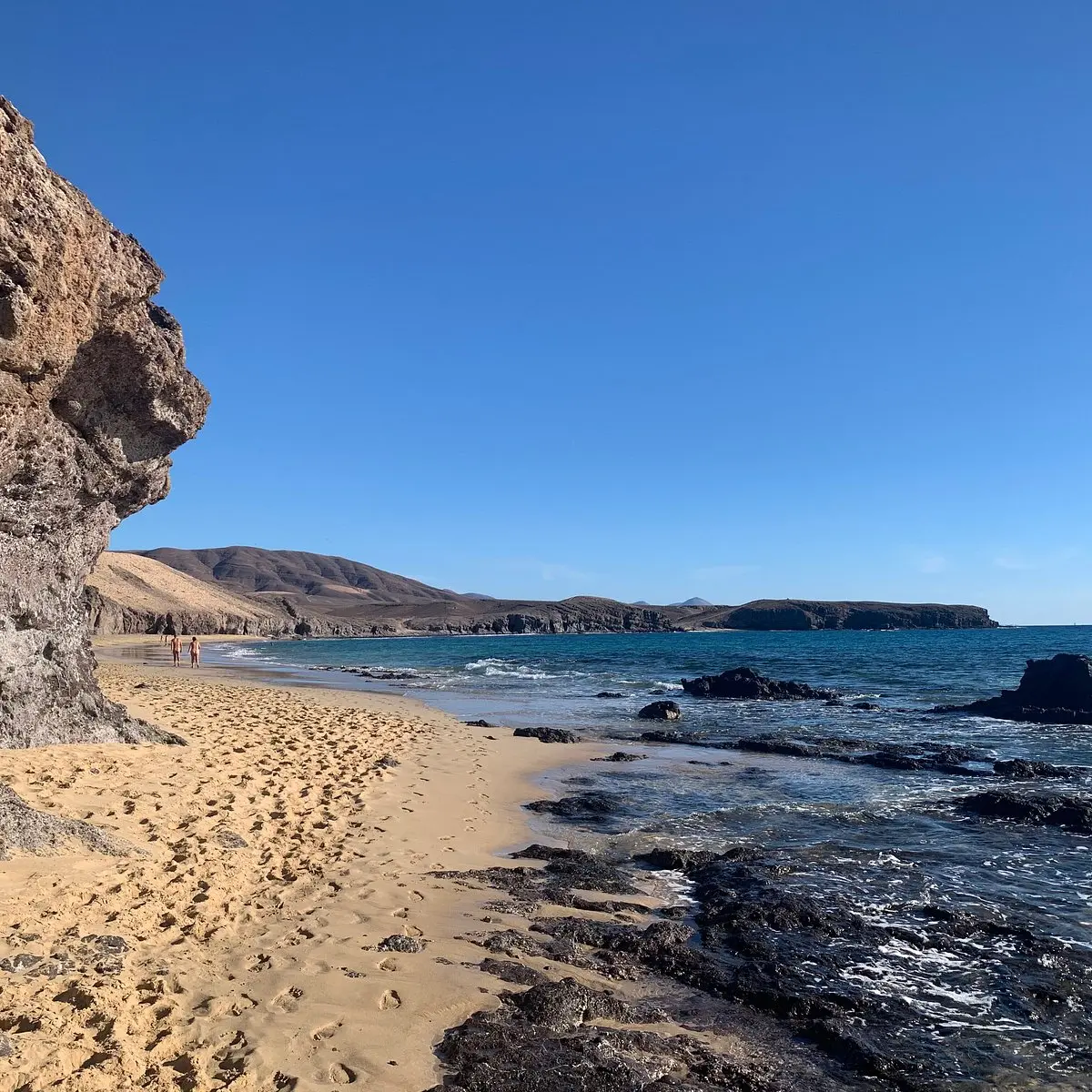
The last of the main coves, Puerto Muelas is a long, wild beach next to the Papagayo camping area, with views to Lobos and Fuerteventura. It's the quietest stretch of the coast outside the summer camping season and is well known as a naturist beach, although it isn't an official nudist zone. There are no facilities apart from the campsite when it's open.
Beyond the main coves: the small Caletón de San Marcial lies just west of Playa Mujeres, and other tiny inlets dot the coast, some reachable only on foot or by kayak. Respect the paths: this is a protected natural monument, and driving off the marked track is forbidden.
The Coves Compared
| Cove | Size | Crowds in summer | Facilities | Best for |
|---|---|---|---|---|
| Playa Mujeres | Large | Busy, but space | None fixed | Families |
| Playa del Pozo | Small | Moderate | None | A quieter swim |
| Playa de la Cera | Tiny | Moderate | None | Early mornings |
| Playa de Papagayo | Small–medium | Very busy | Restaurants above | Photos, lunch |
| Caleta del Congrio | Small | Quiet | None | Seclusion |
| Puerto Muelas | Long | Quiet | Campsite (seasonal) | Naturists, solitude |
Sunset, Viewpoints and the Castillo de las Coloradas
Papagayo is one of the best sunset spots in the south of Lanzarote. The clifftop above Playa de Papagayo looks straight down on the cove as the headlands turn orange, with Fuerteventura across the strait. Arrive half an hour early in high season to find a place, and stay well back from the unfenced edges.
On the way from Playa Blanca, the Castillo de las Coloradas — also called the Torre del Águila — is an 18th-century stone watchtower built to defend the coast from pirates, on a low headland near Marina Rubicón. It's a short detour on the coastal path. For a bird's-eye view of the whole coast, drive up to the village of Femés, in the Los Ajaches hills, whose viewpoint looks over Playa Blanca, Papagayo and the sea to Fuerteventura. Femés is also the start of the walk down to Playa Quemada in our best hikes in Lanzarote guide.
The Papagayo Camping Area
Camping anywhere else in Los Ajaches is forbidden, but the Cabildo de Lanzarote runs an official camping area next to Puerto Muelas. It opens for limited seasons — in 2026, for Easter and from 3 July to 4 October — with around 260 plots, most of them for campervans and motorhomes and only a few for small tents. Places must be booked in advance through the official website, acampadapapagayo.com.
Where to Stay Near Papagayo
Playa Blanca is the obvious base: the eastern end of town, around Playa Dorada and Marina Rubicón, is closest to the track and the coastal path. For a full comparison of the island's bases, see our where to stay in Lanzarote guide.
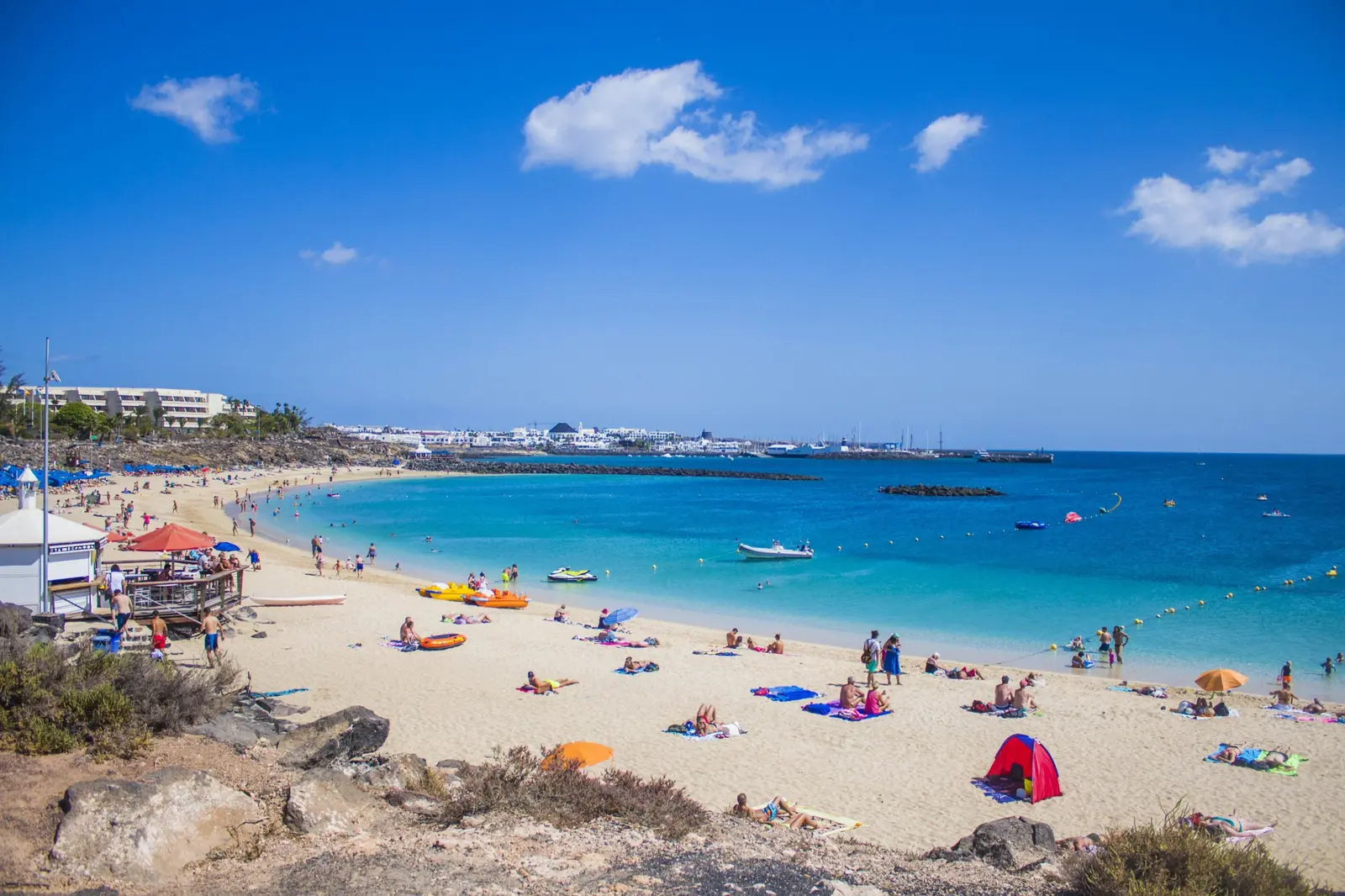
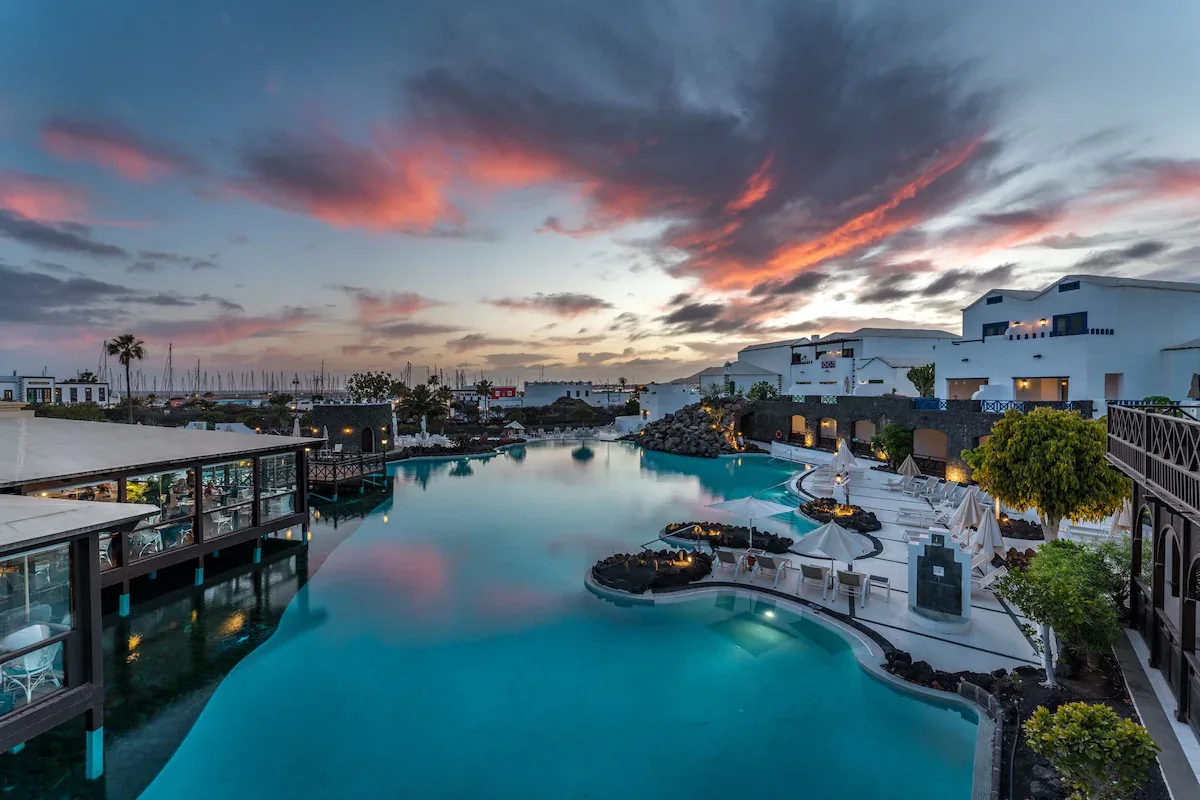
LIVVO Volcán Lanzarote
Beside Marina Rubicón, where the coastal path to Papagayo begins. Family rooms and adults-only Club rooms.
Check Prices →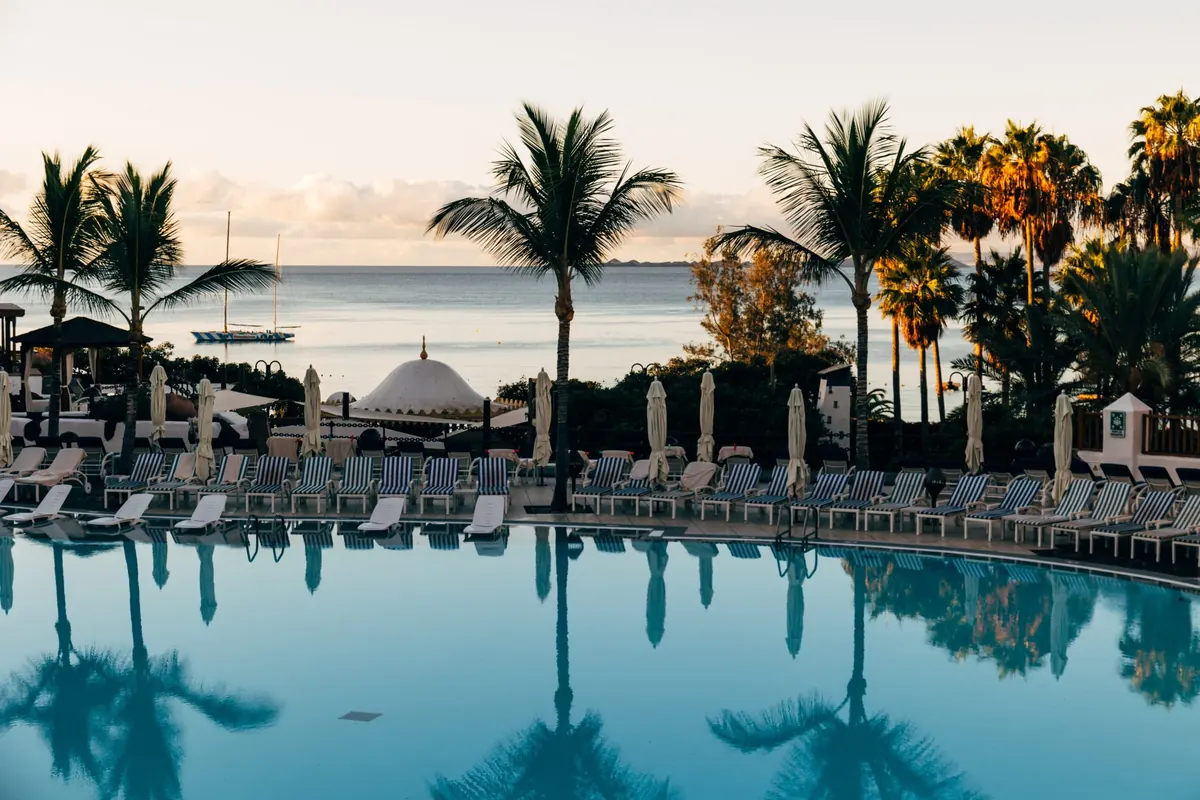
Princesa Yaiza Suite Hotel Resort
On Playa Dorada, a short walk from the marina: large suites, seven restaurants and a free kids' club.
Check Prices →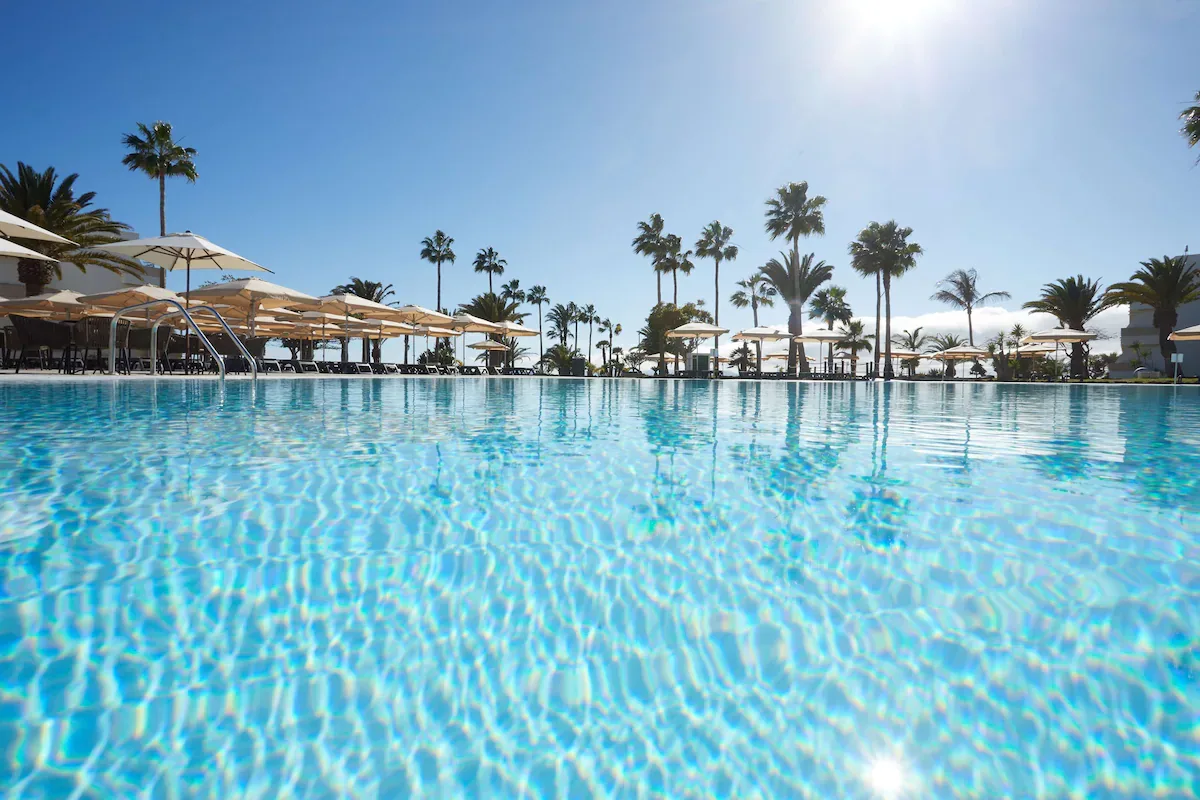
Grand Hyatt Lanzarote Playa Dorada
Steps from Playa Dorada, with nine heated pools, kids' and teen clubs and an all-inclusive option.
Check Prices →
H10 White Suites
A small, calm suite hotel with yoga and Pilates, a short walk from the seafront.
Check Prices →More choice in our best hotels in Lanzarote and best luxury hotels guides.
Combine Papagayo With the Rest of the South
Papagayo fits easily into a day in the south. The salt pans of Janubio, the blowholes of Los Hervideros, the green lagoon at El Golfo and Timanfaya National Park are all 20 to 30 minutes north of Playa Blanca. Ferries from Playa Blanca's harbour cross to Corralejo in Fuerteventura in 25 to 35 minutes, so a day on the neighbouring island is easy too — see our Lanzarote vs Fuerteventura guide.
A full-day tour from Playa Blanca covers Timanfaya, El Golfo, Los Hervideros, the Janubio salt pans and La Geria, with lunch included.
Practical Tips
Bring Shade and Water
There's almost no natural shade and no shops outside Playa de Papagayo. Pack water, food and a parasol.
No Lifeguards
The coves are usually calm, but there are no lifeguards. Keep an eye on children and on the wind.
Mind the Wind
Papagayo is sheltered from the trade winds, which is why it's calm when Playa Blanca's beaches are breezy.
Protect the Monument
No camping outside the official area, no fires, and no driving off the marked track.
Shoes for the Paths
Sandals with a good grip help on the dusty tracks and the steps down to Playa de Papagayo.
Staying Connected
Signal is patchy on the track. A Yesim eSIM helps with maps and arranging a taxi back.
Planning a Trip to Lanzarote?
Tell us your dates and where you're staying — we'll help you fit Papagayo, Timanfaya and the rest of the island into a realistic plan.
Get My Personalised PlanFrequently Asked Questions
Our Honest Verdict
Papagayo deserves its reputation, but it rewards a little planning. Families should head for Playa Mujeres, photographers and anyone who wants lunch with a view for Playa de Papagayo, and those looking for peace for El Pozo, Caleta del Congrio or Puerto Muelas. Go early or late in summer, pay the €3 at the booth, and bring everything you need — or walk in along the coast from Marina Rubicón and see the coves the slow way.
For the rest of the island, our Lanzarote travel guide covers the sights and 2026 prices, and our 5 days in Lanzarote itinerary puts Papagayo on the last day, after La Geria.
Lanzarote Airport (ACE) is about 35 minutes from Playa Blanca, with direct flights from the UK, Ireland and most of Europe.