Lanzarote looks like nowhere else in Europe. Between 1730 and 1736 a chain of eruptions buried about a quarter of the island under lava, and the black, red and ochre landscape they left is still the island's defining sight. What makes it special is what people did next: farmers learned to grow vines in the volcanic ash, and the artist César Manrique turned lava tubes and craters into gardens, concert halls and viewpoints.
The whole island has been a UNESCO Biosphere Reserve since 1993 and a UNESCO Global Geopark since 2015. It's also one of the sunniest places in the Canaries, with calm beaches in the south, Atlantic surf in the north and white villages in between. This guide covers the essential sights and what they cost in 2026, where to stay, how to get around and how to plan your days. For a ready-made plan, see our 5 days in Lanzarote itinerary.
Quick Guide: Lanzarote in Six Experiences
If you only do six things on the island, make it these.
Manrique's Masterpiece
A lava tube turned into a lagoon, garden and concert hall.
Main Sights: Prices and Hours 2026
Most of the big sights are run by the Cabildo's tourist centres (CACT). Prices below are for non-residents; children up to 6 go free.
| Sight | Price | Hours | Note |
|---|---|---|---|
| Timanfaya · Montañas del Fuego | €30 | 9:00–15:45 | Online only, timed entry |
| Jameos del Agua | €17 | 10:00–18:00 | Manrique's lava-tube space |
| Cueva de los Verdes | €17 | 9:30–16:45 | Guided, online only |
| Jardín de Cactus | €9 | 10:00–17:00 | Guatiza |
| Mirador del Río | €9 | 10:00–17:00 | View of La Graciosa |
| Fundación César Manrique | €10 | 10:00–17:30 | Manrique's lava-bubble house |
Prices and hours from the official CACT and Fundación César Manrique websites in October 2026. They change from time to time — check before you go, and book Timanfaya and the Cueva de los Verdes online in advance.
The Essential Lanzarote Experiences
I. Timanfaya National Park
The eruptions of 1730 to 1736, and a smaller one in 1824, created the Montañas del Fuego: more than 50 square kilometres of craters and lava now protected as a national park. You visit its heart from the Islote de Hilario, where the ground is still hot a few metres down — staff pour water into a pipe to make it erupt as steam, and the El Diablo restaurant grills over the heat of the volcano. From there, the Ruta de los Volcanes coach tour, included in the ticket, winds for about 35 minutes through the lava fields, where you can't walk on your own.
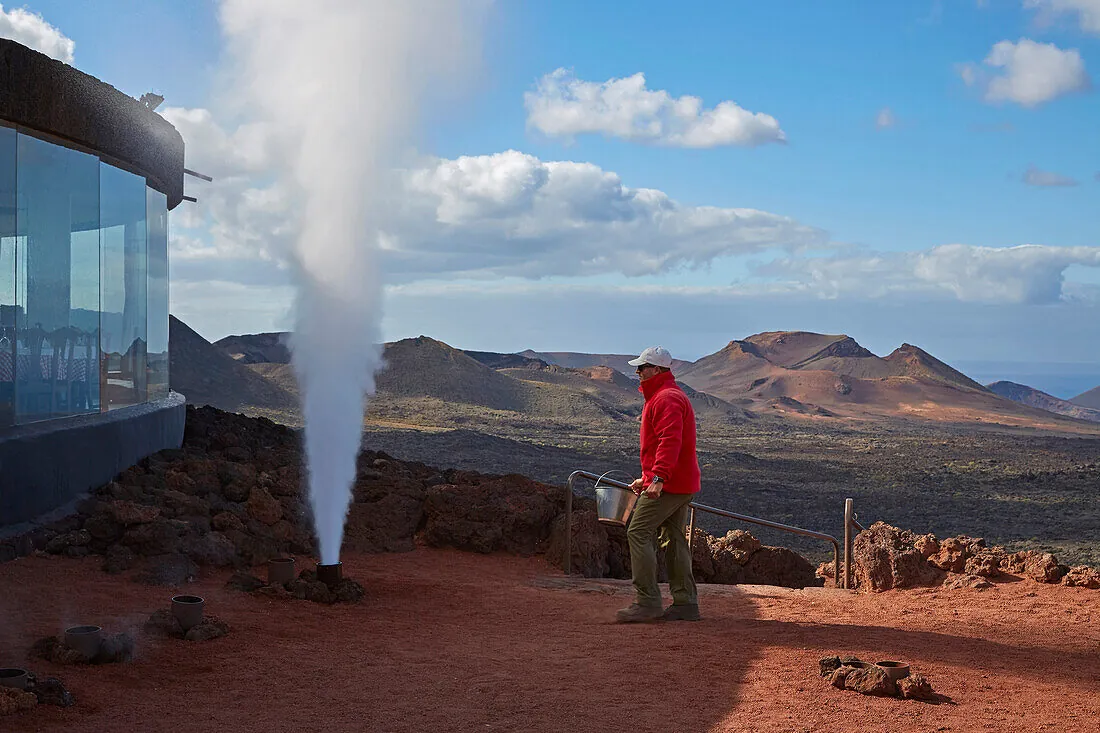
Tickets cost €30 for non-residents and are now sold online only, for a set date and time; the visit takes about 90 minutes, from 9:00 with the last entry at 15:45. Arrive early, as the small car park fills and queues form on the access road. No public bus reaches the park. Our Timanfaya National Park guide covers the camel rides, the guided walks and the best viewpoints.
II. Jameos del Agua and Cueva de los Verdes
In the north-east, the Volcán de La Corona erupted around 25,000 years ago and left one of the longest lava tubes in the world: more than 7.6 kilometres, the last 1.6 of them under the sea. Where its roof collapsed, César Manrique created Jameos del Agua — a saltwater lagoon in the dark, home to a tiny blind white crab found nowhere else, then a white pool framed by palms and lava, and an auditorium inside the tube. Nearby, the Cueva de los Verdes is a guided walk through a longer section of the same tube, with a surprise at the end best left unspoilt.
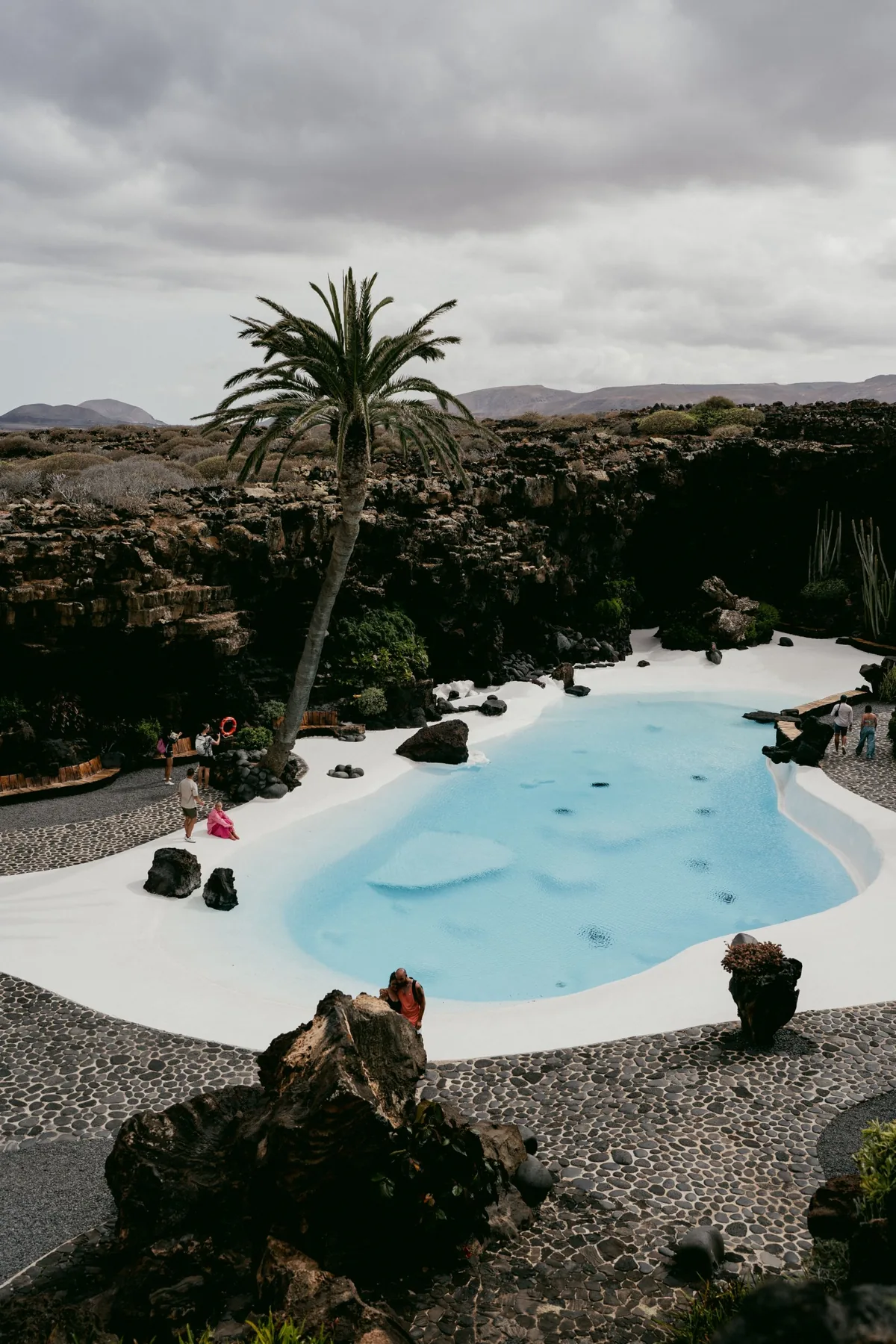
Each costs €17. Jameos opens from 10:00 to 18:00; the Cueva from 9:30 to 16:45, with tickets online only. Don't use flash photography near the lagoon. Visit both together with the Jardín de Cactus and the Mirador del Río in a day in the north.
III. César Manrique's Lanzarote
Manrique (1919–1992) was a painter and architect who returned to his island in the 1960s and fought for a model of tourism in harmony with the landscape. His legacy is everywhere: low white houses with green or blue woodwork, no high-rise hotels in most of the island and no roadside billboards. His former home, built into five volcanic bubbles at Taro de Tahíche, is now the Fundación César Manrique (€10).
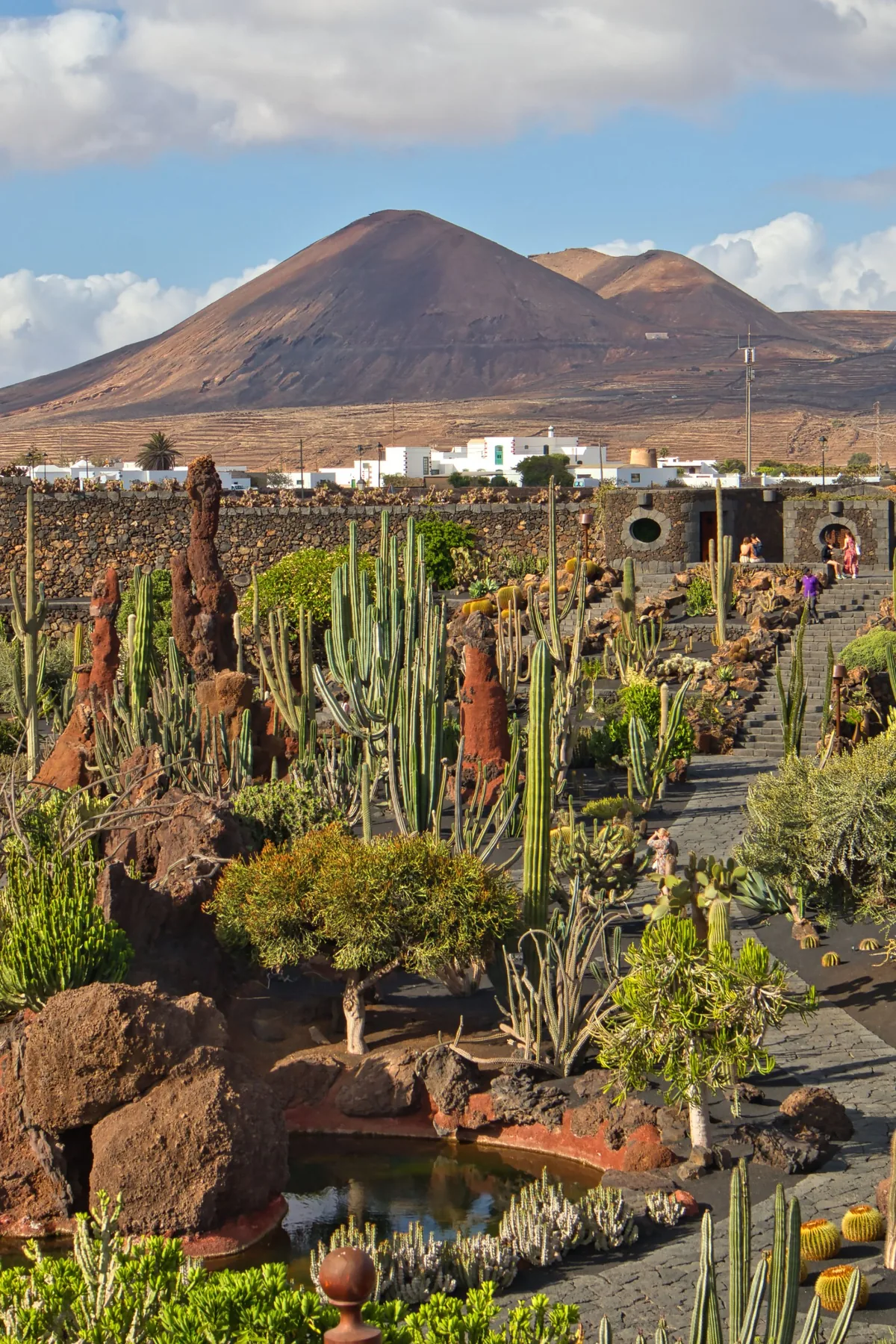
His last work, the Jardín de Cactus in Guatiza, fills an old quarry with around 4,500 cacti from all over the world, around a restored windmill (€9). In the far north, the Mirador del Río is a viewpoint hidden inside the cliff, nearly 500 metres above the strait, looking straight down on La Graciosa (€9).
IV. La Geria Wine Region
Between Timanfaya and the centre of the island, the La Geria valley is covered in black volcanic gravel. Farmers dig hollows in it — called hoyos — plant a vine at the bottom, and protect each one from the wind with a low, half-moon wall of stones. The ash holds the night's moisture, and the result is a landscape like no other and fresh white wines from the Malvasía Volcánica grape. Several bodegas along the LZ-30 road are open for tastings. Our Lanzarote wine route guide has the details.
V. Papagayo Beaches
East of Playa Blanca, inside the Los Ajaches natural monument, a string of golden coves sits between ochre headlands with clear, calm water and views to Fuerteventura. Playa de Papagayo is the most famous; Playa Mujeres is the largest. Driving in, you pay a small fee per car — it has been €3 — then follow a bumpy dirt road; walking in along the coast from Playa Blanca is free. There's little shade and only a couple of beach bars at the top, so bring water. See our Papagayo beach guide and best beaches in Lanzarote.
VI. Famara
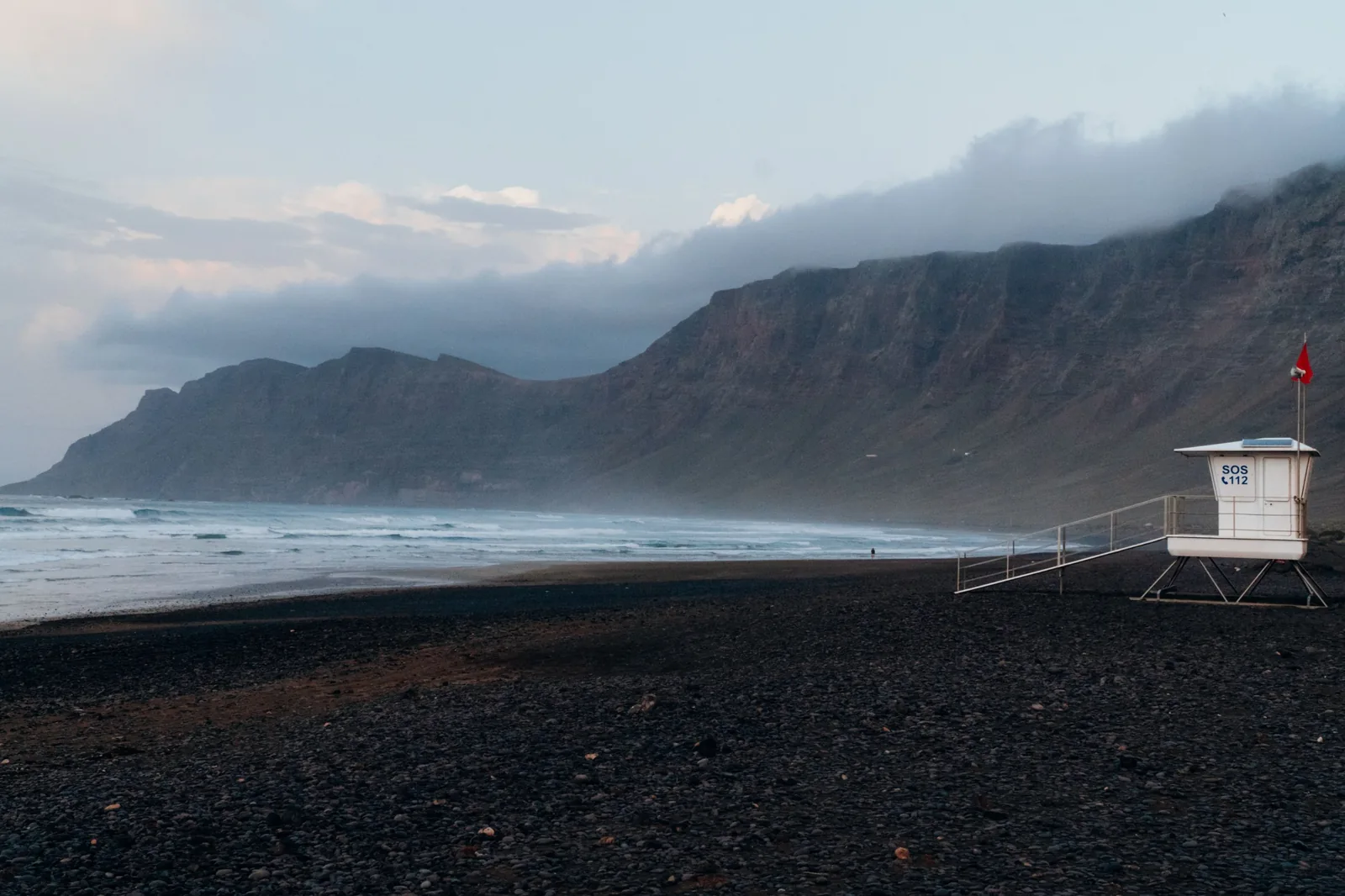
On the north-west coast, a long beach runs beneath the Risco de Famara, cliffs that rise to 671 metres at the Peñas del Chache, the highest point on the island. Famara is the home of surfing in Lanzarote, with schools in the village of Caleta de Famara, and a wonderful place for a sunset walk. The currents are strong, though, so swim only near the lifeguard post and on calm days.
VII. La Graciosa
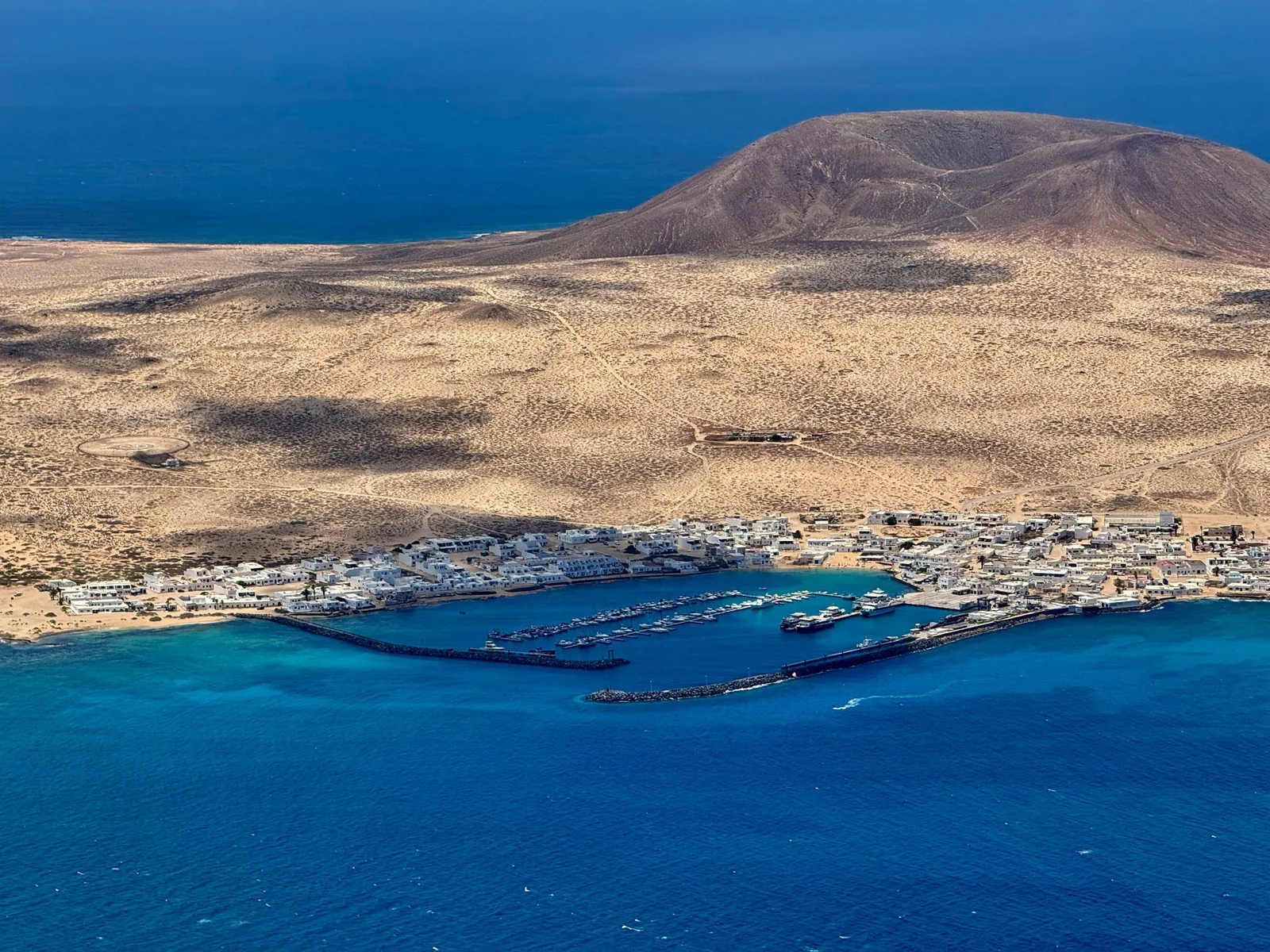
Officially the eighth inhabited Canary Island since 2018, La Graciosa lies just off the north coast, part of the Chinijo Archipelago natural park. It has two small villages, Caleta de Sebo and Pedro Barba, sand streets and no paved roads. Ferries from Órzola, run by Líneas Romero and Biosfera Express, take about 25 minutes; once there, hire a bike, walk or take a 4x4 taxi to beaches like Playa de las Conchas. Take water and sun protection: there's almost no shade.
Where to Stay in Lanzarote
| Area | Best for | From the airport |
|---|---|---|
| Playa Blanca | Families, calm beaches, Papagayo | ~35 min |
| Puerto del Carmen | Long beach, restaurants, nightlife | ~10 min |
| Costa Teguise | Quieter resort, watersports | ~15 min |
| Puerto Calero | Marina, couples, upmarket | ~20 min |
| Famara & the north | Surf, walking, rural stays | ~30 min |
For a detailed comparison of areas, see our where to stay in Lanzarote guide; for more hotels, our best hotels, luxury hotels and adults-only hotels guides.
Hotel LIVVO Volcán Lanzarote, Playa Blanca
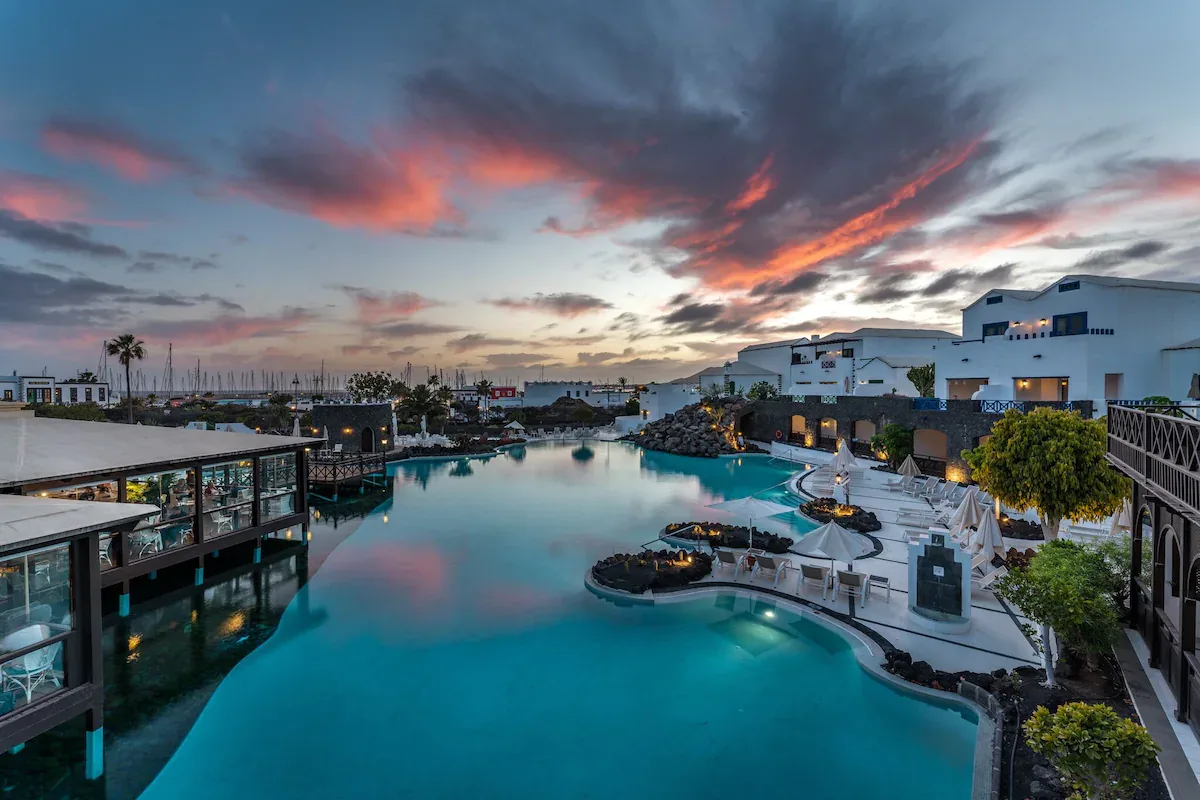
Built like a white Canarian village around lagoon-style pools, beside the Marina Rubicón and a short walk from the centre of Playa Blanca. It works for both families — with a kids' club, family rooms and play areas — and couples, who can book adults-only rooms. There are five restaurants, a spa with a Turkish bath and sauna, and views across to Fuerteventura.
Grand Hyatt Lanzarote Playa Dorada, Playa Blanca
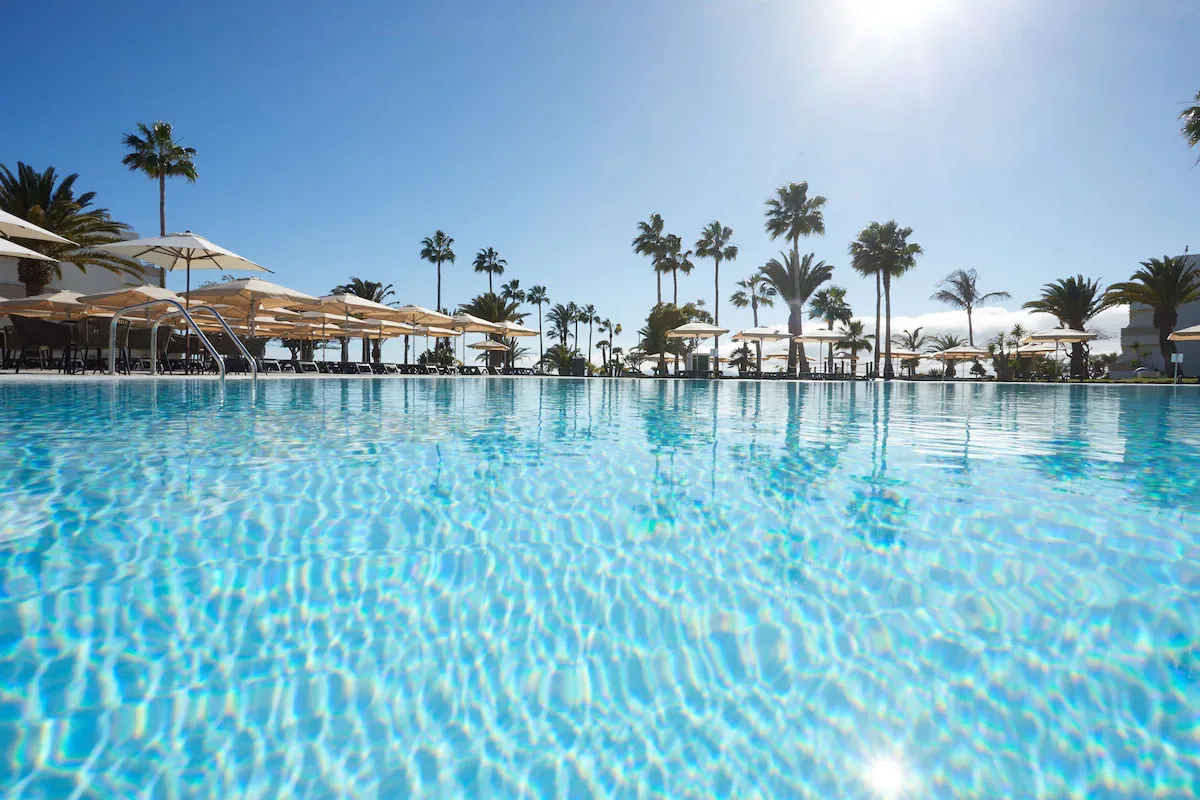
The former Dreams Lanzarote Playa Dorada, now part of Hyatt, is a large resort steps from Playa Dorada: 465 rooms, nine heated pools including infinity pools and a family pool with slides, five restaurants and a spa. The kids' club for ages 4 to 12 and a teen club make it one of the island's best family choices, and you can book it all-inclusive.
Secrets Lanzarote Resort & Spa, Puerto Calero
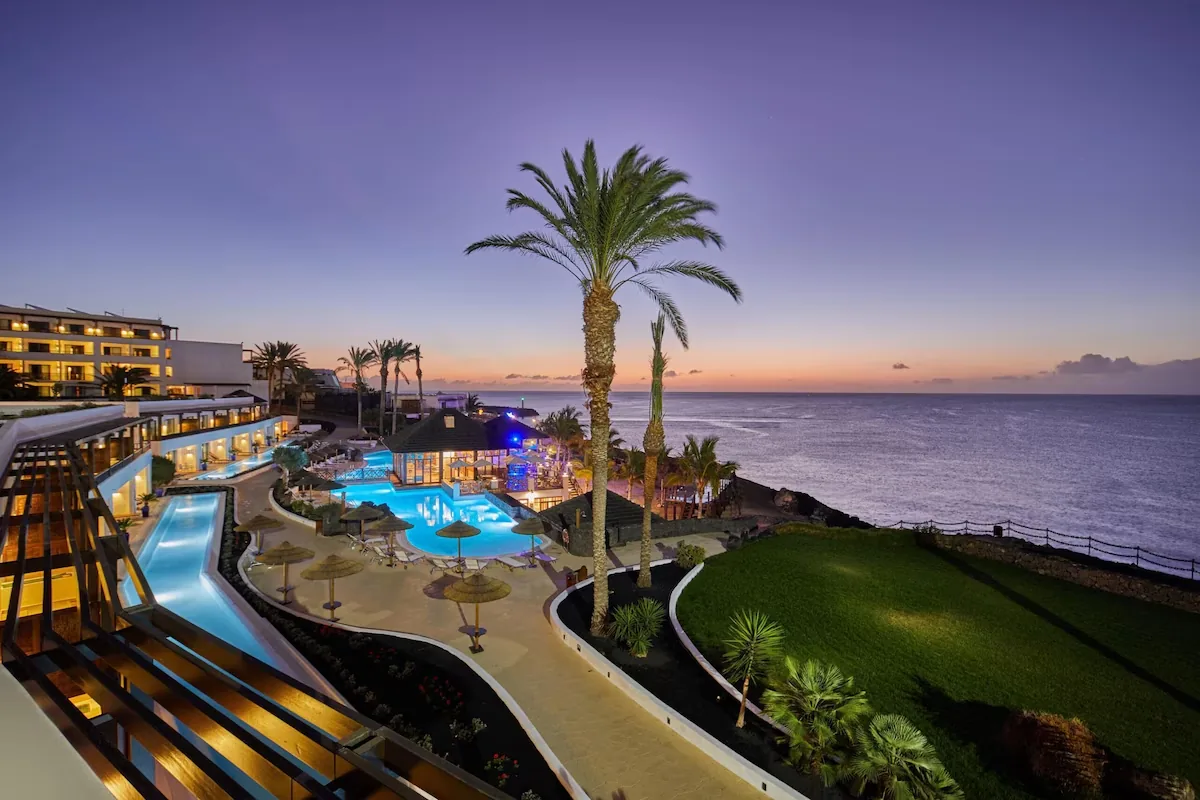
An adults-only resort for guests aged 18 and over, on the edge of the marina at Puerto Calero, between Puerto del Carmen and Playa Blanca. Six restaurants, four outdoor pools and a full spa with ten treatment rooms, an indoor pool, sauna and steam room make it a strong choice for couples who want to switch off. Guests rate it 8.8 out of 10 from around 1,000 reviews.
More of our favourite hotels on the island:
Princesa Yaiza Suite Hotel Resort
A large, all-suite resort on Playa Dorada, as good for families as for couples.
La Isla y el Mar Hotel Boutique
An adults-only boutique of suites in volcanic stone above the resort.
Paradisus Salinas Lanzarote
A beachfront hotel with interiors and gardens by César Manrique.
Getting There and Around
By air, Lanzarote Airport (ACE) is just outside Arrecife, with direct flights from the UK, Ireland and much of Europe. It's about ten minutes to Puerto del Carmen, fifteen to Costa Teguise and around 35 minutes to Playa Blanca.
By sea, ferries link Playa Blanca with Corralejo in Fuerteventura in 25 to 35 minutes (Fred. Olsen, Naviera Armas and Líneas Romero), and Arrecife with Las Palmas de Gran Canaria in about four to seven hours. For La Graciosa, ferries leave from Órzola. See Lanzarote vs Fuerteventura if you're deciding between the two.
On the island, IntercityBus Lanzarote runs buses from the airport to Arrecife and on to Puerto del Carmen and Playa Blanca, and between the main towns. They're fine for resort hopping, but no bus reaches Timanfaya, and the north and La Geria are hard work without a car. Our getting around Lanzarote guide covers routes and fares.
Practical Tips
Book Online
Timanfaya and the Cueva de los Verdes sell tickets online only, for a set time. Book a day or two ahead in high season.
The Wind
The trade winds blow most of the year, strongest in summer. Pick sheltered beaches in the south on windy days.
Sun and Water
There's little shade at Papagayo, on La Graciosa or in the lava fields. Carry water and sunscreen.
Plan by Area
Group the north (Jameos, Cueva, Mirador, cactus garden) in one day and the south (Timanfaya, La Geria, Papagayo) in another.
Sea Safety
Famara and the north coast have strong currents. Swim near lifeguards and respect the flags.
Staying Connected
A Yesim eSIM keeps maps and tickets on your phone from the moment you land.
All Our Lanzarote Guides
Frequently Asked Questions
Final Verdict
Give Lanzarote at least four or five days: one for Timanfaya and La Geria, one for the north and the Manrique sites, one for Papagayo, and time for Famara or La Graciosa. Stay in Playa Blanca for beaches and families, Puerto del Carmen for convenience, or Puerto Calero for a quieter, more upmarket base — and hire a car, because the island's best places are spread out and buses don't reach them. Book Timanfaya online, start early, and you'll understand why this small volcanic island feels like no other.