Most visitors see one Tenerife: the sunny south of Costa Adeje and Los Cristianos, with a day trip up to Teide. It's a good version of the island, but it isn't the whole story. The north is green and misty, with laurel forest older than most of Europe's woodland, cave homes still lived in today and colonial towns rebuilt on lava. Even the south hides a canyon with a waterfall and a landscape of white rock that looks borrowed from the moon.
None of these places is a secret, and some are busy at peak hours. What they share is distance from the resort belt and the reward of a little planning — several now need a reservation or have restricted access, which we explain below. For first-timers, our 3 days in Tenerife itinerary covers the essentials; for the island's two sides, see Tenerife south vs north.
Quick Guide: Where to Start
Six highlights for six kinds of traveller.
Forest & Mountains
Cloud-wrapped laurel forest and ridge trails in the north-east.
The Dramatic Village
A hamlet on a ridge in the Teno mountains, above a famous gorge.
History & Swimming
A town rebuilt on lava, with natural pools in the old lava flow.
Best for Culture
A UNESCO World Heritage colonial town with a student buzz.
Wildest Beach
Black sand and sea stacks at the end of the Anaga coast road.
Best from the South
White rock towers in the pine forest above Vilaflor.
All 11 at a Glance
| Place | Area | Drive from Costa Adeje | Access | Best for |
|---|---|---|---|---|
| Masca | Teno · north-west | ~50 min | Narrow road; gorge by booking | Views, hiking |
| Punta de Teno | Far north-west | ~70 min + bus | Bus 369 only | Lighthouse, swimming |
| Garachico | North coast | ~60 min | Easy | History, natural pools |
| Icod de los Vinos | North coast | ~55 min | Easy; cave by booking | Drago tree, lava cave |
| La Laguna | North-east | ~60 min | Easy; tram from Santa Cruz | Culture, food |
| Anaga laurel forest | North-east | ~75 min | Mountain roads | Forest walks |
| Chinamada | Anaga | ~90 min | Narrow road or trail | Cave homes, hiking |
| Playa de Benijo | Anaga coast | ~90 min | Road via Taganana | Sunset, wild beach |
| Bajamar & Punta del Hidalgo | North-east coast | ~70 min | Easy | Natural pools |
| Vilaflor & Paisaje Lunar | South-centre | ~40 min | Trail from the village | Hiking, pine forest |
| Barranco del Infierno | Adeje | ~10 min | Online booking | Canyon walk, waterfall |
Drive times are approximate and depend on traffic and your starting point. From Puerto de la Cruz or La Laguna, the northern places are much closer.
The North-West: Teno, Garachico and Icod
I. Masca
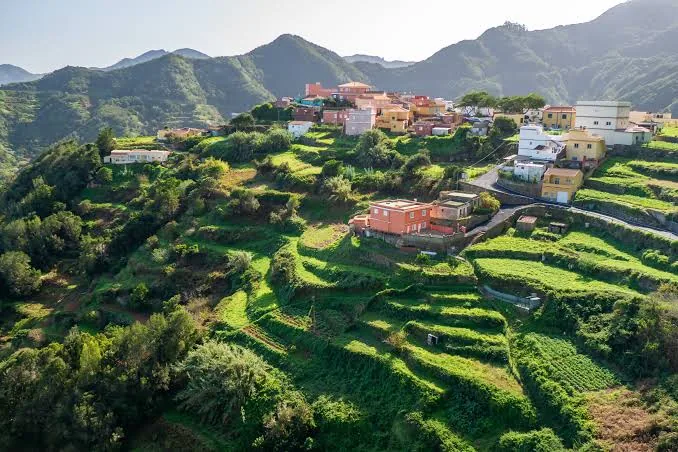
Masca is a small hamlet on a ridge in the Teno mountains, surrounded by jagged peaks and terraced palms, and reached by the TF-436, one of the most spectacular — and narrowest — roads on the island. Come early or late in the day: there is one road in, limited parking and coaches at midday. The village itself has a handful of cafés with views down the gorge.
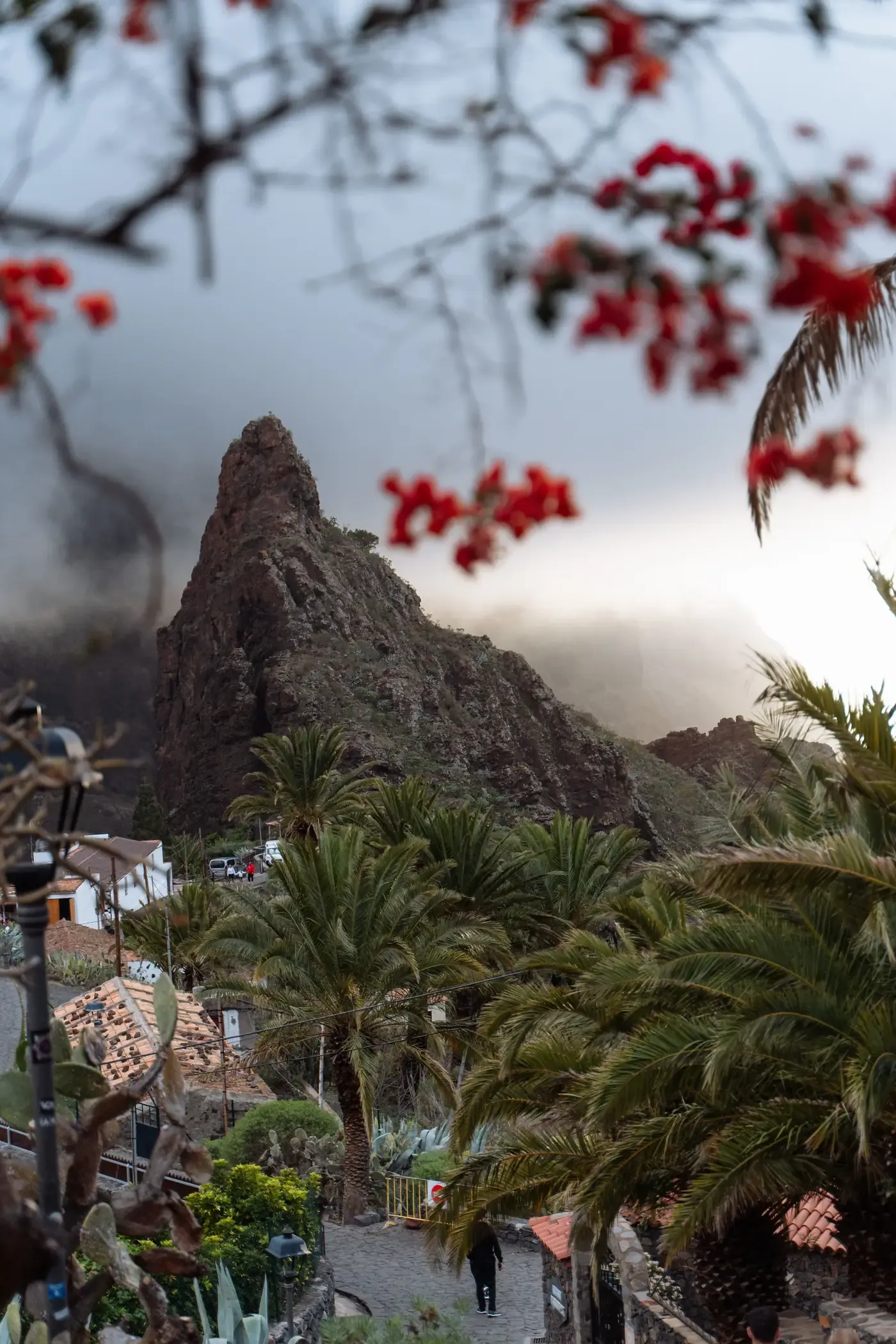
The Barranco de Masca, the gorge below the village, is one of the most famous hikes in the Canaries, but it is now strictly regulated. The descent is booked online in advance, runs on set days with a fee for non-residents (around €40 per adult in the current regulation), and starts with a compulsory shuttle from Santiago del Teide; you also need to book the boat or kayak transfer from the Masca landing to Los Gigantes, and children under eight can't take part. Our Masca gorge guide explains the process.
II. Punta de Teno
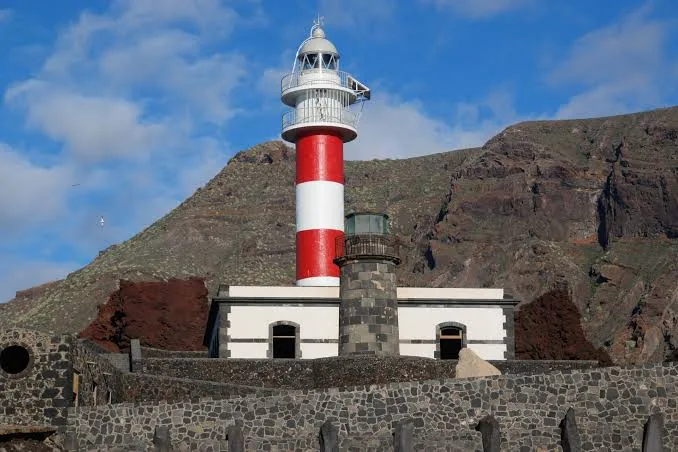
The north-western tip of Tenerife is a wild headland of dark lava with a red-and-white lighthouse, views along the cliffs of Los Gigantes and, on clear days, La Gomera on the horizon. There are calm rock pools for a swim when the sea allows. Since April 2025 the road has been open only to the TITSA bus, line 369 from Buenavista del Norte (about 20 minutes, around €1); check before you go, as the arrangement may change when the road works finish.
III. Garachico and El Caletón
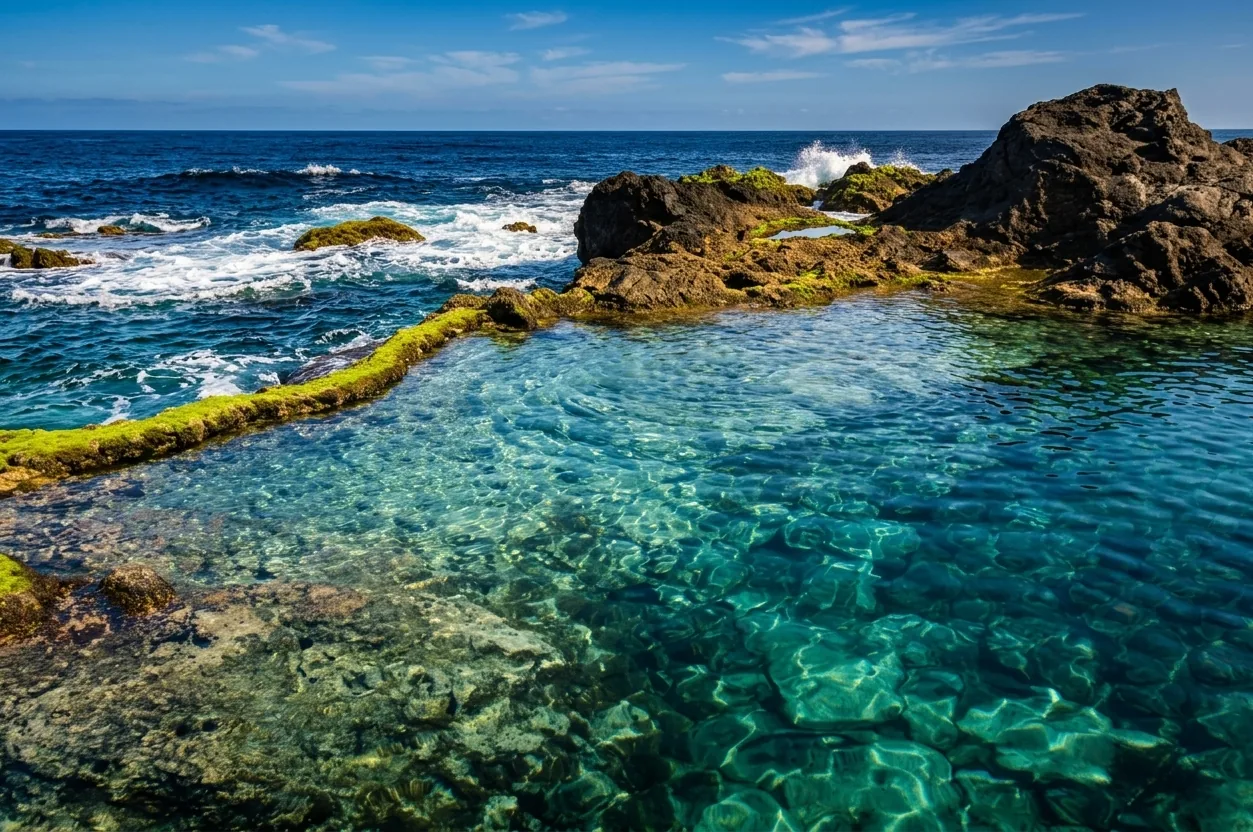
Garachico was Tenerife's main port until 1706, when lava from the Trevejo eruption filled its harbour and destroyed much of the town. It was rebuilt on the same ground, and today it's one of the most charming towns on the island: cobbled streets, convents, the small Castillo de San Miguel and, on the seafront, El Caletón — natural swimming pools formed in the old lava flow, safe to use only when the sea is calm. Boutique Hotel San Roque, in a restored 17th-century mansion, is one of the best small hotels in the north.
IV. Icod de los Vinos: the Drago and the Cueva del Viento
A few kilometres east of Garachico, Icod is home to the Drago Milenario, the island's most famous dragon tree, around 18 metres tall and often said to be about 800 years old, though its exact age is debated. You can see it from the plaza for free, or walk around it in the Parque del Drago with a ticket. Above the town, the Cueva del Viento is one of the longest volcanic lava tubes in the world, around 18 kilometres of passages; a short section can be visited on small guided tours that must be booked in advance. Down on the coast, the black-sand cove of Playa de San Marcos is a quiet place to swim.
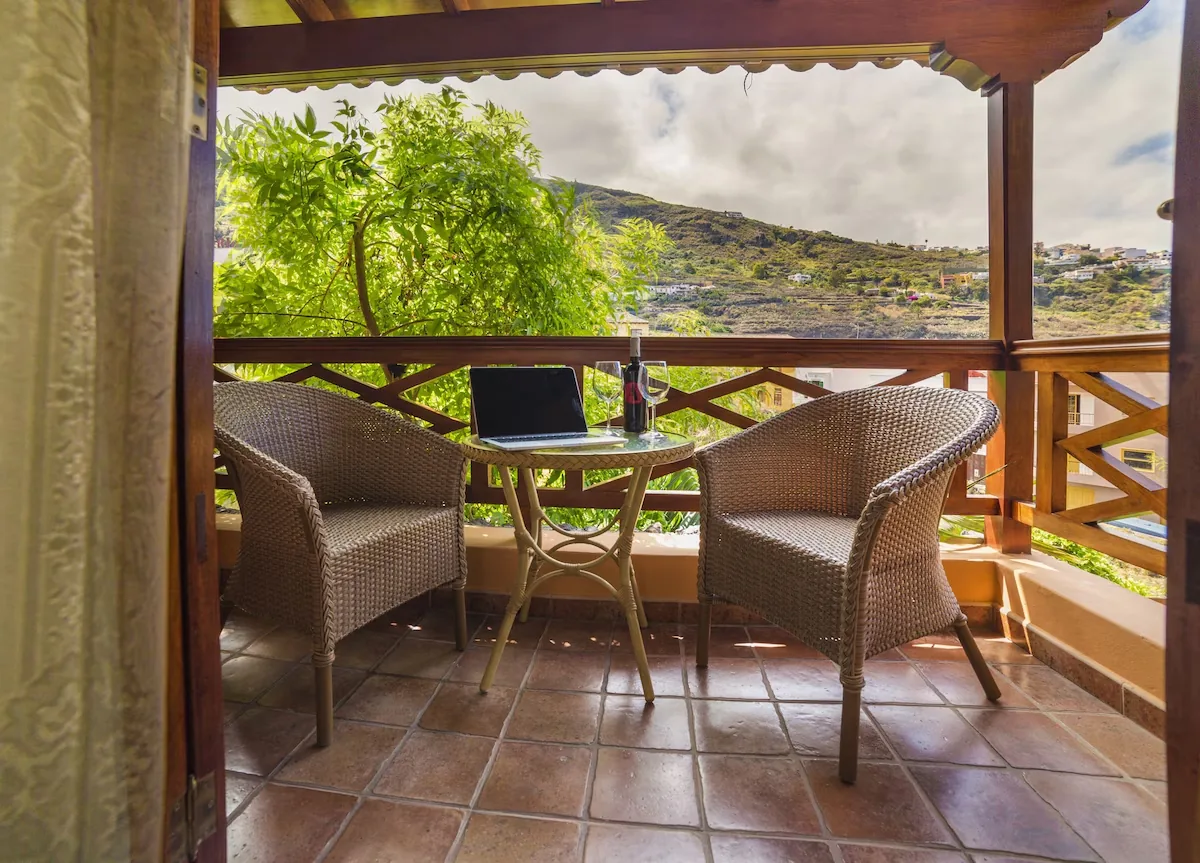
To stay, Hotel Emblemático San Marcos is a small hotel in a traditional Canarian house in the centre of Icod, with breakfast included, a roof terrace and free parking, and guest scores of around 9 out of 10 — from around €115 a night.
The North-East: La Laguna and Anaga
V. San Cristóbal de La Laguna
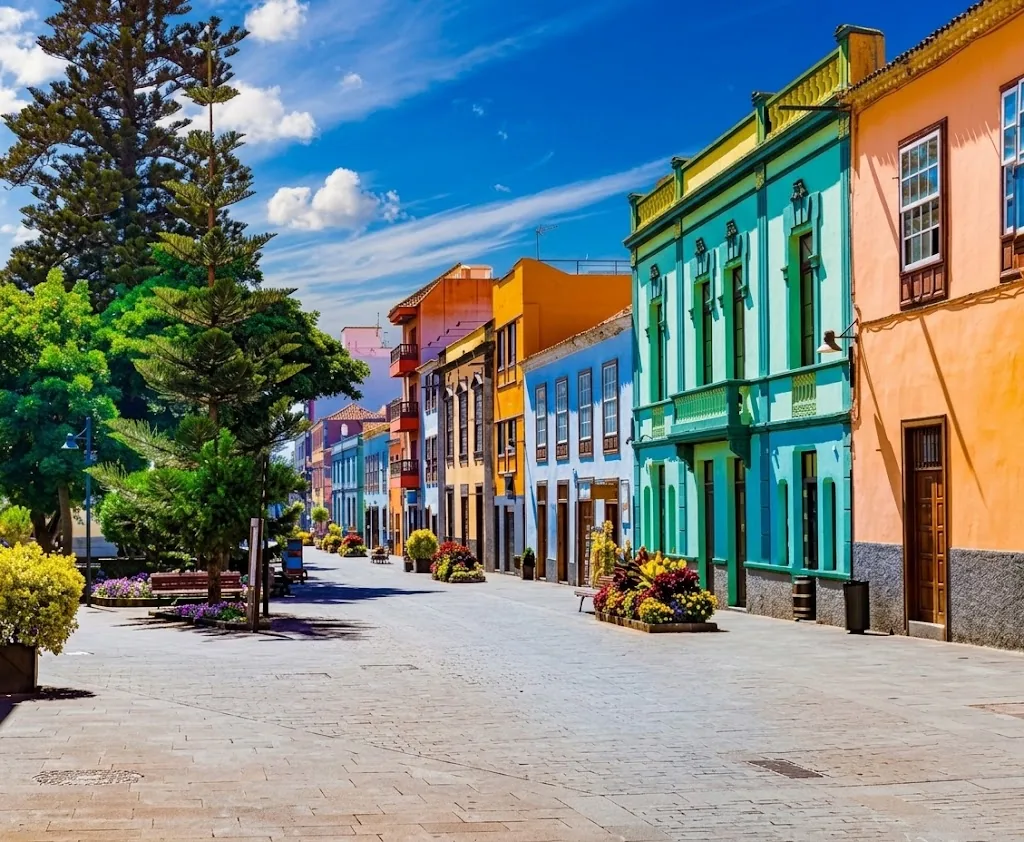
Tenerife's first capital was founded in the late 15th century, and its grid of streets — laid out without walls — became a model for colonial cities in the Americas. It has been a UNESCO World Heritage Site since 1999. Walk Calle San Agustín and Calle Obispo Rey Redondo, past mansions with carved wooden balconies, the cathedral and the tower of the Iglesia de la Concepción. It's also a university town, so the bars and cafés are lively and good value, especially in the evening. The tram connects it with Santa Cruz.
VI. Anaga Rural Park and the Laurel Forest
The Anaga mountains, a Biosphere Reserve in the north-east tip of the island, are covered in laurisilva — a humid laurel forest that is a living relic of the forests that covered much of the Mediterranean region millions of years ago. Moss hangs from the branches, mist drifts through the trees and the temperature drops noticeably. The best starting point is the Cruz del Carmen visitor centre, with the easy, accessible Sendero de los Sentidos and longer trails along the ridges. Signal is patchy, so download your route. Our Anaga Rural Park guide covers the trails.
VII. Chinamada
Deep in Anaga, Chinamada is a hamlet of around thirty cave homes dug into the rock, some still lived in year-round, surrounded by terraced fields above a deep ravine. A narrow road reaches it, with very little parking, so many visitors walk in from Las Carboneras. Restaurante La Cueva, inside a cave house, serves simple Canarian food (check opening days). From Chinamada, a classic trail descends to Punta del Hidalgo on the coast.
VIII. Playa de Benijo
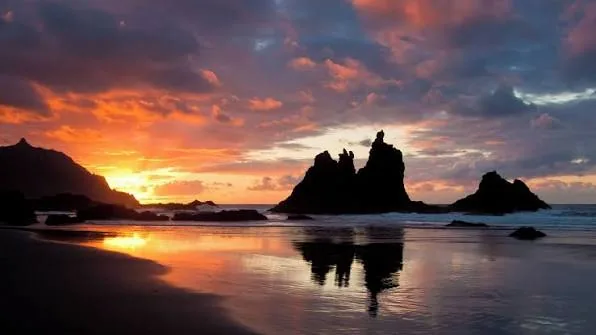
At the end of the coast road beyond Taganana, Benijo is a wild beach of black sand facing the Roques de Anaga, sea stacks that glow at sunset. There are no sunbeds or lifeguards, and the Atlantic swell can be strong, so it's a place for walking and watching rather than swimming on rough days. The fish restaurants in nearby Almáciga and Taganana make it a perfect end to a day in Anaga.
IX. Bajamar and Punta del Hidalgo
On the north-east coast below La Laguna, Bajamar and neighbouring Punta del Hidalgo have natural seawater pools, part rock and part concrete, where Atlantic waves crash over the walls. They're local favourites at weekends and a good alternative to the sandy south. Swim only when the sea is calm, and respect the flags. Punta del Hidalgo is also where the trail from Chinamada ends, with sunsets behind the Anaga cliffs. For more, see our best natural pools in Tenerife guide.
The South: Vilaflor and the Barranco del Infierno
X. Vilaflor and the Paisaje Lunar
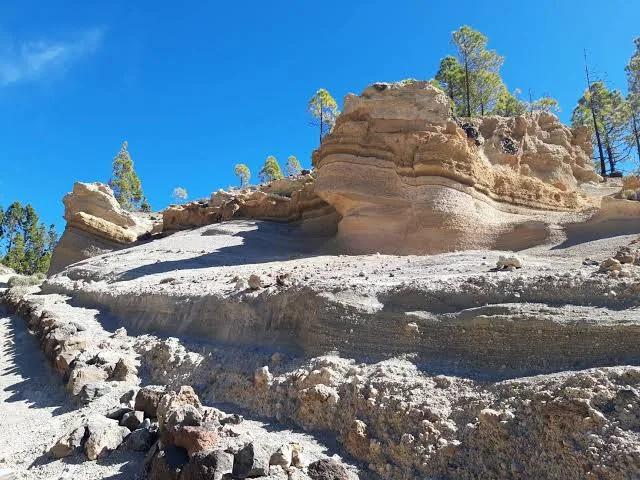
At around 1,400 metres, Vilaflor is the highest village in the Canary Islands, set in Canarian pine forest above the southern resorts. From the village square, the PR-TF 72 circuit leads to the Paisaje Lunar, a "moonscape" of white volcanic tuff eroded into towers and cones among the pines. The full loop is about 13 kilometres with around 630 metres of ascent — allow four to four and a half hours. Avoid the trail after heavy rain, and bring layers: it's much cooler than the coast.
Above Vilaflor, the road continues into Teide National Park. Stay for sunset and the stars — the Teide sunset and stargazing tour is one of the island's best experiences — and see our Teide hiking guide for the trails.
XI. Barranco del Infierno
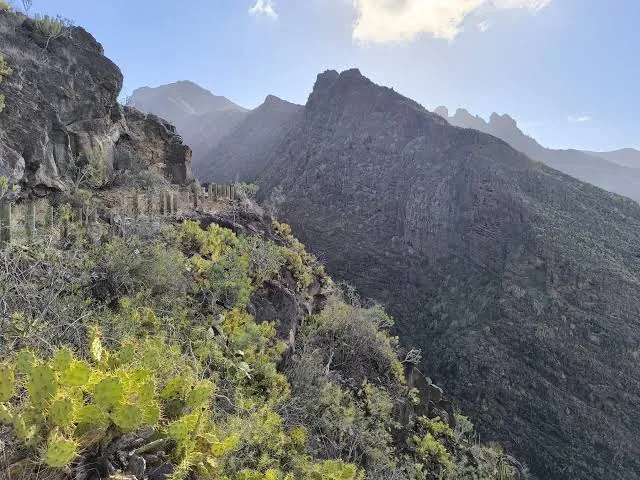
Just above Adeje, minutes from the southern resorts, this protected canyon is the island's most accessible wild walk. The path climbs gently along the ravine, past cactus slopes and old water channels, to a permanent waterfall in a narrow gorge — around 6.5 kilometres there and back, 2.5 to 3.5 hours. Visitor numbers are capped: you must book online, entry is in the morning only, the adult ticket is around €15 from 2026 and children under five aren't allowed. It can close after rain or rockfalls, so check the official site before you go.
Prefer the sea? Boat trips from Los Gigantes sail beneath the island's highest cliffs and past the mouth of the Masca gorge — compare Los Gigantes boat trips.
Suggested Routes
Day 1: The North-West
Drive early to Masca for the views before the coaches arrive, continue to Buenavista del Norte for the bus to Punta de Teno, then lunch and a swim at El Caletón in Garachico. Finish at the Drago in Icod and stay the night in Garachico or Icod.
Day 2: La Laguna and Anaga
Morning in La Laguna's old town, then up to Cruz del Carmen for a forest walk. Continue to Chinamada, or over the mountains to Taganana for a fish lunch, and end with sunset at Benijo. On a hot day, swap Benijo for the pools of Bajamar.
Half-days from the South
Book an early slot at the Barranco del Infierno, and give another morning to the Paisaje Lunar from Vilaflor — then drive up to Teide for sunset.
Where to Stay
Staying in the north for a night or two makes these places much easier than day-tripping from the south. Our picks, with more options in our best hotels in Tenerife North guide.
Boutique Hotel San Roque
An adults-only boutique in a restored 17th-century mansion — from around €160.
Hotel Emblemático San Marcos
A small historic hotel near the Drago, breakfast included — from around €115.
La Laguna Gran Hotel
A modern hotel in the UNESCO old town, the best base for Anaga — from around €105.
Practical Tips
Book Ahead
The Masca gorge, the Barranco del Infierno and the Cueva del Viento all need advance booking. Check official sites for current days and prices.
Mountain Roads
The roads to Masca and Anaga are narrow with hairpins. Drive slowly, use your horn on blind bends and allow extra time.
Weather
The north is cooler and cloudier than the south. Bring a layer for Anaga and Vilaflor, even in summer.
Sea Pools
Natural pools are only safe when the sea is calm. Never swim when waves are breaking over the walls.
Getting Around
TITSA buses serve the main towns, and the tram links Santa Cruz with La Laguna. A car is easiest for Anaga and Teno.
Staying Connected
A Yesim eSIM helps where signal drops in Anaga and Teno.
Frequently Asked Questions
Final Verdict
If you only have one extra day, spend it in the north-east: La Laguna in the morning, the Anaga laurel forest at midday and sunset at Benijo. With a second day, head north-west for Masca, Punta de Teno and Garachico. From the south, the Barranco del Infierno and the Paisaje Lunar are the easiest escapes. Book what needs booking, check access rules before you set off, and you'll see a Tenerife most visitors never do.