Tenerife is the largest of the Canary Islands and the most varied. In a single day you can drive from the sunny resorts of the south, up through pine forest to the lava fields beneath Teide, and down to a green, misty north of colonial towns and banana terraces. That variety is the island's great strength — and the reason it pays to plan.
Several of Tenerife's best places now have rules: the Masca gorge must be booked, the summit of Teide needs a permit with an eco-fee, and the road to the Punta de Teno lighthouse is open only to the bus. This guide brings together what you need to know in 2026 — the essential experiences, what they cost, where to stay and how to get around. For more corners of the island, see our Tenerife hidden gems.
Quick Guide: Tenerife in Six Experiences
If you only do six things on the island, make it these.
Spain's Highest Peak
The cable car, the crater trails and sunset above the clouds.
Forest in the Clouds
Laurel forest, cave homes and black-sand beaches in the north-east.
Best Wildlife
Resident pilot whales and dolphins off the south-west coast.
History & Old Towns
A UNESCO colonial town and a port rebuilt on lava.
Prices and Booking Rules 2026
| Sight | Price (non-resident adult) | Booking |
|---|---|---|
| Teide cable car | €42 return · €23.50 one way | Online, timed |
| Teide summit trail (no. 10) | €15 eco-fee | Tenerife ON, released Mondays |
| Montaña Blanca trail (no. 7) | €6 weekdays · €10 weekends | Tenerife ON |
| Masca gorge descent | €40.66 | Online, Wednesday–Saturday |
| Barranco del Infierno | €15 | Online, mornings only |
| Siam Park · Loro Parque | €44 each · €78 Twin Ticket | Online or at the gate |
Prices from the official websites in October 2026. Children's tickets are cheaper and rules change — always check before you go.
The Essential Tenerife Experiences
I. Mount Teide National Park
At 3,715 metres, Teide is the highest point in Spain, rising from Las Cañadas, a vast caldera of lava flows and coloured rock that has been a UNESCO World Heritage Site since 2007. The cable car climbs to 3,555 metres in about eight minutes, where two short trails lead to viewpoints over the clouds; the Roques de García loop, around two hours, circles the park's most famous rock formations. To reach the crater you need a permit for trail no. 10, with a €15 eco-fee for visitors since 2026, released every Monday on the Cabildo's Tenerife ON website. For sunrise from the top, the Altavista refuge reopened in July 2026.
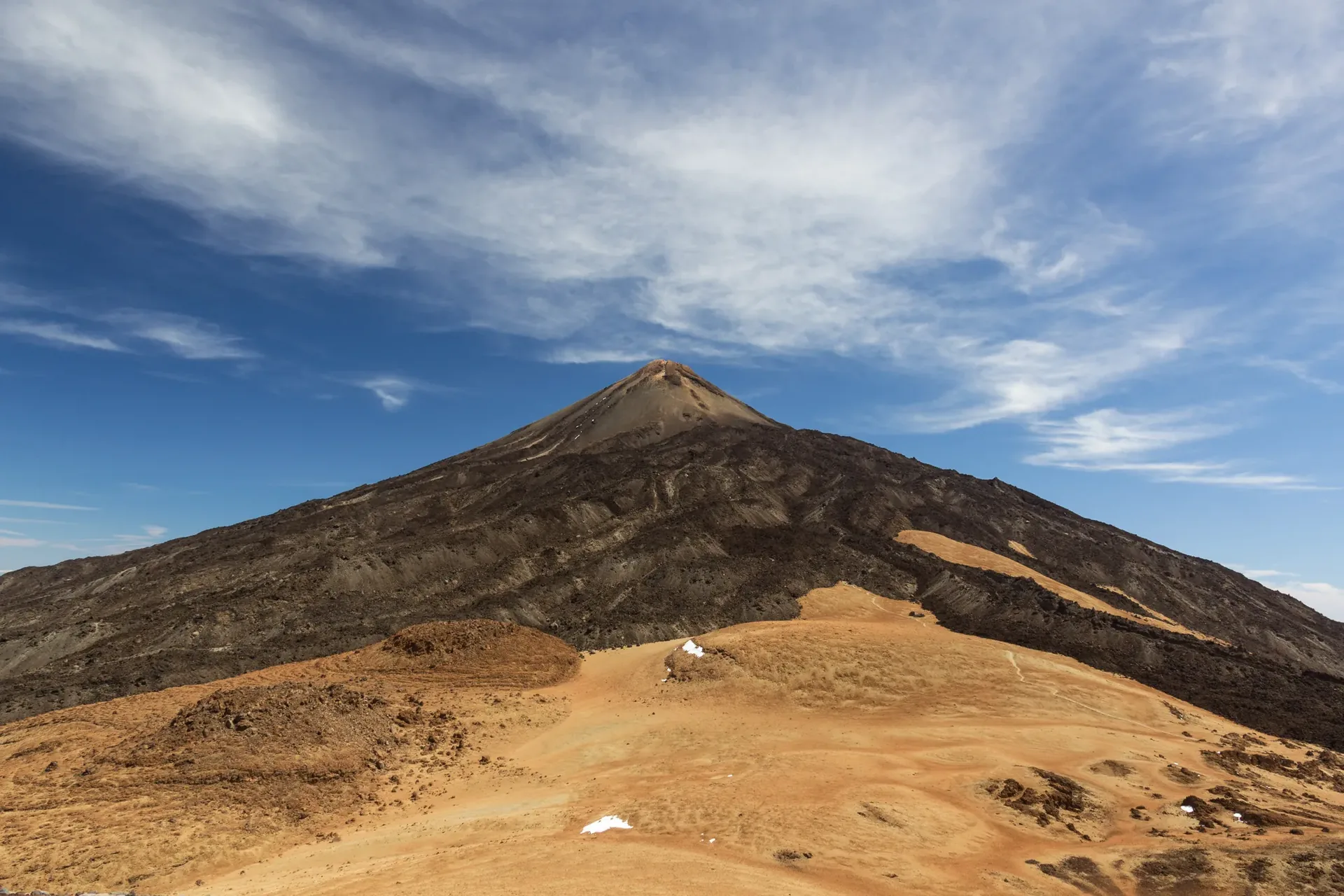
Go early — the cable car closes in strong wind — and bring warm layers: it can be 20 °C colder at the top than on the coast. Stay for sunset and the stars, among the clearest anywhere. Our Teide National Park guide covers every trail, the fees and the refuge.
II. Masca and the Teno Mountains
In the north-west, the village of Masca clings to a ridge among jagged peaks, reached by the TF-436, one of the island's most spectacular — and narrowest — roads. The village is free to visit; come early, as parking is very limited. The Masca gorge below is now strictly regulated: the descent is booked online, runs Wednesday to Saturday, costs €40.66 for non-residents and starts with a compulsory shuttle from Santiago del Teide, and you book the boat or kayak to Los Gigantes separately. Nearby, the Punta de Teno lighthouse can only be reached on the TITSA 369 bus from Buenavista del Norte while the road is closed to cars.
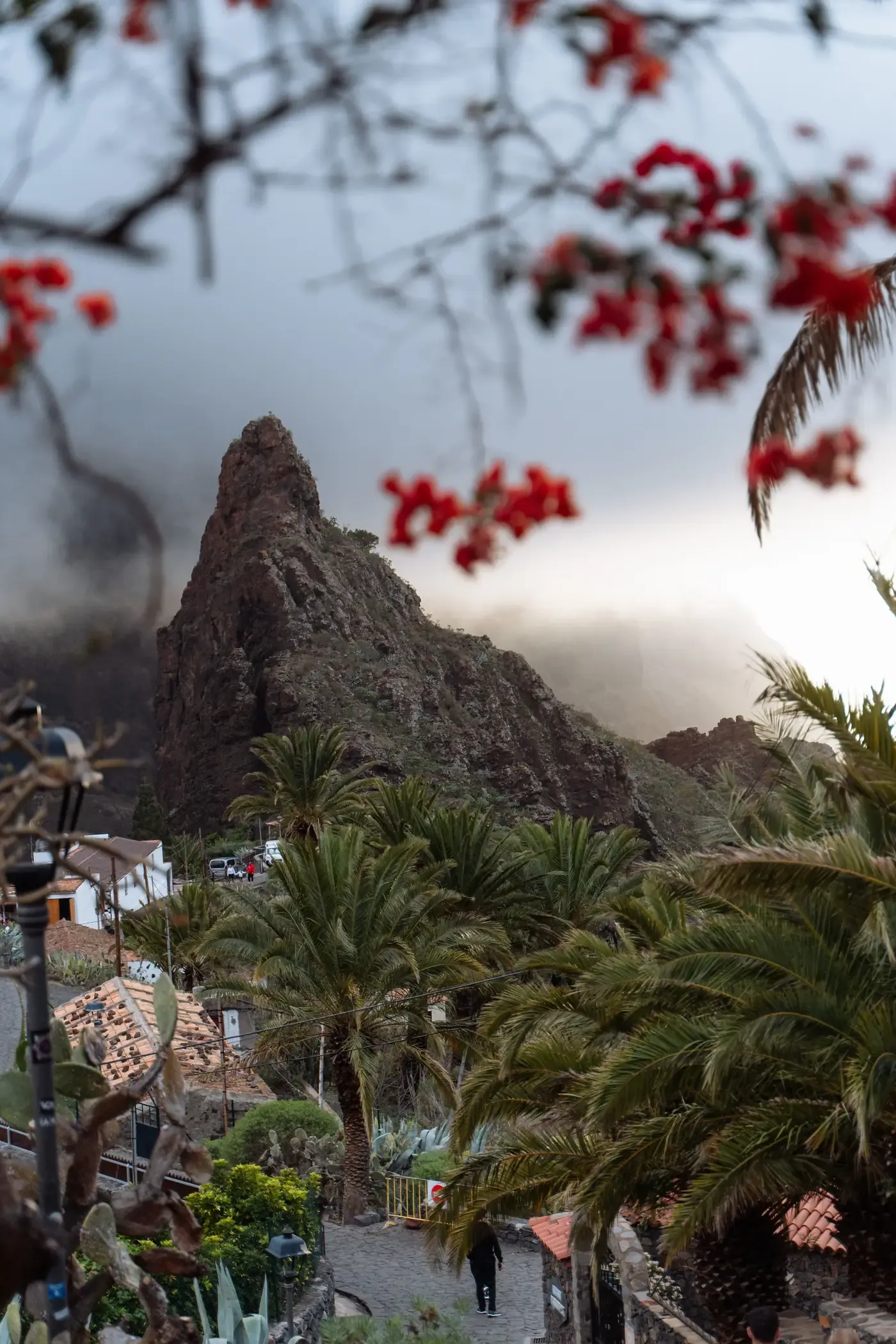
Our Masca gorge guide explains the booking step by step.
III. Anaga Rural Park
The north-eastern tip of Tenerife is a tangle of ridges and ravines covered in laurisilva, a humid laurel forest kept alive by the trade-wind clouds, and a UNESCO Biosphere Reserve since 2015. Start at the Cruz del Carmen visitor centre, 20 minutes from La Laguna, with the short Sendero de los Sentidos; hike the PR-TF 10 past the cave hamlet of Chinamada down to Punta del Hidalgo; or drive over the mountains to Taganana and the black sand of Benijo. Only the El Pijaral trail needs a permit, but the Cabildo has announced an access fee and shuttle buses for hikers from 2027.
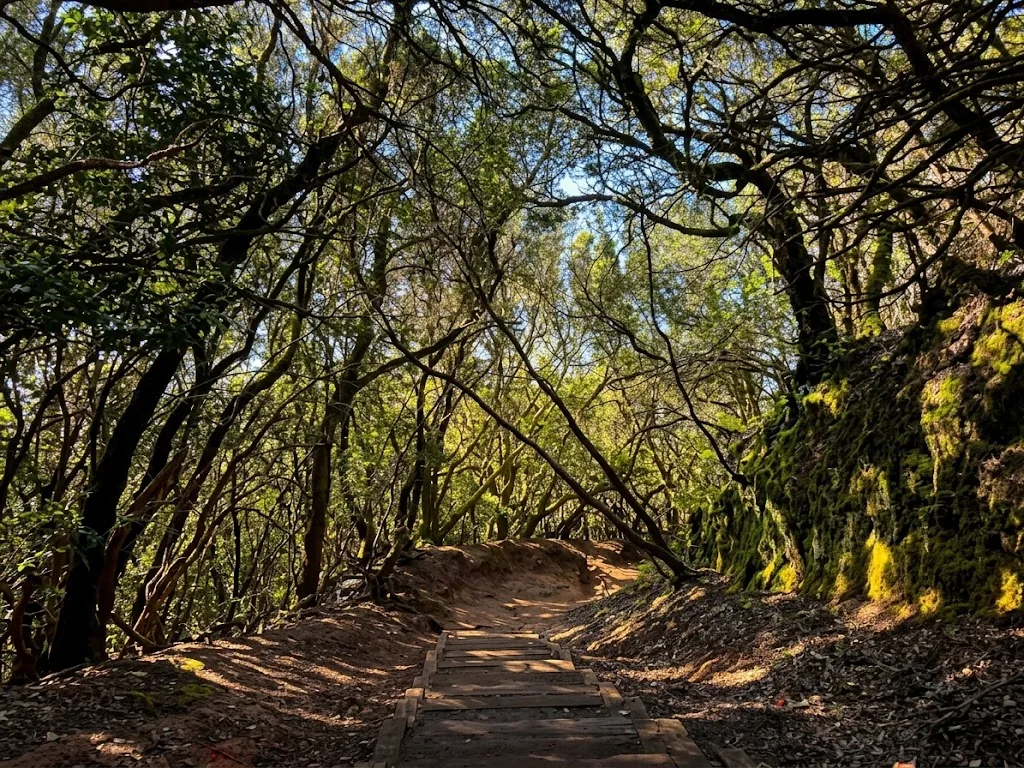
See our Anaga Rural Park guide for the trails, buses and access rules.
IV. Las Teresitas
Just past the fishing village of San Andrés, a few kilometres from Santa Cruz, Las Teresitas is a long beach of golden sand brought from the Sahara, protected by a breakwater so the water stays calm. It's lined with palms, has lifeguards, showers and kiosks, and looks up at the dry slopes of Anaga — a perfect break between the capital and the mountains. Local buses run from Santa Cruz, and it gets busy at weekends. For more, see our best beaches in Tenerife and natural pools guides.
V. La Laguna, Garachico and the North
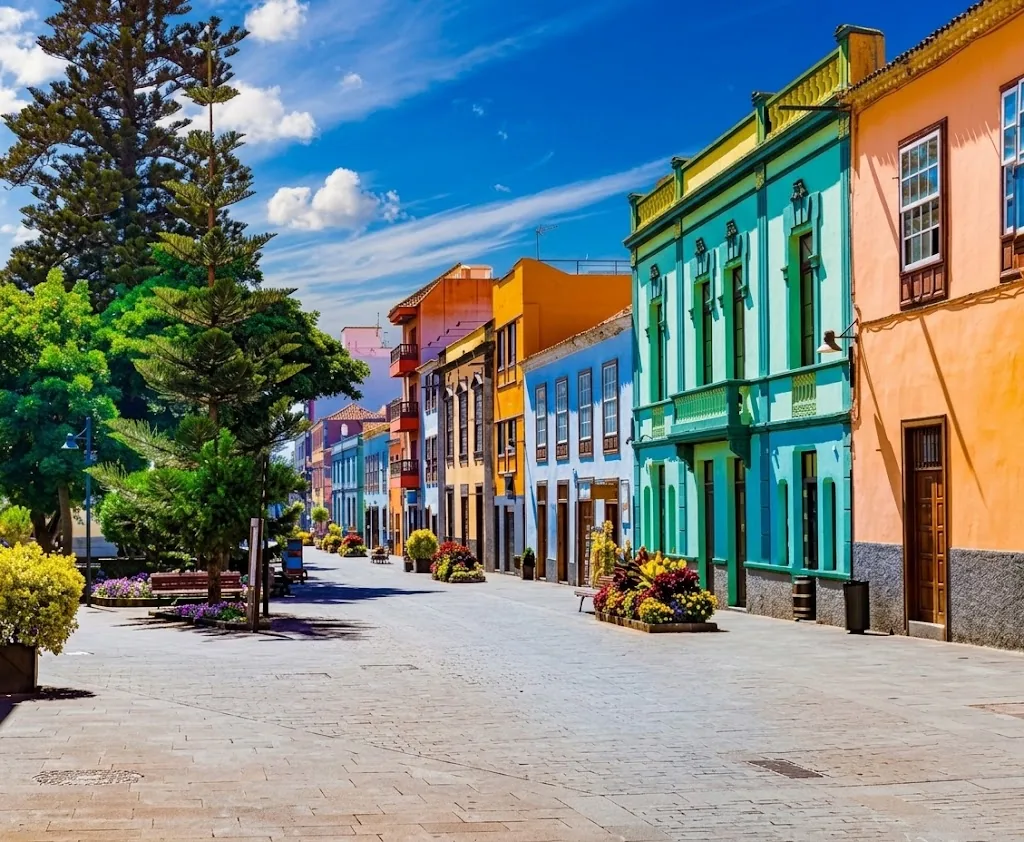
San Cristóbal de La Laguna, the island's first capital, has been a UNESCO World Heritage Site since 1999: a grid of streets with carved wooden balconies, a lively university buzz and the tram to Santa Cruz. On the north-west coast, Garachico was rebuilt after lava filled its harbour in 1706, and its El Caletón pools are formed in the old lava flow. In between, Puerto de la Cruz is the north's main resort, home to Loro Parque and the Lago Martiánez pools, and Icod de los Vinos has the famous Drago tree.
VI. The South: Whales, Cliffs and Water Parks
The waters between Tenerife and La Gomera are home to resident pilot whales, so whale and dolphin watching trips from the south-west coast see them on most outings. Boats from Los Gigantes sail beneath cliffs several hundred metres high to the mouth of the Masca gorge. Above Adeje, the Barranco del Infierno is a canyon walk of about 6.5 kilometres return to a waterfall, booked online (€15). For families, Siam Park in Costa Adeje is one of Europe's best water parks (€44), and Loro Parque in Puerto de la Cruz is the island's top animal park.
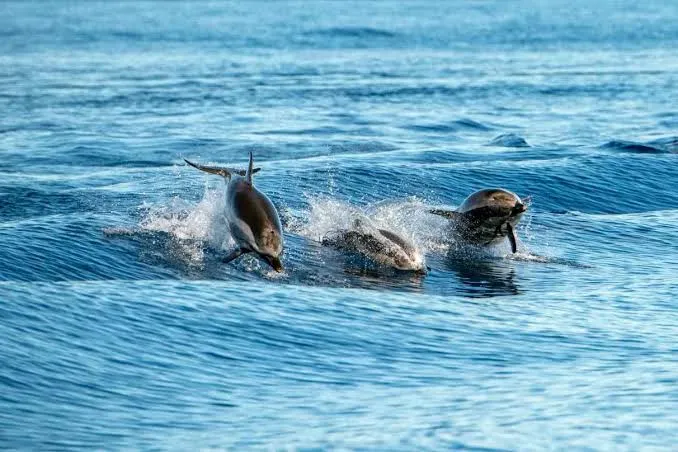
More ideas in our best excursions in Tenerife and Tenerife with kids guides. With a free day, the ferry from Los Cristianos makes a day trip to La Gomera easy.
Where to Stay in Tenerife
| Area | Best for | Nearest airport |
|---|---|---|
| Costa Adeje | Luxury resorts, calm beaches, families | TFS · ~20 min |
| Las Américas & Los Cristianos | Lively resorts, nightlife, ferries | TFS · ~20 min |
| Puerto de la Cruz | The green north, Loro Parque | TFN · ~30 min |
| La Laguna & Santa Cruz | Culture, Anaga, city life | TFN · ~10–15 min |
| Los Gigantes & the north-west | Cliffs, Masca, quieter stays | TFS · ~45 min |
Full picks by category in our best hotels in Tenerife South, Tenerife North, luxury, adults-only and budget guides.
Gran Meliá Palacio de Isora, Alcalá
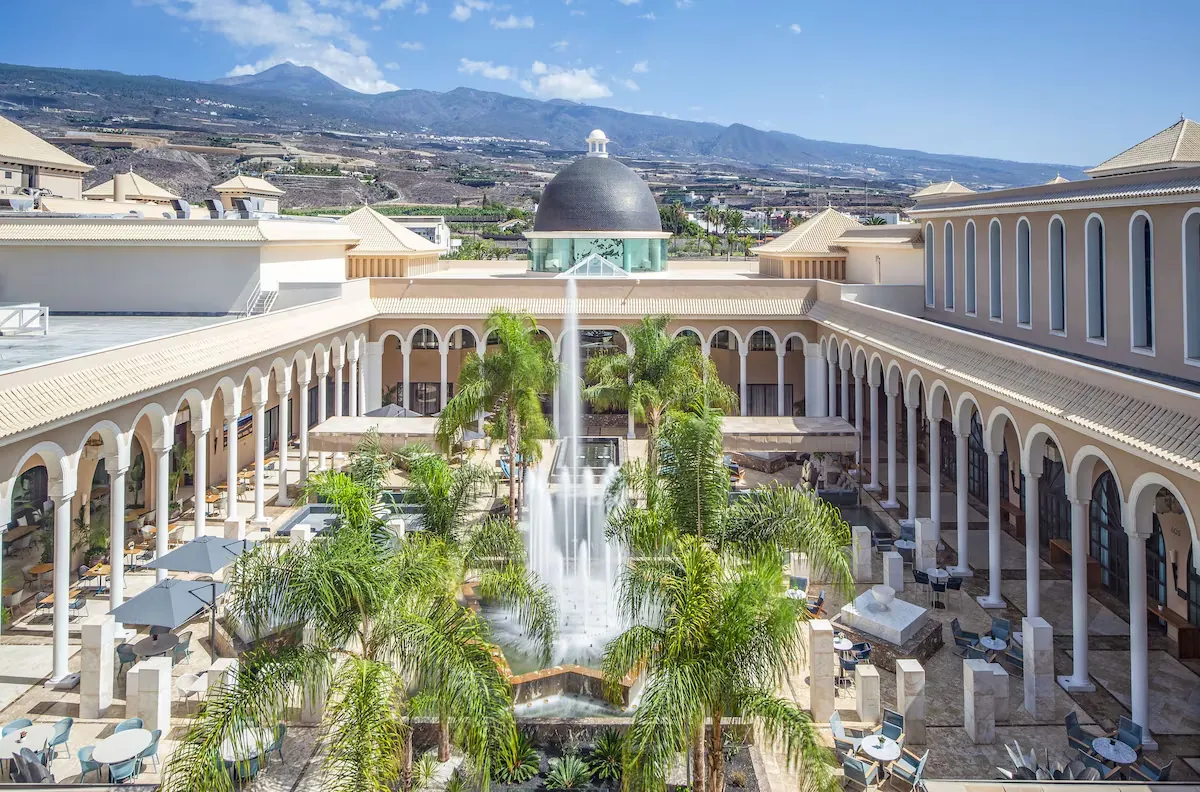
The south's most complete resort: a five-star palace on the sea at Alcalá, on the quieter west coast, with views across to La Gomera and one of the largest saltwater infinity pools in Europe. Its 604 rooms are spacious, and the arcaded courtyards, gardens and pools give it a sense of grandeur few hotels can match.
Hotel Botánico & The Oriental Spa Garden, Puerto de la Cruz
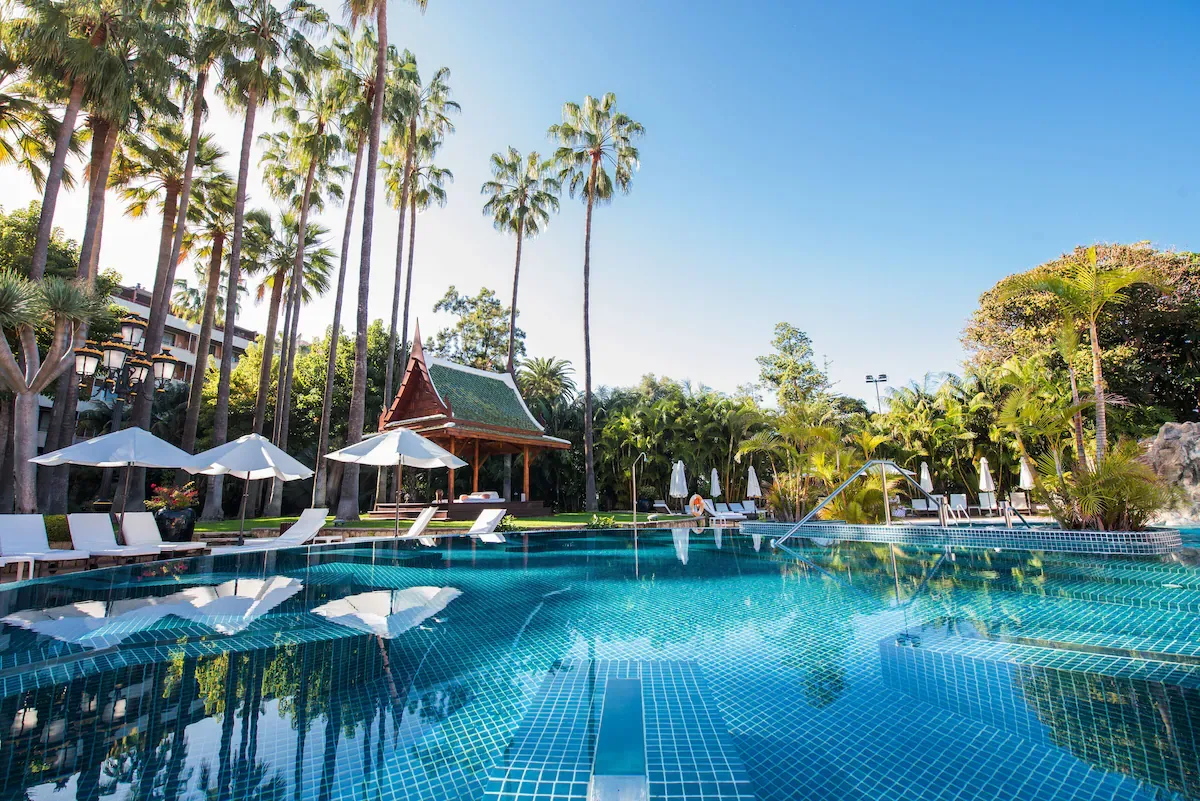
Tenerife North's most complete luxury hotel: a five-star grand-luxe property in its own tropical gardens beside Taoro Park, a few minutes' walk from the Botanical Garden, with The Oriental Spa Garden, four restaurants and guest scores of around 9.6 out of 10.
More of our favourite hotels on the island:
Bahía del Duque
A five-star village of colonial-style buildings above Playa del Duque, with several pools and restaurants.
H10 Costa Adeje Palace
A family favourite by the sea, with pools and kids' facilities.
Catalonia Oro Negro
Good value close to the beach and the ferry port.
La Laguna Gran Hotel
A modern hotel in the UNESCO old town, the best base for Anaga — from around €105.
Hacienda del Conde
A five-star golf and spa retreat near Masca and Teno.
Getting There and Around
By air, Tenerife has two airports. Tenerife South (TFS) has most international flights and is about 20 minutes from Costa Adeje; Tenerife North (TFN), near La Laguna, has mostly Spanish and inter-island flights and is closest to Santa Cruz, La Laguna and Anaga.
On the island, TITSA buses link the airports, resorts and towns, and the tram runs between Santa Cruz and La Laguna. The TF-1 motorway runs along the south and the TF-5 along the north, meeting at Santa Cruz; the drive from Costa Adeje to Puerto de la Cruz takes about an hour and a quarter. Buses into the mountains are infrequent — line 342 from the south and 348 from Puerto de la Cruz run to Teide once a day — so a car or a guided tour is easiest for Teide, Masca and Anaga.
By sea, ferries from Los Cristianos reach La Gomera in under an hour, and from Santa Cruz go to Gran Canaria, to Agaete in about 1 hour 20 minutes or to Las Palmas. Deciding between the two big islands? See Tenerife vs Gran Canaria.
Practical Tips
Book Ahead
The Teide summit, the Masca gorge and the Barranco del Infierno all need online booking — the first two sell out.
Two Climates
The south is sunny and dry; the north is greener and cloudier. Pack a warm layer for the mountains.
Mountain Roads
The roads to Masca, Teno and Anaga are narrow with hairpins. Drive slowly and start early.
Sea Safety
The north coast has strong currents. Swim at lifeguarded beaches, and in natural pools only when the sea is calm.
Teide Weather
Wind closes the cable car and snow can close the summit trail. Check the same morning.
Staying Connected
Signal drops in Anaga and Teno. A Yesim eSIM keeps maps and bookings on your phone.
All Our Tenerife Guides
Frequently Asked Questions
Final Verdict
Base yourself in the south for sun and beaches, or split your stay with a few nights in the north for its towns and mountains. Whatever you choose, give a day to Teide — booking the summit permit early if you want the top — and another to the north-west for Masca, Teno and Garachico, with a day in La Laguna and Anaga if you can. Book what needs booking, hire a car for the mountains, and you'll see why Tenerife is so much more than a beach island.